

Traditional wool spinning preserves heritage in Northern Borders
Wool spinning remains a cherished women’s craft in Saudi Arabia’s Northern Borders, reflecting the region’s social and economic traditions across generations.
Key Takeaways
AIWool spinning is a traditional craft closely tied to the lives of women in the Northern Borders region, remaining present across generations as a handicraft that reflects the social and economic fabric of local society. The abundance of livestock in the area has provided natural raw materials, enabling the creation of various popular products and textiles.
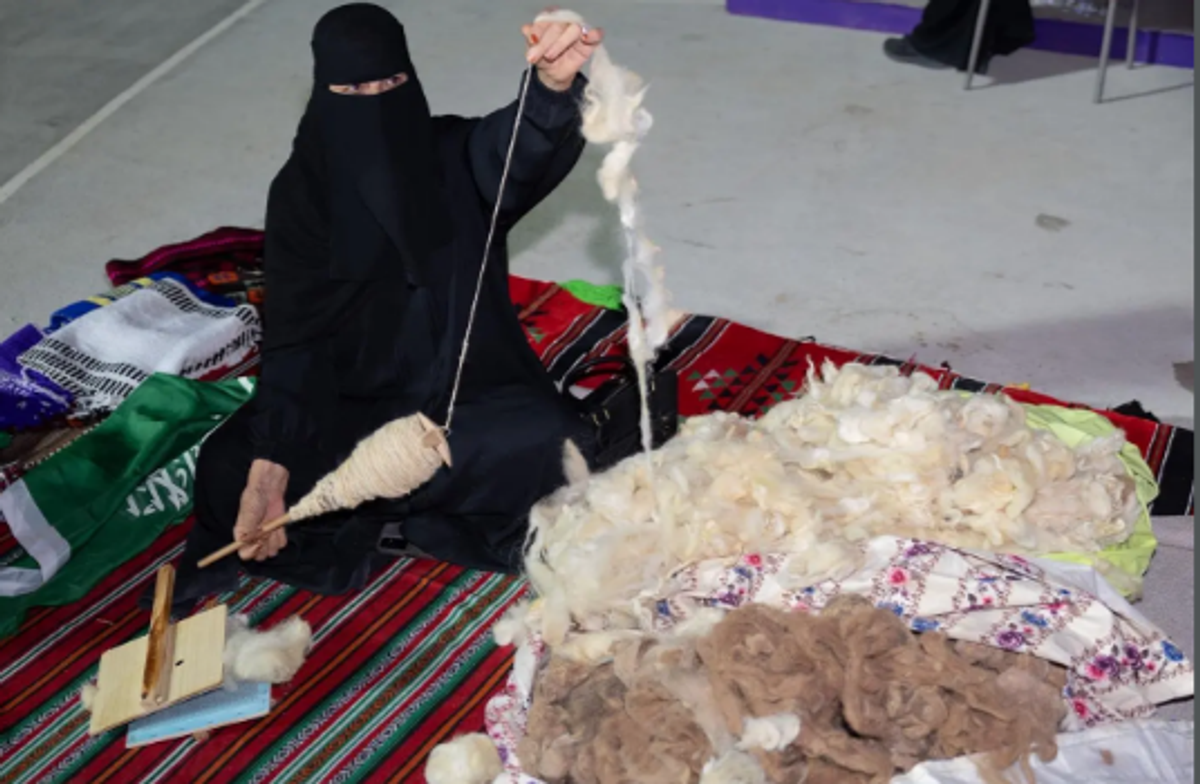
This craft stands out in the region’s heritage as a model of manual skills passed down from one generation of women to the next. The process begins with collecting, preparing, and cleaning the wool, followed by spinning it into yarn, and finally using it to produce textiles, carpets, and daily necessities. The work requires skill, precision, patience, and expertise accumulated over many years.
Livestock, especially sheep and camels, are a hallmark of the Northern Borders and serve as a vital source of wool, which has long been a key material in traditional crafts and industries. In the past, families made use of locally available resources, transforming them with simple tools and manual skills into a range of practical products.
Once spun, wool becomes the foundation for many traditional textiles, including those used in Bedouin tents, as well as carpets, mats, blankets, and other items known for their durability and suitability to the local environment. These products showcase how people have adapted natural resources to meet their everyday needs.
The wool spinning process typically starts with preparing, cleaning, and sorting the raw material, then separating the fibers and getting them ready for spinning. Using traditional tools, the fibers are spun into strong threads, which are then woven—a stage requiring skill in arranging and coordinating the yarns—until the final product is achieved, combining practical function with aesthetic value.
Women play a central role in this craft. Historically, all stages of wool preparation, spinning, and weaving were part of women’s household work. They excelled at transforming raw wool into useful products and contributed to developing the techniques, patterns, and decorations that give these textiles their distinctive local character and popular appeal.