

National Guard showcases advanced tech solutions at LEAP 2026
Saudi Arabia’s National Guard is presenting data-driven and AI-powered security and healthcare innovations at the LEAP 2026 technology conference.
Key Takeaways
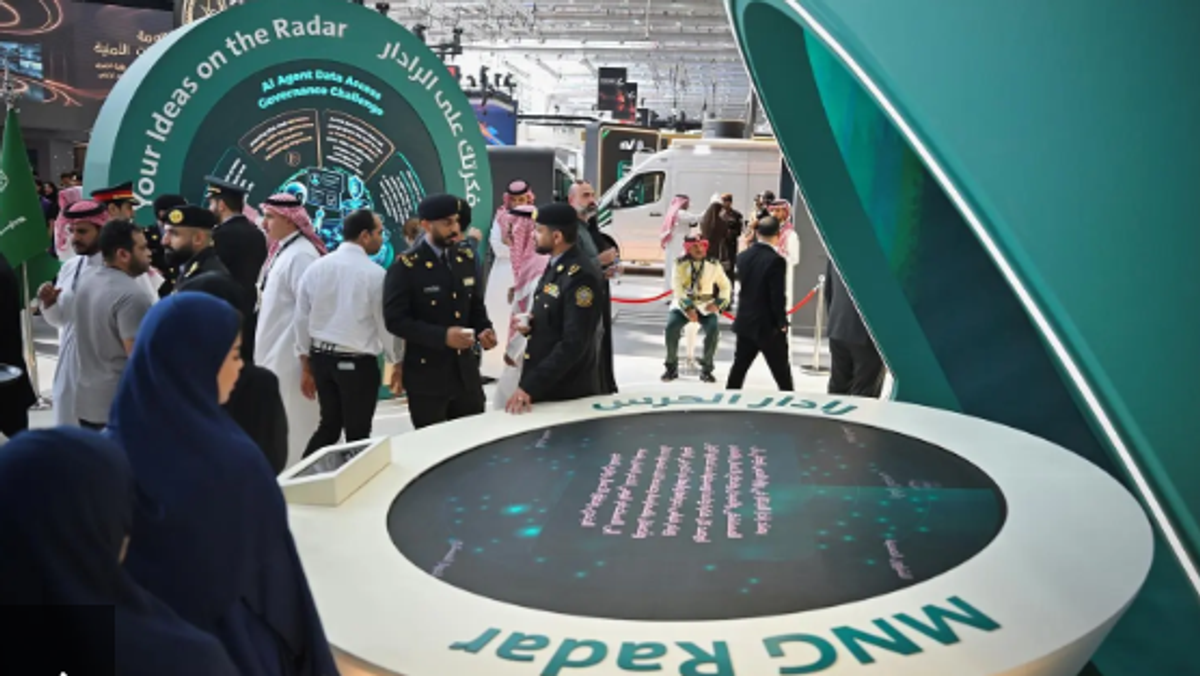
AIIn a rapidly changing world where readiness and precise response are increasingly vital, technology has evolved from being a mere support tool to an integral part of building security and healthcare capabilities, enhancing response efficiency, improving resource management, and supporting decision-making. Against this backdrop, the Ministry of National Guard is showcasing a range of solutions and technologies at LEAP 2026 that leverage data, artificial intelligence, and advanced digital models to boost security readiness, develop healthcare, and enhance operational and institutional planning.
The story begins with a system operating in an environment that demands continuous monitoring, understanding, and response—from security threats and incidents to patients, visitors, and medical operations, as well as resource management and planning. Data flows constantly, and its true value lies in transforming information into actionable insights that enable understanding of the present, anticipation of needs, informed decision-making, and improved outcomes.
On the security front, the ministry is presenting its security monitoring and threat response system, designed to provide a comprehensive operational picture and improve the accuracy and appropriateness of responses to threats. This system embodies an advanced approach to handling security situations, focusing not only on detecting incidents but also on building a complete picture to understand the situation, assess threat levels, and determine the right response—thereby enhancing readiness and adaptability.
In the area of resource management and institutional planning, the inventory calculation tool is highlighted as a technological solution aimed at improving planning and optimizing resource utilization. This tool demonstrates how technology can support institutional efficiency by converting resource-related data into indicators that aid more precise planning and decision-making.
In healthcare, the scope of technology and AI applications spans various stages of the patient journey and the medical system, from early diagnosis and proactive planning to emergency rooms, clinics, and surgical operations.
A notable example is the use of AI for early detection of glaucoma, harnessing AI’s analytical capabilities to identify the disease in its initial stages. This helps reduce the risks of delayed diagnosis and vision loss, turning AI from a technical concept into a practical tool that enables specialists to detect early signs and improve intervention opportunities.
AI’s role extends beyond diagnosis to proactive planning and operations management through the predictive engine on the MIMS platform. This system leverages data and predictive capabilities to improve request processing and distribution, aiming to reduce the expected rejection and cancellation rate from 26.7–33.8% to just 3–5%, and to cut processing times from weeks to mere seconds.
This marks a shift from reactive to proactive request management, using data and prediction to accelerate procedures, improve distribution, and enhance planning efficiency.
In emergency departments, where every minute counts, the digital twin for emergency sections offers an advanced model to simulate the emergency environment and understand patient and resource flow. This helps optimize operations and support operational decisions, with the goal of reducing emergency stay times from over seven hours in some regions to less than four hours—making technology a tool for reducing wait times, improving patient flow, and boosting efficiency in one of healthcare’s most critical and dynamic areas.
This approach extends to the new outpatient clinic model, which aims to serve more than 90% of visitors without waiting, offering instant booking and zero wait times. The model reflects a shift toward redesigning the patient journey through technology, making services smoother, streamlining procedures, and providing a faster, more efficient experience.
For surgical operations, the iSURGE system for managing surgery waiting lists introduces a model focused on clinical fairness, reducing wait times, and increasing decision transparency. It organizes surgery lists based on clinical priority, supporting clearer and more consistent decisions and maximizing the use of available resources.
Despite their diverse applications, these solutions share a common goal: transforming data into capability, AI into actionable decisions, and technology into tangible impact. In security, technology enhances situational awareness and response accuracy; in resource management, it supports planning and optimization; and in healthcare, it enables early diagnosis, proactive planning, improved patient flow, and better operations management.
These technologies do not operate in isolation from people—they enhance human capabilities. Security personnel need broader vision and tools for faster response, healthcare professionals require technologies that support decision-making, patients seek earlier diagnoses, faster service, and shorter waits, and institutions need systems that make their operations more efficient and responsive to change.
This is the true value of what the Ministry of National Guard is presenting at LEAP 2026: technology is not an end in itself, but a means to achieve greater security readiness, more precise responses, earlier diagnoses, shorter waits, better resource utilization, and faster, clearer decisions.
From security to health, from monitoring to diagnosis, and from planning to decision-making, the Ministry of National Guard offers a model of technologies that not only keep pace with a changing world but also build greater readiness to meet its challenges.
In a world where challenges evolve rapidly, the value of technology lies not in its novelty, but in its ability to enable smarter responses, more accurate decisions, greater efficiency, and improved safety and health for people.