

Saudi Cabinet approves National Curriculum Center regulation, 10 new decisions
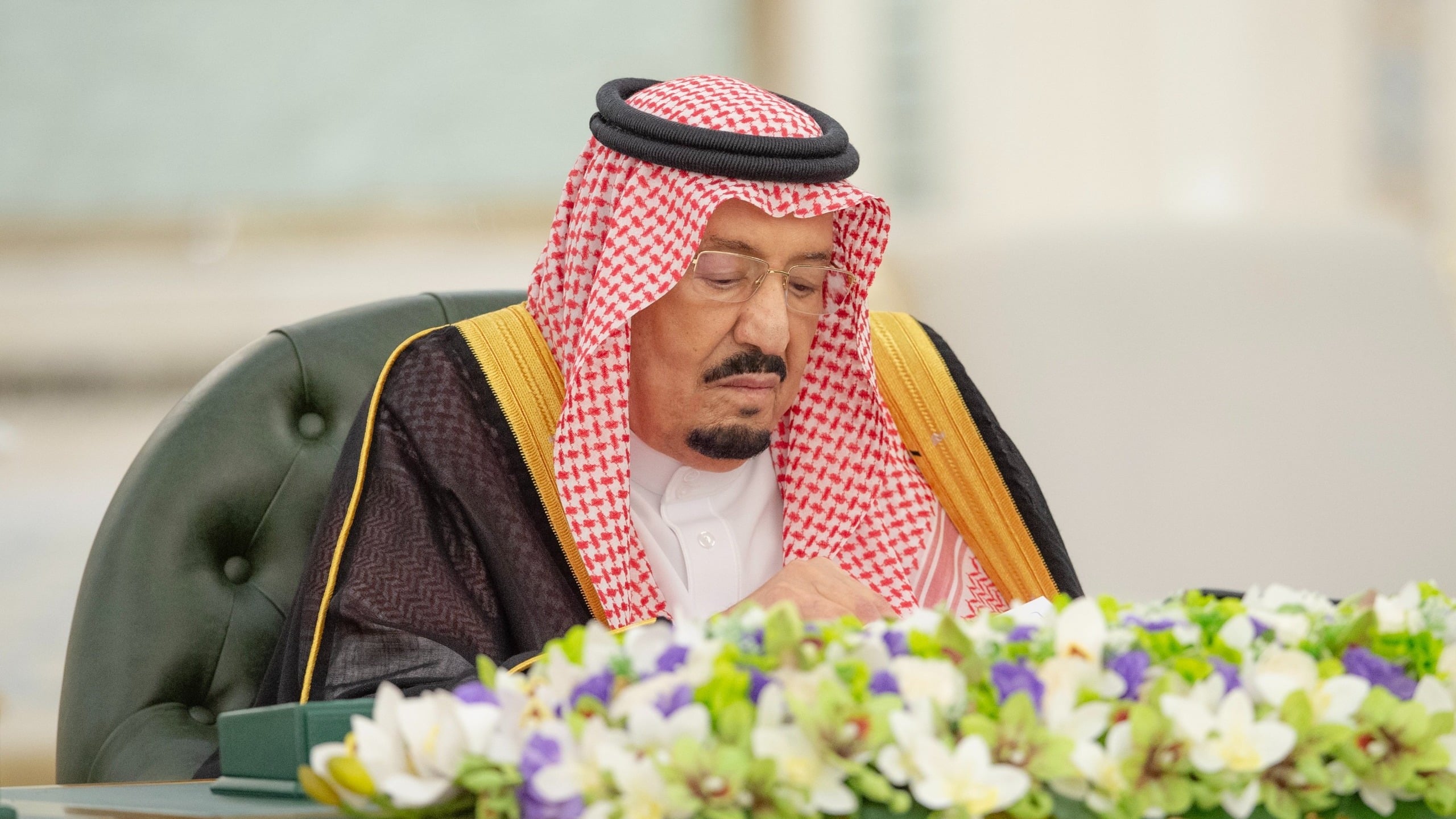
King Salman chaired the Cabinet in Jeddah, approving the National Curriculum Center regulation and a series of appointments, promotions, and university accounts.
Key Takeaways
AIKing Salman bin Abdulaziz chaired the Cabinet meeting held today in Jeddah.
At the start of the session, the Cabinet reviewed recent talks and consultations between Saudi Arabia and allied and friendly nations, aimed at strengthening bilateral and multilateral cooperation across various fields to achieve shared interests, mutual benefits, and support efforts to reinforce regional and international security and stability.
The Cabinet welcomed the launch of institutional and operational activities of the multinational maritime defense alliance—initiated by Saudi Arabia—following the completion of its organizational and planning frameworks. This marks a new phase of joint action to achieve full operational readiness, carry out assigned tasks to enhance collective maritime security, protect freedom of navigation and maritime straits, and support the continuity of global trade and supply chains.
Minister of Media Salman bin Yousef Al-Dosari stated to the Saudi Press Agency after the session that the Cabinet reiterated its firm rejection of repeated Iranian attacks on ships and commercial tankers, describing them as a dangerous escalation and a direct threat to maritime security and safety. The Cabinet said these acts constitute a grave violation of international laws and norms and a blatant challenge to the UN Security Council resolution requiring respect for the rights and freedom of navigation for commercial vessels through the Strait of Hormuz, condemning any threats or actions that could impede this.
Regarding bilateral relations, the Cabinet considered the establishment of the Saudi-Sudanese Coordination Council as an extension of both countries’ commitment to supporting joint coordination within an institutional framework that fosters tangible cooperation, integration, initiatives, and projects to achieve shared aspirations.
The Cabinet also highlighted Saudi Arabia’s success in presiding over the 16th session of the Conference of the Parties to the United Nations Convention to Combat Desertification, launching partnerships and initiatives to support international cooperation in addressing land degradation, desertification, and drought, as well as strengthening water and food security, climate adaptation, and developing innovative solutions for environmental protection and sustainable development.
The Minister added that, on the occasion of World Humanitarian Day, which falls on Wednesday, the Cabinet expressed pride in Saudi Arabia’s leading role in humanitarian work and its prominent standing among the world’s largest donors, with a record of generosity, initiative, and extending aid to countries and peoples in need and providing relief to those affected worldwide.
On the domestic front, the Cabinet reviewed national achievements in the education sector ahead of the new academic year, particularly efforts to strengthen the sector’s organizational and operational capacity, continue building centers of learning, expand students’ scientific experiences, develop teachers’ skills, and provide model environments, pioneering curricula, and specialized programs that foster innovation and creativity, contributing to human capital development and the goals of Saudi Vision 2030.
The Cabinet praised the financial performance of the Public Investment Fund and its continued progress in growing revenues and net profits in the past year 2025—a date that appears ambiguous in the official statement—alongside its ongoing role in advancing development, economic diversification, and expanding local and international investments, with contributions to strategic sectors such as artificial intelligence, technology, energy, infrastructure, and advanced manufacturing.
The Cabinet commended the notable progress made by government agencies in the "Digital Experience Maturity Index" for 2026, reaffirming their commitment to developing operations and innovating more flexible and effective technological solutions to deliver the best procedures and services to citizens, residents, and visitors, in line with the Kingdom’s leadership and competitiveness in relevant international rankings and indicators.
The Cabinet reviewed the items on its agenda, including topics studied in cooperation with the Shoura Council, as well as reports from the Political and Security Affairs Council, the Economic and Development Affairs Council, the General Committee of the Cabinet, and the Bureau of Experts. The Cabinet resolved the following:
First:
Approval to authorize the Chairman of the Nuclear and Radiological Regulatory Commission—or a delegate—to discuss with the Malaysian side a draft memorandum of understanding between the governments of Saudi Arabia and Malaysia on cooperation in nuclear technology applications for peaceful purposes, including safety, security, and safeguards, and to sign the agreement.
Second:
Approval of a memorandum of understanding for cooperation in public-private partnership between the governments of Saudi Arabia and Kuwait.
Third:
Authorization for the Minister of Commerce—or a delegate—to discuss with the Tunisian side a draft memorandum of understanding between the Saudi Ministry of Commerce and the Tunisian Ministry of Commerce and Export Development on consumer protection cooperation, and to sign the agreement.
Fourth:
Authorization for the President of the Oversight and Anti-Corruption Authority—or a delegate—to sign a draft model agreement for information exchange among members of the Global Operational Network of Anti-Corruption Law Enforcement Authorities (GlobE Network).
Fifth:
Approval of a cooperation memorandum between the Zakat, Tax and Customs Authority of Saudi Arabia and the New Zealand Customs Service on mutual administrative assistance in customs matters.
Sixth:
Approval of the regulation of the National Curriculum Center.
Seventh:
Appointment of Abdulaziz bin Saleh Al-Rabdi, Ahmed bin Abdulqader Binjazar, Talal bin Ahmed Al-Khereiji, Abdulmalik bin Ibrahim Al-Sheikh, and Mohammed bin Omran Al-Omran as private sector representatives to the Board of Directors of Saudi Arabian Airlines Corporation.
Eighth:
Approval of the final accounts for King Faisal University, Al-Jouf University, Taibah University, and Qassim University for previous fiscal years.
Ninth:
Issuing necessary directives regarding several items on the Cabinet agenda, including annual reports from the National Competitiveness Center (formerly) and the Royal Institute of Traditional Arts.
Tenth:
Approval of promotions to the fifteenth rank and to the positions of Ambassador and Minister Plenipotentiary as follows:
- Saud bin Saad Al-Harbi promoted to Director General (fifteenth rank) at the Ministry of Interior.
- The following promoted to Ambassador at the Ministry of Foreign Affairs:
Nasser bin Awad Al-Ghannoum.
Salman bin Abdulrahman Al-Sheikh.
Mazen bin Hamad Al-Himli.
- The following promoted to Minister Plenipotentiary at the Ministry of Foreign Affairs:
Fahd bin Hassan Al-Shahri.
Mohammed bin Salah Al-Thubaiti.
Anwar bin Abdullah Haji.
Hisham bin Abdulaziz Al-Faiz.
Anas bin Saleh Al-Nuwaiser.
Hanaa bint Mohammed Al-Ghannam.
Mazeed bin Mohammed Al-Howaishan.