

Trump rules out new strikes on Iran as diplomatic talks progress
US President Donald Trump said further attacks on Iran are unlikely while negotiations to end the conflict continue, amid reports of shipping attacks.
Key Takeaways
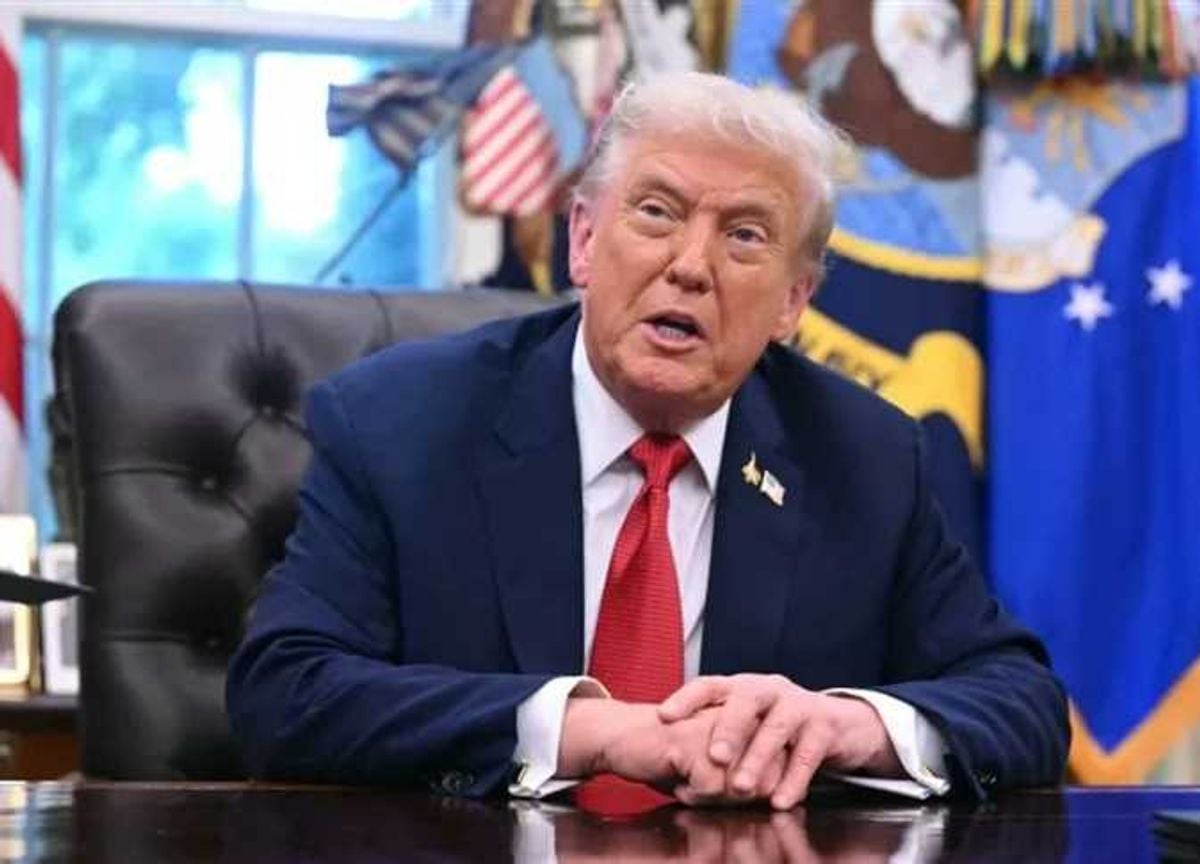
AIUS President Donald Trump said on Sunday that it is highly unlikely he would order new attacks on Iran as long as negotiations aimed at ending the conflict are making progress. His comments came as both countries reported attacks on cargo ships in or near the Strait of Hormuz.
In a phone interview with CNN, Trump stated, "It depends on whether they sign a very good deal or not... The answer is that it is highly unlikely that would be necessary."
CNN did not specify the exact question posed to Trump, who also said that if attacks were to resume, the United States had identified potential infrastructure targets, including 38 bridges "that we could literally take down in an hour."
Later on Sunday evening, Trump posted on Truth Social that "Task Force Iron Gate is operating at full strength and effectiveness" against Iran. The campaign, first reported by Reuters on Saturday, aims to restrict Tehran's movement of advanced weapons and other sanctioned materials across its land borders and via the Caspian Sea.
Trump acknowledged after last week's US midterm elections that the war with Iran was one reason for Republican losses. His vice president, J.D. Vance—widely seen as a potential successor when Trump's term ends in two years—went further, stating bluntly on social media, "The reason we lost is the war."
Trump told reporters on Sunday, "A lot of people did not like Vance's comment about Iran."
Secretary of State Marco Rubio, widely considered another contender to succeed Trump, declined to comment on Sunday about any link between the war and the elections.
Rubio told reporters, "All I can say is that the President of the United States identified a very real threat to this country that has existed for a very long time and addressed it."
Asked separately about diplomatic efforts to end the war, Rubio said he did not believe a breakthrough was imminent.
Rubio said, "The president always prefers to resolve this issue and all issues diplomatically. But sometimes, unfortunately, that's not possible. If there is an opportunity to do so, we will explore it. For now, these efforts have not been very fruitful because Iran's demands are not only unacceptable, but sometimes outrageous, absurd, and truly unrealistic."
Trump had hinted at resuming major attacks on Iran after last week's midterm elections, but there have been no signs of a large-scale US military operation. Iran has declared it would retaliate by striking US and Israeli targets.
Iranian media reported that explosions in the south of the country on Saturday evening were linked to Iranian military activities and not US strikes.
Iranian state television reported hearing explosions in several areas in southern Iran, including Qeshm Island in the strait, but said officials had not confirmed any missile strikes on Iranian territory.
Nevertheless, both sides have continued attacks on ships in the Strait of Hormuz, restricting exports of energy and other goods vital to the global economy.
Iranian television suggested that the evening explosions may have been related to Iranian military activities in the waterway, reporting that Iran said two ships struck mines and a third caught fire.
The United States said its air force disabled a ship in the Gulf of Oman.
Tasnim News Agency reported that two missiles targeted Qeshm Island, but there was no official information on possible damage. Neither Iran nor the United States commented on the report. Washington said on November 2 it had struck the island in a limited defensive action against Iranians using surface-to-air missiles against US assets.
Since the US and Israel began attacks on Iran in February, Tehran has sought to assert control by targeting ships in the Strait of Hormuz to disrupt Gulf energy exports, while US forces began a blockade of shipping to and from Iranian ports in April.
The US military said on Saturday evening that its air forces fired on the stern of a commercial vessel in the Gulf of Oman, disabling it as it attempted to breach the US blockade on Iran.