

US naval blockade on Iran enters 130th day as tensions rise in Hormuz
Two oil tankers targeted in Hormuz Strait as US blockade on Iran hits 130 days, with ship traffic and oil flows declining amid ongoing maritime tensions.
Key Takeaways
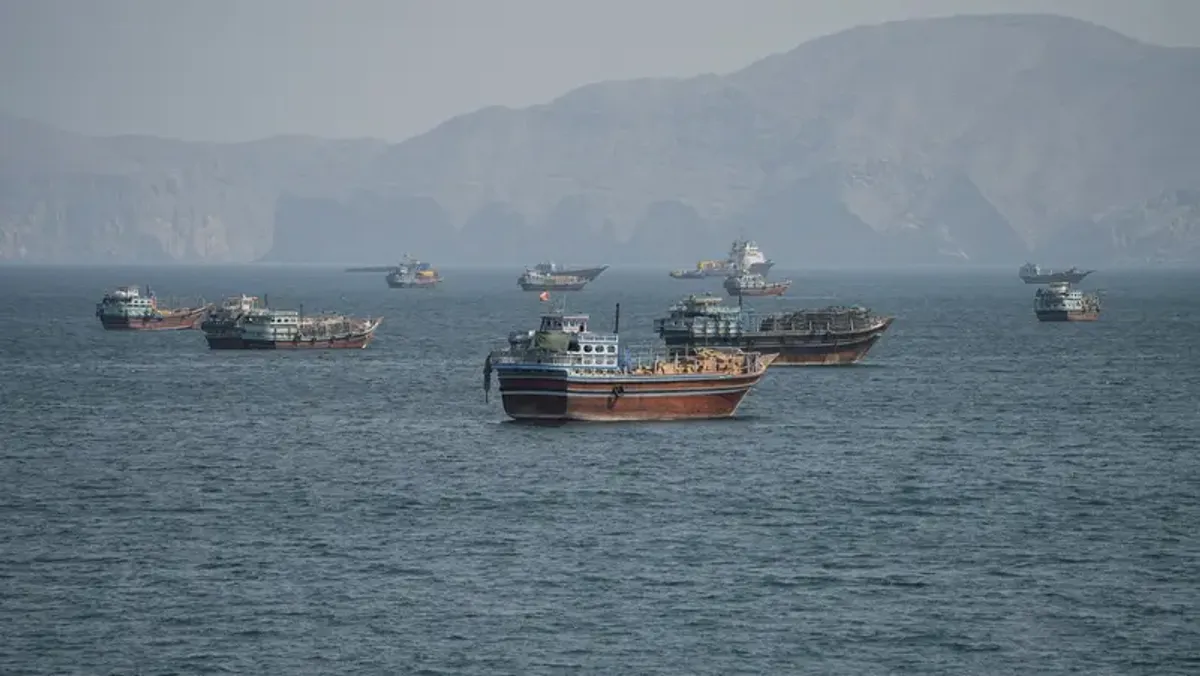
AITwo oil tankers were targeted by unidentified projectiles while sailing out of the Strait of Hormuz on Saturday, coinciding with the 130th day of the US-imposed naval blockade on Iran. The incident comes amid a decline in shipping activity and oil flows through the strategic waterway, according to British data and preliminary figures from the Kpler platform.
The UK Maritime Trade Operations agency reported that 263 vessels transited the Strait of Hormuz in both directions during the week ending November 18, a drop of about 15% from the previous week and 20% compared to the week before that.
These figures reflect a significant decrease from pre-strike levels before US and Israeli attacks on Iran at the end of February, when around 135 ships crossed the strait daily, transporting nearly one-fifth of the world's oil and gas supplies, along with other goods.
Preliminary data from Kpler also indicated that oil flows through the strait in the second week of November were nearly half those recorded in the first week of the month, according to a Financial Times report, which attributed the decline to near-daily Iranian attacks on vessels.
Meanwhile, US Central Command (CENTCOM) confirmed the continuation of the naval blockade, posting a video on its X account on Saturday highlighting operations on the 130th day. The US military said its forces continue to prevent Iran's Islamic Revolutionary Guard Corps from exporting billions of dollars' worth of crude oil.
CENTCOM stated that US forces "continue to enforce the blockade with focus, determination, and exceptional professionalism," reaffirming ongoing efforts to restrict Iranian oil exports.
Washington imposed the blockade on Iranian ports and coastal areas after talks with Tehran collapsed last July, including intercepting vessels heading to or departing from Iranian ports.
Through these measures, the US aims to deprive Iran of vital oil export revenues, a key source of funding for its economy, and to pressure Tehran to make concessions in negotiations. The blockade also targets oil transport networks and efforts to circumvent sanctions, including what is known as the "shadow fleet."
On the Iranian side, Tehran continues to add vessels to a list it labels as "non-compliant ships," often after they have been attacked, citing violations of its transit protocols for the Strait of Hormuz, even though Iranian territorial waters cover only part of the shipping lane.
The maritime escalation comes as diplomatic efforts to resume talks between Washington and Tehran stall, despite Qatari mediation attempts. US President Donald Trump said Iran wants a deal but described its conditions as still unacceptable, warning that he may strike Tehran again if necessary.
Iran, for its part, insists on seven conditions for returning to the negotiating table, including a ceasefire on all fronts, lifting US sanctions, ending the naval blockade on its ports, and releasing its frozen assets abroad.