

Yemeni ambassador urges Lebanon to stop Houthi support, reveals office in Beirut
Yemen’s ambassador to Lebanon calls on authorities to prevent their territory from being used to aid the Houthis, citing an office in southern Beirut.
Key Takeaways
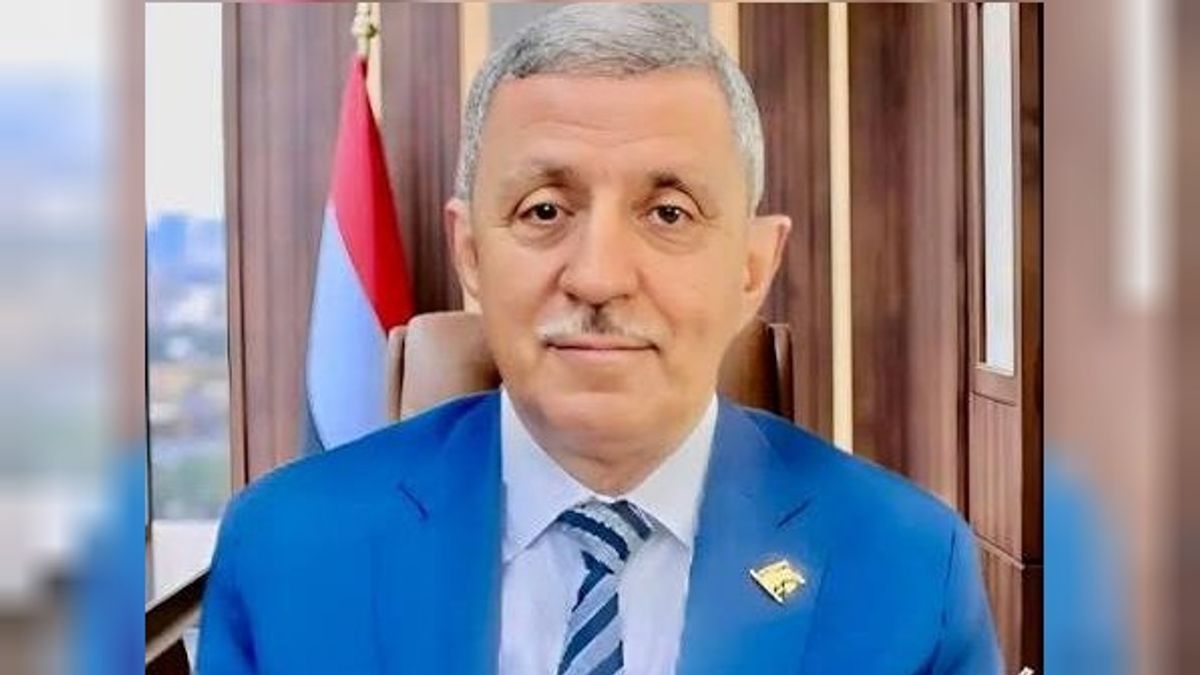
AIAbdullah Al-Daees, Yemen’s ambassador to Lebanon and Cyprus, has revealed the existence of a Houthi office in Beirut’s southern suburbs, saying it is used for coordination and preparing media content broadcast by Al-Masirah TV. He called on Lebanese authorities to take measures to prevent their territory, documents, or networks from being used to facilitate activities by individuals supporting the group.
In comments to Al Arabiya.net and Al Hadath.net, Al-Daees stressed that “Lebanon’s sovereignty is a shared Arab interest,” adding: “We only ask the Lebanese government to uphold its stated positions and to prevent any Lebanese individuals or groups from interfering in Yemeni affairs or using Lebanese territory as a base for activities that threaten Yemen’s security and stability.”
His remarks came after Lebanese Prime Minister Nawaf Salam condemned any Lebanese groups interfering in the internal affairs of Arab countries, especially Yemen, following Yemeni Interior Minister Maj. Gen. Ibrahim Haidan’s confirmation of Hezbollah members’ involvement in supporting and training Houthi militias.
Al-Daees praised Salam’s stance against dragging Lebanon into new conflicts, saying, “The Lebanese prime minister’s position, rejecting efforts to drag Lebanon into another war and affirming that decisions of war and peace must remain solely with the state, reflects a responsible approach.”
The Yemeni ambassador expressed hope that “this approach will translate into practical steps to protect Lebanon’s sovereignty and prevent its territory, documents, or networks from being used to facilitate activities by those supporting the Houthi militia.” He emphasized that “Yemen-Lebanon relations are far greater than to be defined by the actions of armed groups or cross-border regional projects.”
Regarding Hezbollah’s military role in Yemen, Al-Daees said the Yemeni Interior Ministry’s disclosure of 21 experts from Iran’s Islamic Revolutionary Guard Corps and Hezbollah working with the Houthis was not a surprise, but rather official confirmation of information that has emerged over years about Iranian intervention and Hezbollah’s role in developing the Houthis’ military and operational capabilities.
He said, “Hezbollah’s activities in Yemen show that this is not just a training mission or a group of technical advisers, but a fully integrated military structure involved in planning, managing operations, and building the militia’s combat capabilities—what the interior minister described as akin to a complete general staff.”
Yemeni Interior Minister Ibrahim Haidan had revealed the presence of seven Hezbollah and 14 IRGC experts working with the Houthis, managing the group’s operations and supporting them under the leadership of a military figure who appears as a ‘state ambassador.’
According to the Yemeni Interior Ministry, Hezbollah’s alleged tasks include managing operations, command and control, developing ballistic missiles and drones, surveillance, communications and electronic warfare systems, securing supply networks, smuggling military components, coordinating maritime operations, developing explosive boats and unmanned submarines, and identifying targets for commercial vessels in the Red Sea.
Al-Daees cited Hezbollah’s role in Yemen by referencing the admission of the group’s deputy secretary-general, Naim Qassem, regarding the presence of military commander Haitham Al-Tabtabai in Yemen from 2015 to 2024, and his involvement in preparing and training the Houthis.
The Yemeni ambassador said, “Hezbollah’s presence in Yemen has never been limited to providing expertise and training, but has extended to direct participation in building the Houthis’ military capabilities and managing their operations. Nothing demonstrates this more than Naim Qassem’s acknowledgment of the presence of one of the group’s military leaders, Haitham Al-Tabtabai, in Yemen from 2015 to 2024, and his role in preparing and training the Houthis.”
Al-Daees linked the arrival of Hezbollah members in Yemen to networks established by Iran over the years to connect its regional proxies, explaining that these networks use multiple official and unofficial routes, various documents and identities, as well as maritime and land smuggling networks.
He said, “This issue requires close security monitoring to uncover the routes used by these individuals and the entities facilitating their movement.”
The Yemeni ambassador argued that “Hezbollah’s denial of responsibility does not change the reality of interventions that have strengthened the militia’s military capabilities and prolonged the war, at the expense of Yemeni lives and the country’s future.”
Hezbollah, for its part, has denied the allegations of its involvement in supporting the Houthis in Yemen.