

Iran faces dilemma in Hormuz Strait as Gulf oil flows, economy falters
Iran’s leverage over the Strait of Hormuz is waning as Gulf oil exports continue and economic pressures mount, according to a Wall Street Journal analysis.
Key Takeaways
AITime is running out for Iran in its standoff over the Strait of Hormuz, as its ability to use the vital oil passage as effective leverage has diminished, while the economic toll of the blockade is rising, according to an analysis published by The Wall Street Journal.
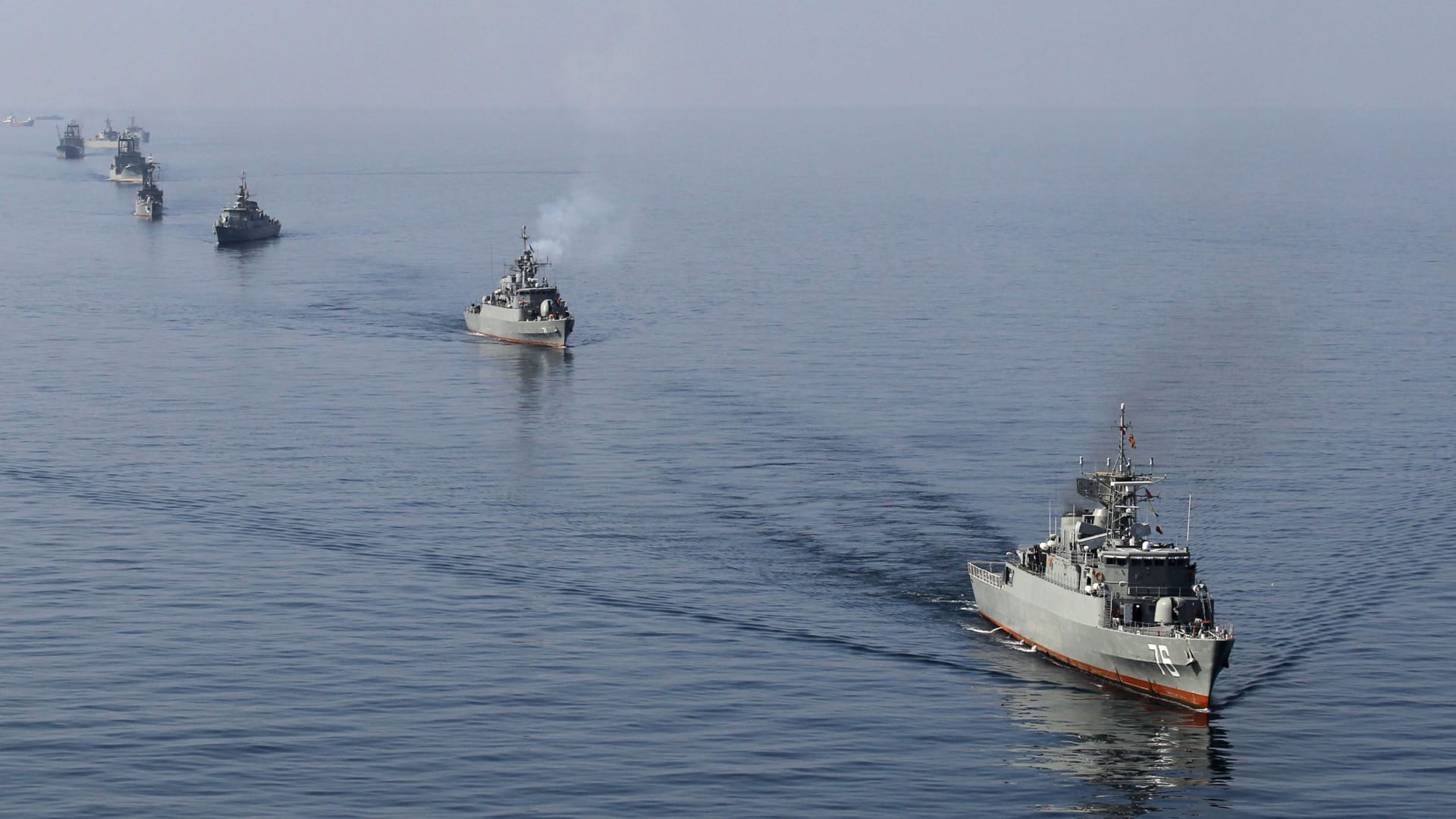
The newspaper reports that when Tehran moved to close the Strait of Hormuz six months ago, it gambled on its capacity to disrupt one of the world’s most important oil routes, which once carried about a fifth of global crude supplies. Iran hoped this would trigger an international economic crisis and force US President Donald Trump to end the conflict on its terms.
However, these expectations have not materialized. Since July, the US naval blockade has prevented Iran from exporting oil through the Gulf, while Washington has helped Gulf Arab states continue shipping large volumes of their oil through the strait, despite Iranian attacks using missiles and drones.
According to TankerTrackers, around 5 million barrels of crude oil—mostly from countries other than Iran—passed through the Strait of Hormuz daily over the past 28 days, in addition to about 2.5 million barrels shipped via ports on the Gulf of Oman. These volumes represent more than 40% of the oil flows that transited the region before the conflict.
Samir Madani, co-founder of TankerTrackers, said, “The Iranian blockade is more porous than the American one,” adding that the Iranians “are unable to completely close the strait.”
The Wall Street Journal notes that the continued flow of Gulf oil highlights Iran’s declining ability to use the Strait of Hormuz to choke off its neighbors’ exports, even as it persists in targeting vessels.
Meanwhile, economic pressures inside Iran are mounting, with trade falling by 25 to 35 percent, the rial losing value, inflation rising, and fuel shortages becoming more widespread.
Iranian officials had estimated at the start of the US blockade that the country could withstand about five months without catastrophic economic consequences—a period that is now nearly over.
Despite these pressures, the economic crisis has not yet sparked a popular uprising against the regime. Iran’s leadership now faces two choices: back down and reopen the strait, sacrificing its main bargaining chip, or escalate militarily in an attempt to break the blockade.
Vali Nasr, professor of Middle East Studies at Johns Hopkins University, said escalation may be the more likely option, as Tehran could believe that increasing military pressure would allow it to return to negotiations from a stronger position and make fewer concessions.
However, continued escalation carries significant risks for Iran, especially as its economic strength erodes and its leverage over the Strait of Hormuz weakens.
According to the newspaper, the question is no longer just whether Iran can use the strait to pressure its rivals, but also how long it can bear the cost of keeping it closed while Gulf oil continues to reach global markets.