

Yemen urges OIC to designate Houthis as terrorist group
Yemen has called on OIC member states to classify the Houthi militia as a terrorist organization and halt its funding and arms supplies.
Key Takeaways
AIThe Republic of Yemen has called on member states of the Organization of Islamic Cooperation to take a firm stance by designating the Houthi militia as a terrorist organization, drying up its sources of funding, and halting the flow of weapons and military expertise to it, in order to confront its ongoing terrorism that threatens the region’s security and stability.
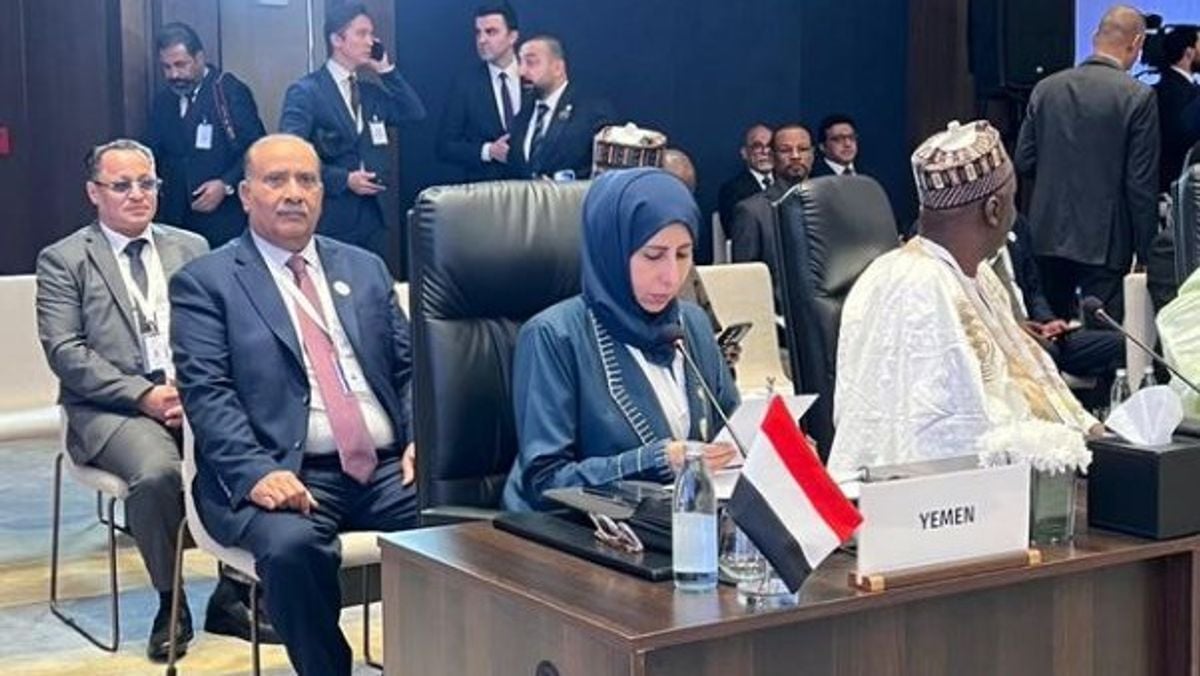
The call came in a speech delivered on Saturday by Yemen’s Minister of Foreign Affairs and Expatriates, Dr. Afrah Al-Zouba, during the 52nd session of the Council of Foreign Ministers of OIC member states, held in Baghdad, Iraq.
The Yemeni foreign minister stressed that the growing threats in the region require Islamic solidarity to move from a slogan to a unified stance and practical steps to protect the peoples and resources of member states. She warned of the dangers posed by the continued undermining of state institutions and the prolongation of the war by the Iran-backed Houthi terrorist militia.
She pointed out that the Houthi militia’s targeting of the presidential and government headquarters at Al-Maashiq Palace in the interim capital, Aden, with ballistic missiles, along with the sieges imposed on Taiz and Marib, reflect the criminal nature of the group. She said this compels the state to fulfill its constitutional responsibilities through the "Fajr Al-Yemen" operation announced by the Chairman of the Presidential Leadership Council, President Rashad Al-Alimi, to restore state institutions and reestablish authority across all Yemeni territory.
The foreign minister affirmed that the Yemeni government, which has upheld the option of peace for twelve years, will not accept peace being used as a cover to legitimize the coup and weapons outside the framework of the state. She emphasized that a just and lasting peace is based on respect for Yemen’s sovereignty, unity, and territorial integrity, the restoration of its institutions, and adherence to agreed comprehensive solution references, foremost among them UN Security Council Resolution 2216.
She noted that the ongoing war in Yemen cannot be separated from the military and technical support provided by Iran to the Houthi militia, which has prolonged the conflict and turned Yemeni territory into a platform threatening regional security. She said such interventions contradict the principles of good neighborliness and respect for the sovereignty of member states enshrined in the OIC Charter, and require a clear and responsible stance rejecting all interference that fuels the conflict.
The Yemeni foreign minister stated: "It is not acceptable for those who arm one side of the conflict and provide it with tools of death and destruction to offer mediation, then portray what is happening in Yemen as a dispute between two countries, when in reality it is an armed militia’s coup against a member state of this organization."
She added: "It is surprising that Iran calls for mediation while it has armed, trained, and sponsored the Houthi militia, ensuring its threats reach neighboring countries and international trade routes. Our Islamic world now clearly sees the contrast between Iran’s polished political rhetoric and its destructive actions, which aim to mislead the world about the nature of the war and falsely legitimize the coup."
Minister Al-Zouba strongly condemned the Houthi attacks targeting cities, airports, and civilian facilities in Saudi Arabia, as well as attempts to target Makkah and Madinah. She stressed that such attacks are unacceptable and cannot be justified by any political or military pretext, and that protecting the Two Holy Mosques is a shared Islamic responsibility.
The Yemeni foreign minister also stressed that safeguarding international shipping lanes in the Red Sea, Bab Al-Mandab, and the Gulf of Aden requires empowering Yemeni state institutions, especially the coast guard, to assert their authority. She warned of the dangers posed by cross-border cooperation between militias, terrorist groups, and smuggling networks.
On the Palestinian issue, the foreign minister reiterated Yemen’s steadfast support for the Palestinian people and their struggle to end the occupation and establish an independent state with East Jerusalem as its capital. She criticized the Houthi militia’s exploitation of Palestinian slogans to cover its own agenda and crimes, including targeting Makkah and Madinah.
Al-Zouba affirmed that Yemen’s position on Palestine—at the level of leadership, government, and people—is longstanding and deep-rooted, and cannot be hijacked by militias responsible for killing and displacing Yemenis.
View the post on X