

Stephen Miller named White House chief of staff as Trump reshapes team after Congress loss
Former policy adviser Stephen Miller appointed White House chief of staff by Donald Trump, replacing Susie Wiles after Republicans lost control of Congress.
Key Takeaways
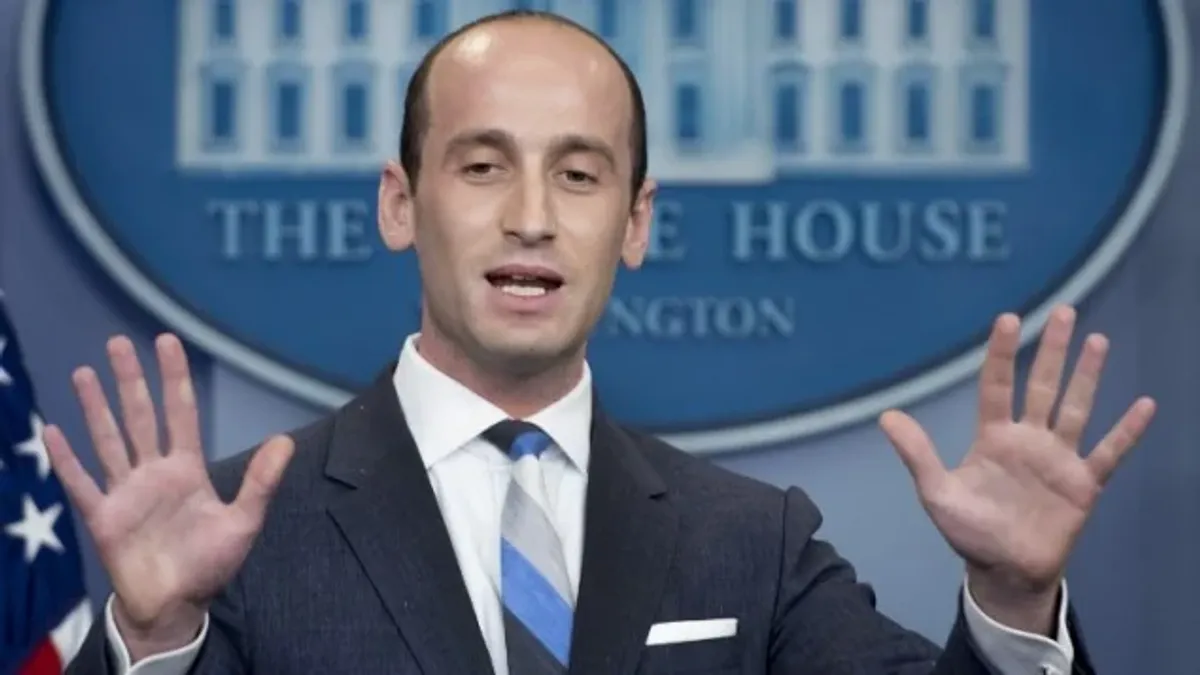
AIUS President Donald Trump has appointed his policy adviser and deputy chief of staff, Stephen Miller, as White House chief of staff, replacing Susie Wiles. The leadership shake-up comes after Republicans lost control of both chambers of Congress in the midterm elections.
Miller, 41, is one of Trump’s closest confidants and a principal architect of his policies, particularly on immigration, security, and border issues. He played a key role in translating the president’s agenda into executive actions and directives.
Miller began his political career after graduating from Duke University in 2007, working with several Republican lawmakers before joining the office of Republican Senator Jeff Sessions. There, he became known for opposing efforts to expand immigration pathways and grant citizenship to undocumented immigrants.
He joined Trump’s 2016 presidential campaign as a policy adviser and wrote several major speeches before becoming a senior White House adviser at the start of Trump’s first term in 2017.
During that period, Miller was a key architect of the Trump administration’s hardline immigration policies, including the travel ban on citizens from several countries, stricter border measures with Mexico, and the policy of separating migrant children from their parents at the border.
After leaving the White House in 2021, Miller founded America First Legal, an organization that mounted legal challenges against policies of the previous administration.
He returned to the White House at the start of Trump’s second term in January 2025 as deputy chief of staff for policy and homeland security adviser, according to The Washington Post.
Since his return, Miller’s influence has extended beyond immigration to security and foreign policy, including relations with Latin American countries. In February 2026, a PBS report highlighted his expanding responsibilities and influence across multiple areas, as well as his role in shaping the administration’s direction and implementing Trump’s political agenda.
His appointment as chief of staff marks a shift from policy oversight to coordinating between the president, senior officials, and government departments, as well as managing White House operations.