

Israeli forces resume 'Sufa 53' project near Golan demarcation line
Israeli forces have resumed excavation and fortification works for the 'Sufa 53' project near the Golan separation line, drawing mounting Syrian criticism.
Key Takeaways
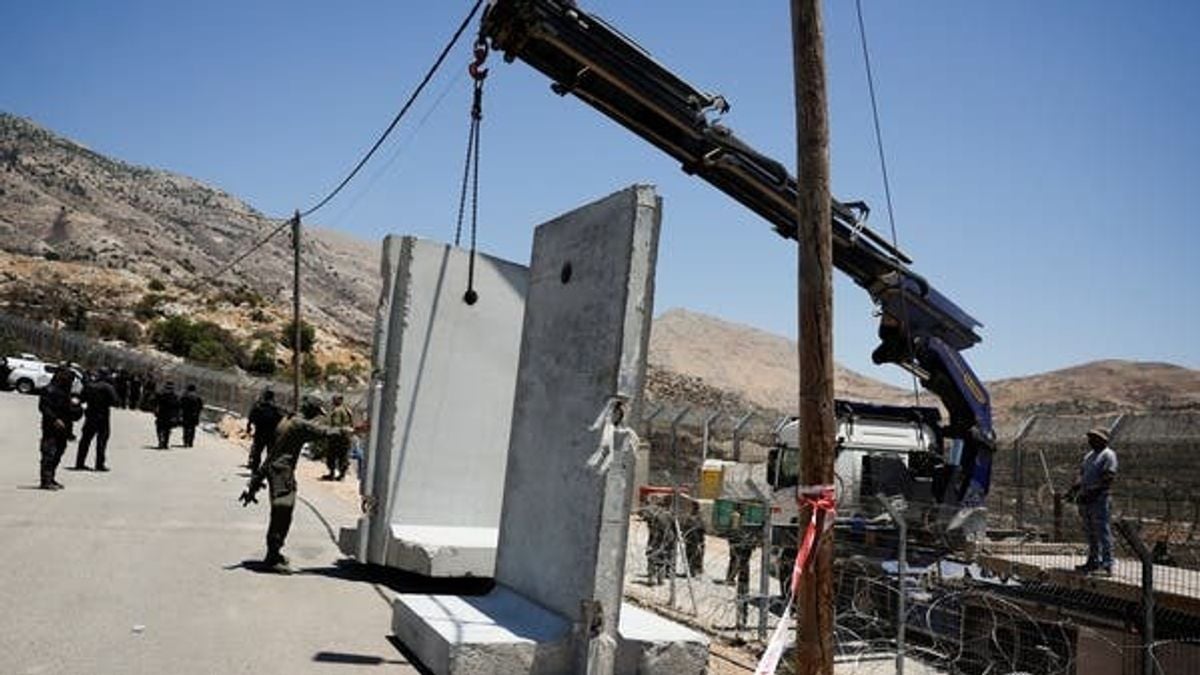
AIIsraeli forces resumed excavation and fortification works on Sunday as part of the 'Sufa 53' project in southern Quneitra province, near the separation line with the occupied Golan Heights, according to Syria's Al-Ikhbariya TV channel.
The channel reported that Israeli forces continued building a military road west of the village of Al-Asha, within the border area, as part of the project known as the 'Great Storm,' which runs along the separation line.
These activities coincide with ongoing Israeli military operations in southern Syria, where Syrian reports have documented incursions, land clearing, and the establishment of military sites in the Quneitra and Daraa countrysides.
Details of the 'Sufa 53' project
The 'Sufa 53' project, which began gradually in mid-2022 within the buffer zone, includes the construction of an approximately 8-meter-wide military road, earth berms up to 5 meters high, as well as trenches and observation posts along the Golan Heights. The project extends from the outskirts of Hadar in northern Quneitra to the southern border triangle, passing through several towns including Jabata al-Khashab, Al-Hamidiyah, Al-Qahtaniyah, Ruwayhina, Beer Ajam, and Buraykah, according to the Syrian 'Sijil' center, which monitors Israeli operations.
The center noted that Israel considers the project part of its security arrangements, while observers say the ongoing engineering works are creating new realities on the ground within the buffer zone.
Syrian criticism and Israeli moves
Israel says these measures are for security reasons and to prevent potential threats along its borders, while Damascus regards the continued implementation of the project as a violation of Syrian sovereignty and the 1974 disengagement agreement.
Israeli incursions into the buffer zone have been recorded at distances ranging from 300 to 1,000 meters, with large areas of farmland seized, including about 7,000 dunams in Jabata al-Khashab, according to local sources.
Reports indicate that the project’s works extend southward to areas near the Syrian-Jordanian border and the Yarmouk basin, reflecting the expanding scope of the military project.
Background on international agreements and positions
The Israeli newspaper Yedioth Ahronoth described the project as a "major engineering effort to fortify the border," involving deep trenches and defensive berms.
Syrian Foreign Minister Assad Al-Shibani stated that Damascus recorded 65 Israeli incursions in July and 52 in the first 18 days of August, emphasizing the growing Syrian criticism of these actions.
The disengagement agreement signed on May 31, 1974, stipulated the separation of Syrian and Israeli forces and the creation of a buffer zone monitored by the United Nations Disengagement Observer Force (UNDOF), which oversees the ceasefire and implementation of the agreement.