

Saudi deputy foreign minister attends Non-Aligned Movement 65th anniversary meeting in Serbia
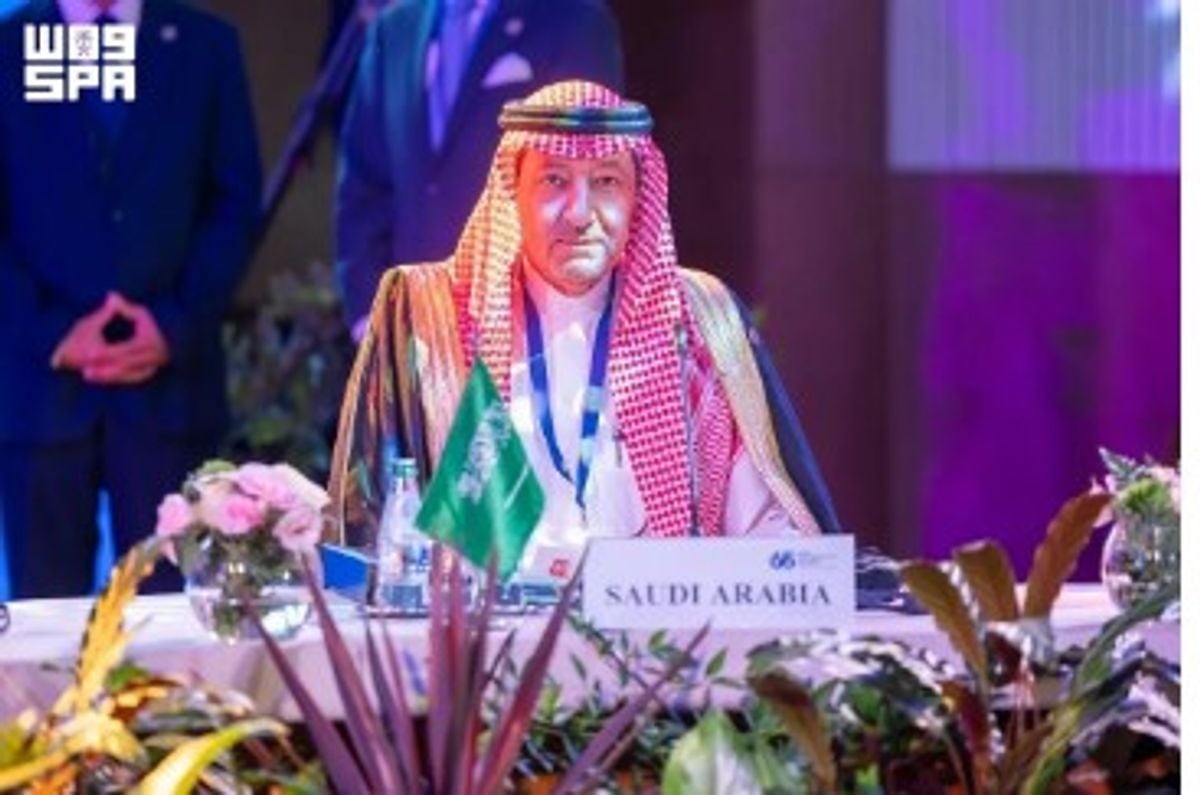
Deputy Foreign Minister Waleed Al-Khuraiji represented Saudi Arabia at the high-level meeting marking the 65th anniversary of the Non-Aligned Movement in Serbia.
Key Takeaways
AIOn behalf of Crown Prince and Prime Minister Mohammed bin Salman, Deputy Foreign Minister Waleed bin Abdulkarim Al-Khuraiji participated in the high-level meeting marking the 65th anniversary of the first Non-Aligned Movement conference, held in the Republic of Serbia.
In his address, Al-Khuraiji expressed Saudi Arabia’s appreciation to President Aleksandar Vučić and the Serbian government for their efforts in hosting the meeting at a time of mounting global challenges.
He stated that since contributing to the founding of the Non-Aligned Movement, Saudi Arabia has remained committed to its core principles, foremost among them the preservation of state sovereignty and independent national decision-making, and the rejection of force as a means to resolve disputes. These values are reflected in the Kingdom’s foreign policy, which prioritizes dialogue in managing international issues, expanding cooperative relations, and supporting efforts to reduce the risk of conflict and promote international peace and security.
Al-Khuraiji affirmed that Saudi Arabia values the Movement’s principles and objectives as a crucial foundation for joint international action, and recognized its responsible role in supporting just causes—especially its steadfast position on the Palestinian issue and its commitment to the security and stability of the Middle East.
He stressed the importance of continued coordination through the United Nations and the Non-Aligned Movement to uphold the priority of peaceful political solutions and reinforce adherence to international law in the face of coercive and escalatory policies. This includes ensuring freedom of navigation in international waterways, as recently emphasized by UN Security Council Resolution 2817.
The deputy foreign minister noted that the absence of political solutions is most evident in the Middle East, particularly due to ongoing crimes committed by the Israeli occupation in Gaza and other occupied Palestinian territories, as well as attacks on Syrian territory—actions that constitute flagrant violations of peoples’ rights and state sovereignty, and further destabilize the region.
He reiterated Saudi Arabia’s position that peace is the only path to lasting security for all countries and peoples of the region, and that this goal cannot be achieved without a swift, just, comprehensive, and final resolution to the Palestinian issue.
Al-Khuraiji stated: “The Kingdom’s regional efforts are based on the conviction that regional security is a shared responsibility, and its sustainability requires understandings that reduce the risk of confrontation and prevent disputes from escalating. For this reason, Saudi Arabia has worked to keep communication channels open, support initiatives that facilitate mediation and de-escalation, and encourage parties to address sources of tension before they develop into broader crises.”
He added that Saudi Arabia believes reducing tensions is not a temporary objective, but an opportunity for countries to redirect their priorities toward sustainable development and improving the lives of their people. Accordingly, the Kingdom calls on regional states to avoid policies that heighten tensions, to work toward building shared interests that make stability the foundation for development, and to provide broader opportunities for their peoples to achieve their aspirations.