

Makkah’s urban transformation: 8 million meters of roads, 294 parks boost city development
Makkah is undergoing rapid urban development focused on infrastructure upgrades and quality of life, while preserving its unique historical and religious identity.
Key Takeaways
AIMakkah continues its journey of urban and architectural transformation, aiming to enhance quality of life and upgrade infrastructure, while improving the efficiency of public services and facilities and preserving its historical and religious identity. These efforts align with the goals of Saudi Vision 2030 to build more sustainable and prosperous cities.
This transformation is reflected in major development projects, the expansion of road and transport networks, improvements to the urban landscape, and the increase of green spaces. Modern technologies and smart solutions are also being utilized to manage the city and boost the efficiency of municipal services.
Makkah’s unique urban character is shaped by its geography, mountainous terrain, and high population movement, especially during Hajj, Umrah, and Ramadan. Urban planning therefore focuses on crowd management, facilitating mobility, enhancing safety, and strengthening infrastructure.
The Royal Commission for Makkah City and Holy Sites plays a central role in setting strategic directions for urban development, coordinating programs and projects to improve the urban environment, enhance infrastructure, and elevate the experience of residents and visitors.
The Makkah Municipality continues to improve the urban landscape through tree planting and beautification projects, upgrading roads and sidewalks, developing parks and recreational facilities, and enhancing cleanliness and environmental health. Efforts also include improving road networks, lighting, bridges, and tunnels.
The municipality reported that Makkah’s road network extends 8,041,454 linear meters, with an additional 595,411 meters in the holy sites. The lighting system includes about 145,000 towers and poles in Makkah and 5,000 in the holy sites.
In terms of mobility, the municipality noted that Makkah has 211 bridges, 62 tunnels for pedestrians and vehicles, and 20 pedestrian bridges, all contributing to better connectivity between neighborhoods, smoother traffic flow, and improved access to key locations.
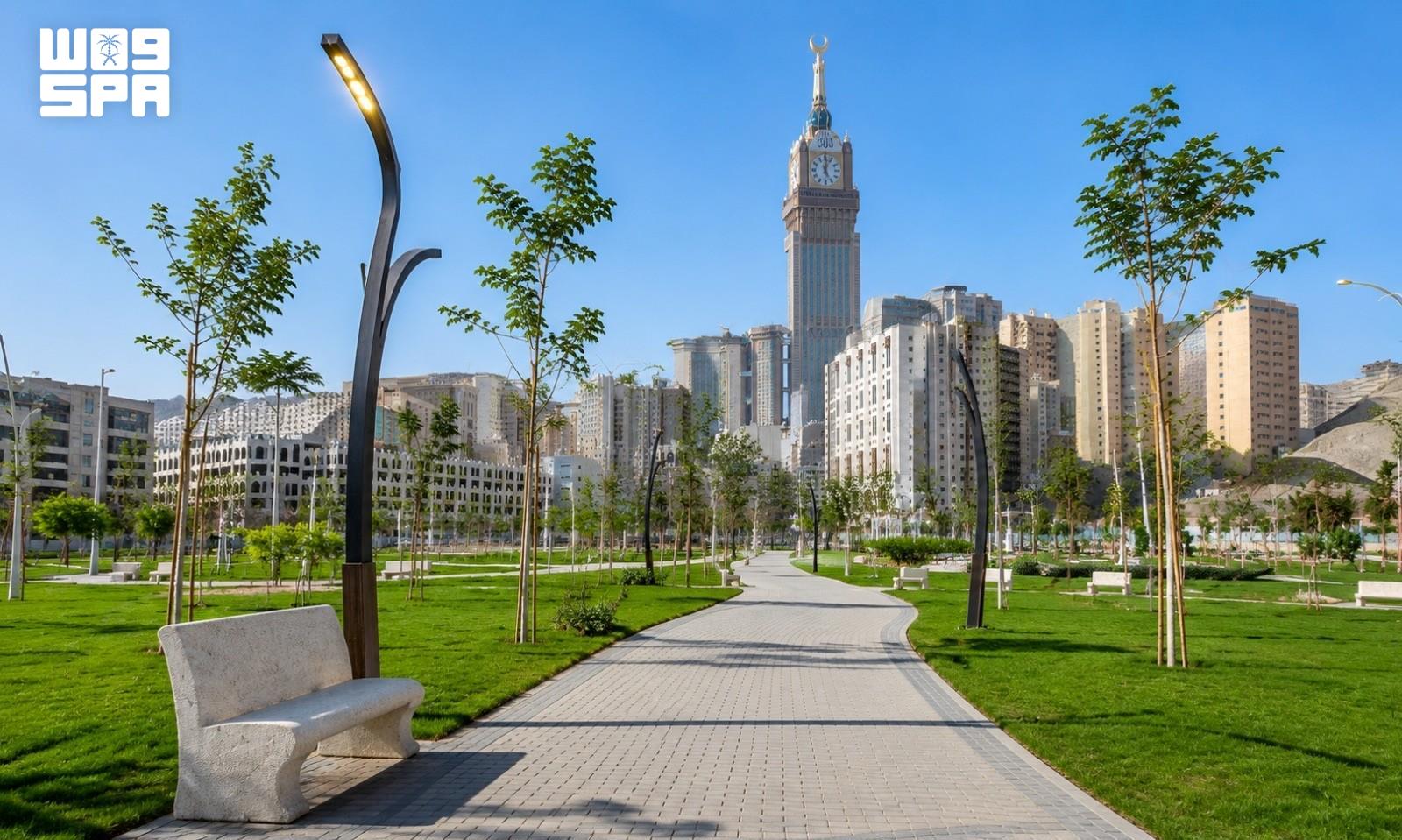
Makkah is also home to 294 public parks, as well as public squares, playgrounds, and recreational facilities. The total area of parks, squares, and playgrounds reaches 2,039,993 square meters, supporting efforts to expand green spaces and provide urban breathing spaces.
The municipality emphasized that expanding parks, developing public facilities, and increasing greenery are top priorities to promote environmental sustainability, improve the urban environment, and provide comprehensive green spaces that meet the needs of residents and visitors.
Technological and digital projects are also prominent, with the use of artificial intelligence applications, data analysis, the Internet of Things, and smart solutions in facility and service management, supporting the shift toward a smart city that relies on innovation to manage its resources.
Preserving Makkah’s historical and cultural heritage remains a key part of urban development. Historic sites, landmarks, and old markets are integral to the city’s identity, and efforts are underway to develop their surroundings to balance modernization with heritage preservation.
Urban planning in Makkah aims to create a comprehensive environment that puts people first, encourages community participation, stimulates investment, and supports economic, tourism, and cultural activities, strengthening the city’s position in facing future changes.