

GCC prioritizes strengthening ties with Russia, says secretary-general
GCC Secretary-General Jasem Albudaiwi says Gulf states are committed to deepening cooperation with Russia amid regional security challenges.
Key Takeaways
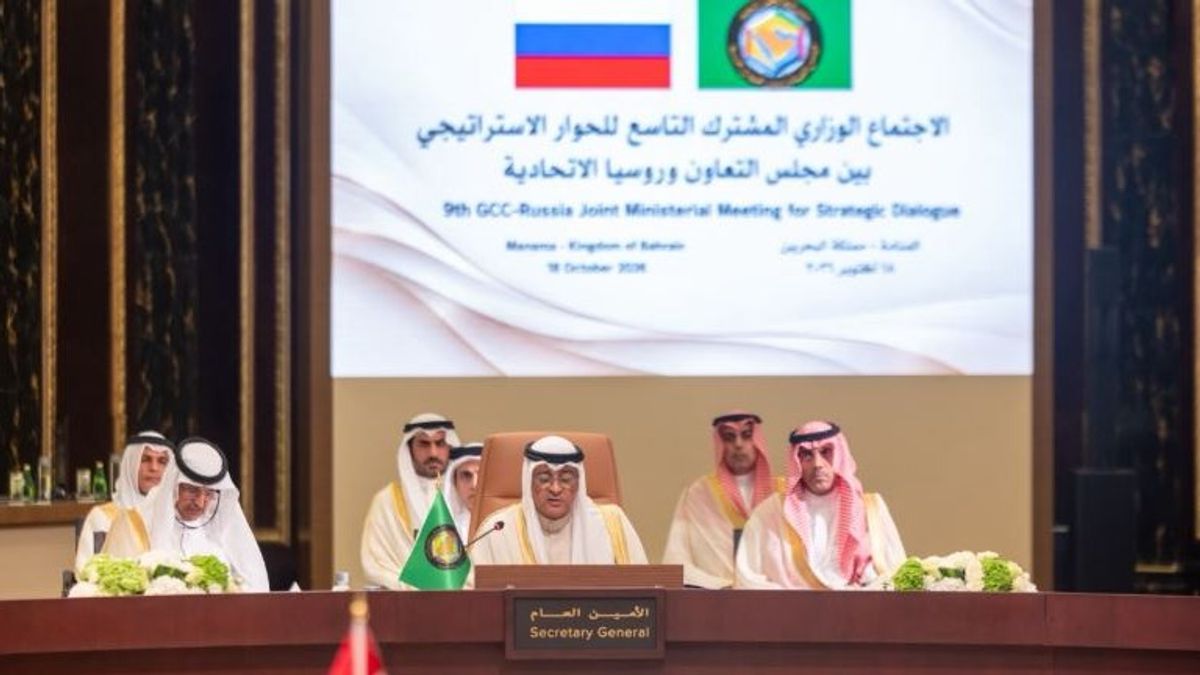
AIJasem Mohammed Albudaiwi, Secretary-General of the Gulf Cooperation Council, said that GCC states attach special importance to strengthening relations with the Russian Federation, based on shared interests and a mutual desire to enhance cooperation and coordination, opening broader horizons for Gulf-Russian partnership.
He made these remarks during the ninth joint ministerial meeting for strategic dialogue between the GCC and Russia, held on Sunday in Manama, Bahrain. The meeting was chaired by Dr. Abdullatif bin Rashid Al Zayani, Bahrain’s Minister of Foreign Affairs and current chair of the GCC Ministerial Council, and attended by the foreign ministers of GCC countries and Russian Foreign Minister Sergey Lavrov.
In his speech, the secretary-general said the joint ministerial meeting comes at a highly sensitive time for the region, as GCC states face unprecedented attacks threatening their security and sovereignty, and maritime navigation and energy supplies are under direct threat. This, he stressed, increases the importance of strategic dialogue and intensified consultation between the GCC and Russia on regional and international issues of mutual concern, to help consolidate security and stability and resolve disputes peacefully in line with the UN Charter and international law. He highlighted that among the most serious challenges facing the region are Iranian attacks on GCC states since February 28, 2026, involving over 7,000 ballistic missiles and drones targeting airports, ports, power and desalination plants, and oil and gas facilities, resulting in civilian casualties. He noted that the GCC was not a party to this conflict and has worked to spare the region its consequences, despite blatant attacks and violations of sovereignty. These attacks, he added, were not limited to direct Iranian strikes but also included assaults by the Houthi militia, which escalated attacks on Saudi Arabia, targeting airports, civilian sites, and energy facilities. Among them was the recent attack on King Khalid International Airport in Riyadh on October 10, which killed 12 people—citizens and residents of various nationalities—and injured more than 300, in a flagrant violation of international and humanitarian law.
The secretary-general reiterated the GCC’s unified support for Saudi Arabia, expressing full solidarity and backing for all measures taken to protect its security, sovereignty, and the safety of its citizens and residents. He called on the international community to take a firm stance against attacks targeting the Kingdom’s security and stability, to condemn these threats to regional peace and security, and to enforce relevant UN Security Council resolutions, especially Resolution 2722.
Albudaiwi also noted that Iran’s disruption of navigation in the Strait of Hormuz—which carries about one-fifth of global oil consumption—and its attempts to impose restrictions and fees on transit, along with its proxies’ threats to navigation in Bab Al-Mandab and the Red Sea, constitute violations of international rules governing navigation in international straits and pose threats to energy security, food security, and global supply chains.
The GCC stressed the need to restore navigation in the Strait of Hormuz to pre-February 28, 2026 levels, and the importance of fully implementing Security Council Resolution 2817 (2026), which strongly condemned Iranian attacks on GCC states and Jordan and called for their immediate cessation.
Albudaiwi added that the GCC looks to Russia, as a permanent member of the Security Council, to play an active role in urging Iran to comply with Resolution 2817 (2026), halt its attacks, respect freedom of navigation, and engage in serious dialogue with GCC states based on good neighborliness, respect for sovereignty, and non-interference in internal affairs.
He also emphasized that the Palestinian issue remains a top priority for the GCC, reaffirming the Council’s steadfast support for the legitimate rights of the Palestinian people, foremost among them the establishment of an independent state along the June 4, 1967 borders with East Jerusalem as its capital, in accordance with international resolutions and the Arab Peace Initiative.
The secretary-general praised Russia’s consistent support for the establishment of an independent Palestinian state and its recognition since 1988. He reiterated the GCC’s support for a sustained ceasefire in Gaza, implementation of the next phase to ensure full Israeli withdrawal, unimpeded delivery of humanitarian aid, the start of recovery and reconstruction, unification of Gaza and the West Bank under the Palestinian Authority, rejection of any attempts at displacement or altering Jerusalem’s legal and historical status, and continued support for UNRWA’s mission.
On Syria, Albudaiwi reaffirmed the GCC’s unwavering support for the sovereignty, independence, and territorial integrity of the Syrian Arab Republic, and the importance of supporting efforts to enhance its security and stability and fulfill the aspirations of the Syrian people for security, development, and prosperity, contributing to regional stability.
Regarding the Russia-Ukraine crisis, Albudaiwi said the GCC reiterates the importance of prioritizing dialogue and diplomacy to resolve the crisis, and supports all efforts to reach a comprehensive, peaceful political solution in accordance with international law and the UN Charter, to achieve security and stability.
He also highlighted the GCC’s pride in its tangible contributions to alleviating the humanitarian impact of the crisis, including the UAE’s mediation that led to the exchange of thousands of prisoners, Saudi Arabia’s hosting of talks in Jeddah and Riyadh, and Qatar’s mediation that reunited more than 100 children with their families—efforts that reflect the GCC’s consistent approach to supporting peaceful initiatives and building trust.
Albudaiwi expressed hope for continued development of Gulf-Russian cooperation in political, commercial, cultural, educational, agricultural, health, energy, and other fields, within the framework of the 2023-2028 joint action plan, to serve mutual interests and support development and prosperity for both sides. He noted that a technical meeting between specialists from both sides was planned in Moscow to discuss cooperation priorities and initiatives, but recent regional events prevented it from taking place as scheduled. Coordination will resume to hold the meeting in line with agreed areas of cooperation.
The secretary-general expressed hope that the ninth joint ministerial meeting for strategic dialogue between the GCC and Russia would be an opportunity to deepen political and security consultation and enhance coordination and cooperation, contributing to security, peace, development, and stability in the region and the world.
View the post on X