

Weqaa launches awareness campaign to promote integrated pest management
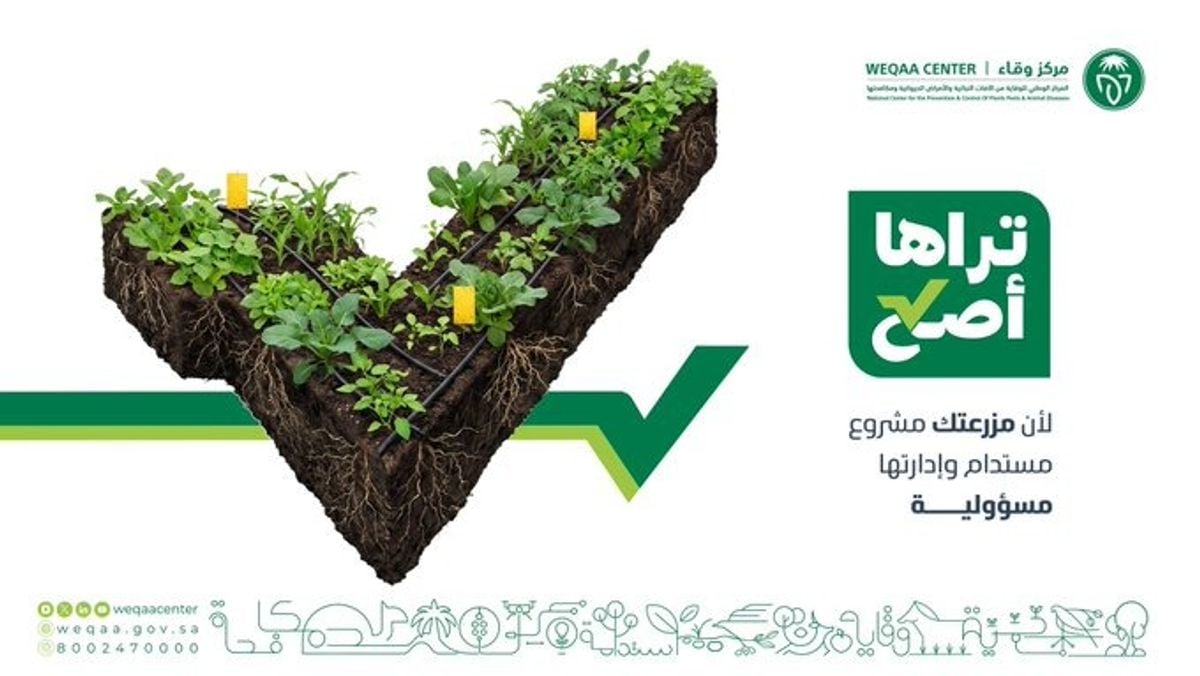
Saudi Arabia’s National Center for Plant Pest and Animal Disease Control has launched the 'Taraaha Asah' campaign to promote sustainable farming practices.
Key Takeaways
AIThe National Center for Plant Pest and Animal Disease Control (Weqaa) has launched an awareness campaign titled "Taraaha Asah" to raise awareness of integrated pest management among farmers and the wider community, and to promote effective agricultural practices in dealing with plant pests.
The campaign aims to protect crops, improve production quality, and support the sustainability of the agricultural sector, while also reducing improper practices. Its messages are directed at farmers, sector workers, partners, relevant authorities, and the general public.
The campaign highlights the importance of integrated pest management through educational messages focusing on early monitoring, identifying signs of infestation, accurate diagnosis, seeking technical advice, and choosing the appropriate action based on the condition of the crop and the pest before deciding on control measures.
Diverse awareness and field activities
The campaign features a range of media and educational materials, including visual and audio content, digital and press materials, as well as simplified messages and field activities. These are designed to make information more accessible to farmers and field workers, and to enhance practical understanding of integrated pest management.
The campaign also emphasizes that pest management is not limited to chemical control, but starts with visual inspection, regular monitoring, and accurate pest identification, while considering factors such as optimal planting times and continuous plant observation.
View the post on X
Through the campaign, Weqaa stresses that every decision on the farm directly affects crop yield and food security. The best decisions are based on accurate information, inspection, and consultation, followed by selecting the most suitable action. The campaign focuses on integrated pest management as a sustainable approach that combines agricultural, biological, and mechanical methods to keep pest populations below economic damage thresholds, and to reduce reliance on chemical pesticides for the health of people and the environment.