

Saudi Arabia urges action on biodiversity pledges at Yerevan summit
At the Yerevan biodiversity summit, Saudi Arabia called for turning environmental commitments into tangible action and highlighted its national achievements.
Key Takeaways
AISaudi Arabia has emphasized the need to strengthen international cooperation and accelerate the implementation of global biodiversity goals by turning environmental commitments into concrete decisions, investments, and partnerships that deliver real results. The Kingdom stressed that protecting nature is an investment in national stability, food and water security, and sustainable development.
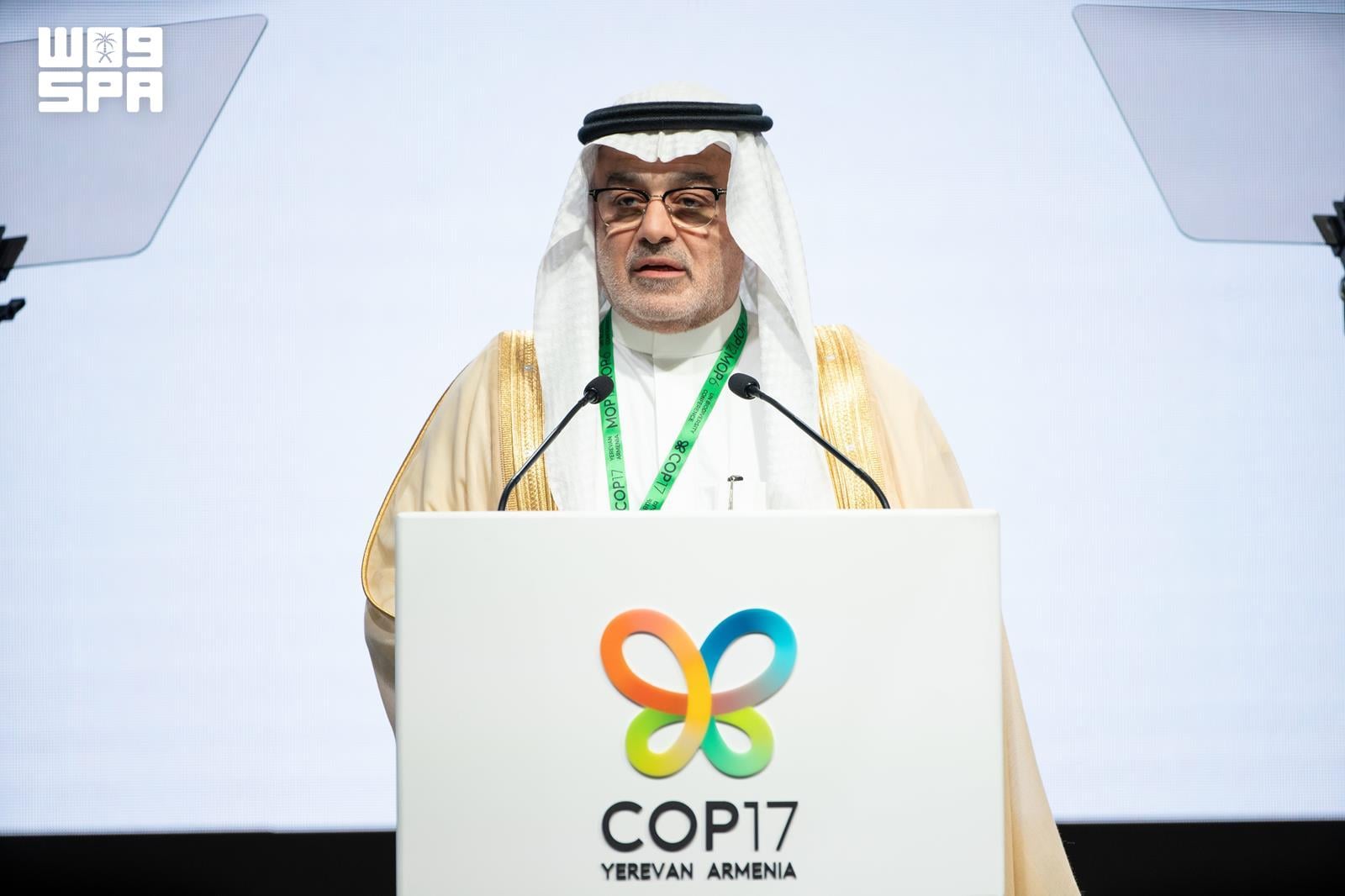
This message was delivered by Dr. Mohammed bin Ali Qurban, CEO of the National Center for Wildlife and head of the Saudi delegation, during the Leaders' Biodiversity Summit held in Yerevan, Armenia, as part of the 17th Conference of the Parties to the UN Convention on Biological Diversity (COP17), which will hold its official meetings from October 19 to 30, 2026.
Dr. Qurban noted that under the leadership of King Salman bin Abdulaziz and Crown Prince Mohammed bin Salman, Saudi Arabia attaches great importance to biodiversity conservation, guided by Vision 2030, which integrates environmental sustainability into national planning and strengthens the protection of natural resources.
He highlighted that the Kingdom has adopted a comprehensive national biodiversity framework aligned with the Kunming-Montreal Global Biodiversity Framework, featuring 22 national targets that set priorities for environmental action and guide efforts toward achieving both national and international objectives.
Saudi Arabia's environmental achievements
Dr. Qurban outlined the Kingdom's achievements, noting that protected areas now cover 18.3% of Saudi Arabia's land and 16.2% of its marine territory, as part of efforts to protect 30% of terrestrial and marine areas by 2030.
In ecosystem restoration, Saudi Arabia has rehabilitated over one million hectares of degraded land and planted more than 159 million trees, working toward a goal of restoring 40 million hectares.
The Kingdom has also released more than 10,000 wild animals into their natural habitats to support endangered species and restore ecological balance.
In waste management, Saudi Arabia established the National Center for Waste Management and organized the sector to support the transition to a circular economy, promote recycling, and reduce pollution.
For marine biodiversity, the General Authority for the Conservation of Coral Reefs and Turtles in the Red Sea was established, focusing on protecting these species and their habitats, as well as rehabilitating coral reefs and turtle nesting sites.
Dr. Qurban also highlighted Saudi Arabia's support for international scientific cooperation through the Global Coral Research and Development Accelerator Platform, launched during the Kingdom's G20 presidency in 2020.
Call for accelerated implementation and international cooperation
Dr. Qurban stressed that achieving global biodiversity goals requires moving from commitments to implementation by strengthening international partnerships, sharing knowledge, and directing investments toward effective initiatives.
He concluded by emphasizing the importance of the Leaders' Biodiversity Summit outcomes in accelerating progress on global targets, expressing Saudi Arabia's hope that the "Yerevan Call to Action" will be a further step toward turning ambitions into practical measures. He reaffirmed the Kingdom's commitment to working with international partners to conserve biodiversity and ensure the sustainability of natural resources for future generations.
The 17th Conference of the Parties to the UN Convention on Biological Diversity will be held in Yerevan from October 19 to 30, 2026, with the participation of government representatives, international organizations, and scientific institutions.