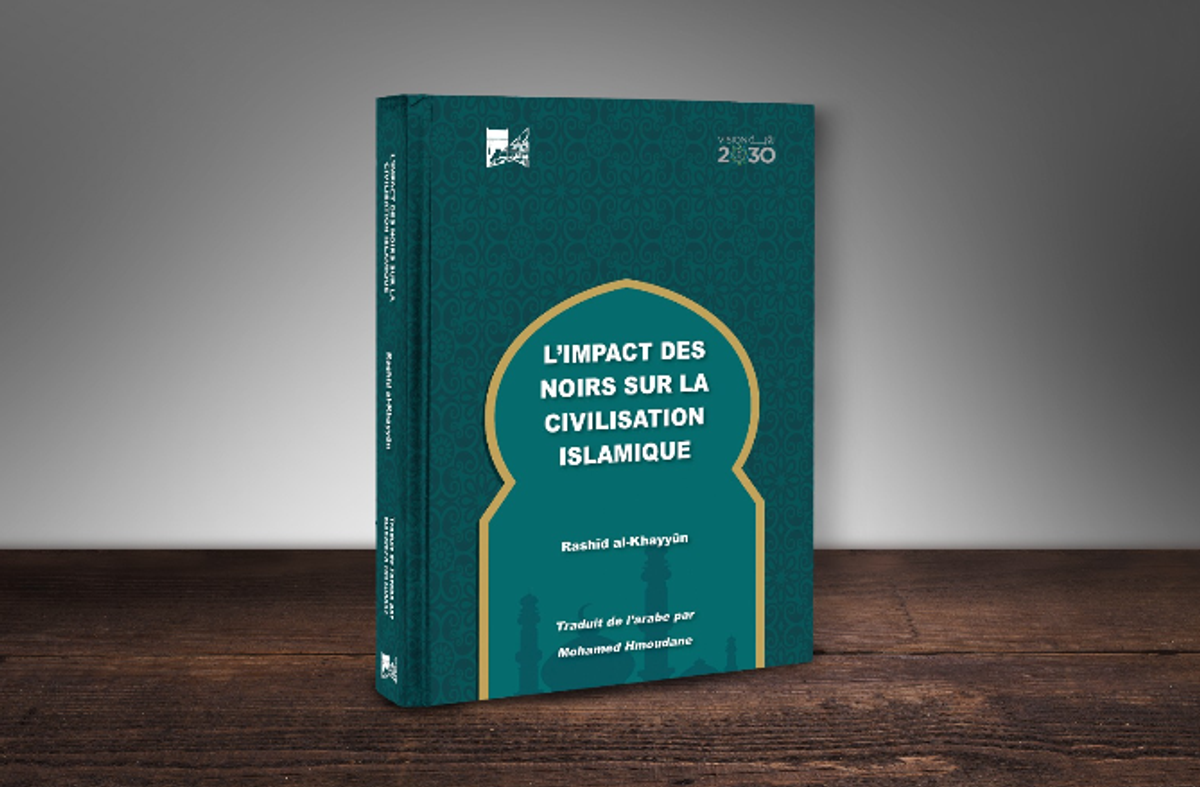

King Abdulaziz Public Library releases French edition on Black Muslims’ impact in Islamic civilization
The King Abdulaziz Public Library in Riyadh has published a French translation of Dr. Rashid Al-Khayoun’s book on Black Muslims’ contributions.
Key Takeaways
AIThe King Abdulaziz Public Library in Riyadh has published the French edition of Dr. Rashid Al-Khayoun’s book, “The Impact of Black People on Islamic Civilization.” The book features translations and profiles of Black Muslims across various Islamic eras who made significant contributions to the development of Islamic civilization in fields such as science, arts, literature, and culture. It focuses on the period from the early days of Islam up to the end of the Abbasid era in Baghdad (656 AH / 1258 CE), and includes an in-depth study of slavery in different civilizations, as well as detailed discussion of the end of slavery and the trade of both white and Black slaves in Europe and Islamic countries.
The French edition, spanning 403 pages, serves as a comprehensive documentation of the humanitarian roles played by Black people as active members of Islamic civilization. The book traces the sensitive relationship between skin color and slavery, particularly after the era of the Rightly Guided Caliphs.
Drawing from 210 historical and modern sources, the author documents the vital roles Black individuals played throughout different eras in all aspects of life, including science, literature, poetry, governance, and the arts.
The King Abdulaziz Public Library first published the book in Arabic in 2015, followed by an English translation released in November 2023.
Difference, not superiority:
The book discusses the concept of human diversity as described in the Qur’an, emphasizing that differences in skin color are a fact of human nature and do not imply superiority. Skin color is mentioned alongside language differences as signs of God, encouraging reflection and understanding.
The first part, titled “On Slavery and the Condition of Slaves,” contains four chapters. The first chapter reviews sources that discuss Black people, including both specialized and general references.
The second chapter examines the status of Black people and slavery before Islam, from the Babylonian era through ancient Roman and Greek civilizations, up to later European periods and the movements to abolish slavery and the slave trade. The third chapter focuses specifically on slavery and the treatment of Black people in Islam.
The fourth chapter covers revolts and social movements, such as the three Black uprisings in Basra, with the first and second occurring in the first Islamic century and the third in the mid-third century AH.
Notable Black figures:
The six chapters of the second part, titled “Notable Black Figures and Their Biographies,” form the core of the book, presenting the lives and achievements of prominent Black Muslims. Readers learn about the specific contributions of each figure, with biographies arranged chronologically.
In exploring the broader context of Black people in predominantly white societies, the author traces the historical development of these systems, including their relationship to both Black and white slaves. He highlights the significant role of Islamic teachings and laws, which advanced beyond other systems that sought to exploit slavery, except in the modern era.
Readers are introduced to a diverse array of influential and distinguished individuals, many of whom may not be widely recognized as Black, whose efforts were crucial in overcoming the stigma of slavery and difference to achieve high status.
Throughout the second part, the author documents numerous figures from the Prophetic and Rightly Guided Caliphate periods through to the Abbasid era. These include Usama ibn Zayd, Bilal ibn Rabah, Wahshi ibn Harb al-Habashi, Mihja’ the freedman of Umar ibn Al-Khattab, Shuqran al-Habashi, Mak’hul al-Shami, Sa’id ibn Jubayr, Abdullah ibn Khazim al-Sulami, and others. Among the poets featured are As-Salik ibn As-Salika, Khafaf ibn Nudbah, Abda ibn al-Tabib, Suhaym the servant of Banu al-Hassas, Nasib ibn Rabah, and more.