

Maysan tops Saudi Arabia’s cleanest air rankings for Q3 2026
Maysan in Makkah region ranked first for air quality in Saudi Arabia in Q3 2026, according to the National Center for Environmental Compliance.
Key Takeaways
AIMaysan in the Makkah region has topped the list of Saudi Arabia’s cleanest-air governorates for the third quarter of 2026, according to air quality assessments released by the National Center for Environmental Compliance.
Center spokesperson Saad Al-Mutrafi explained that the ranking was based on air quality measurements using the center’s approved standards, as well as benchmarks from the US Environmental Protection Agency and the Gulf Cooperation Council Secretariat General. This approach ensures air quality is evaluated in monitored areas using unified scientific and technical criteria.
Al-Mutrafi noted that Hail region had the strongest presence on the list, with four of its governorates among the top ten. The rankings were: Maysan first, Al-Ha'it in Hail second, Al-Shamasiya in Qassim third, Ranyah in Makkah fourth, Al-Sulaimi and Al-Shannan in Hail fifth and sixth, Sawir in Al-Jouf seventh, Al-Khabra in Qassim eighth, Al-Ajfar in Hail ninth, and Khaybar in Madinah tenth.
The center stated that Hail region secured four spots on the list, while Makkah and Qassim each had two, and Al-Jouf and Madinah had one each. The results provide key indicators for understanding air quality levels and their variation between governorates, supporting efforts to improve the environment and enhance quality of life.
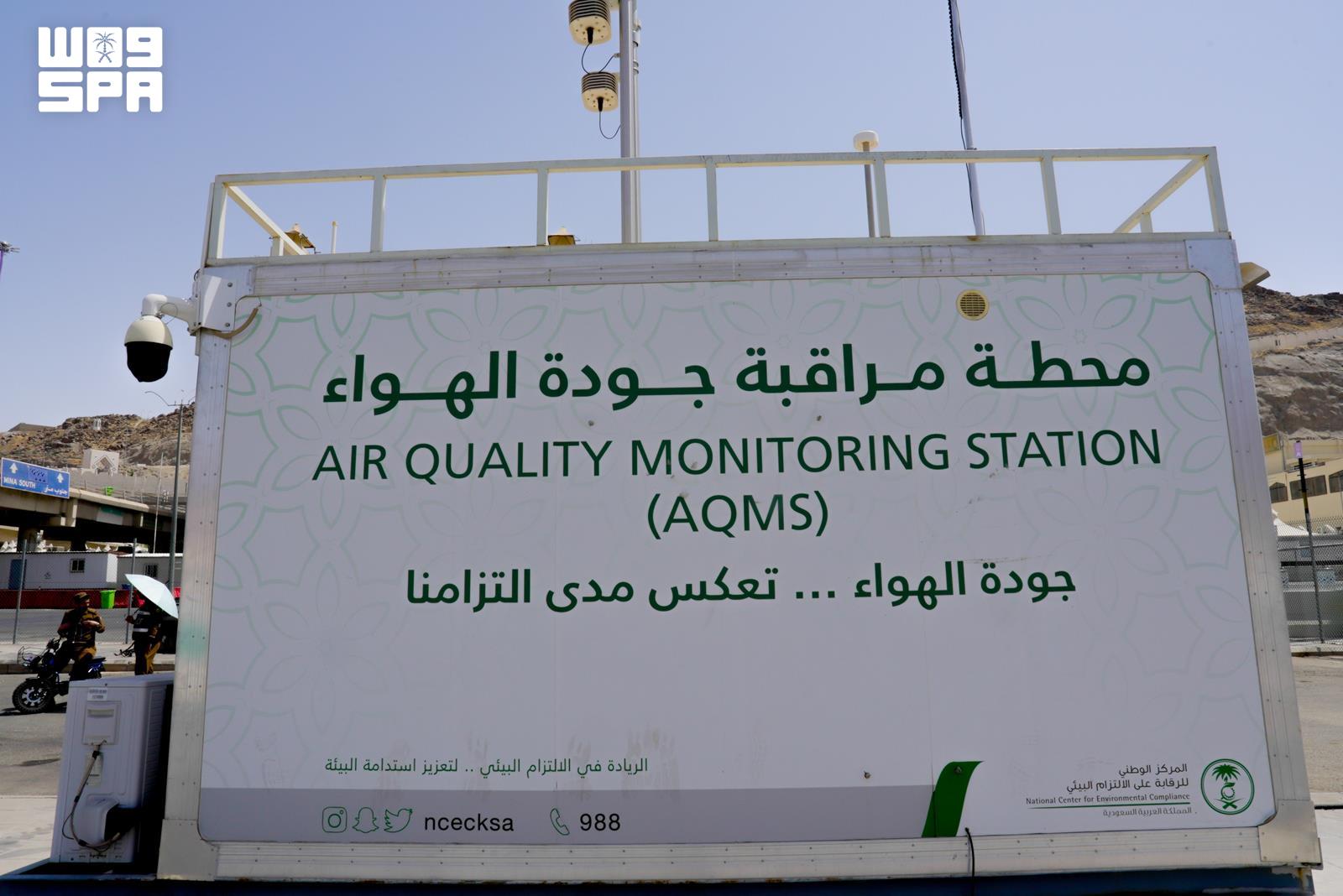
Dr. Mohammed Al-Daghriri, General Manager of Environmental Data Modeling and Analysis at the center, said the rankings are based on data from a national network of 241 air quality monitoring stations across Saudi cities. Measurements are transmitted automatically to central monitoring rooms and undergo technical analysis and review before results are approved.
Al-Daghriri added that the reliability of results depends on technical controls, including regularity of measurements, data accuracy and quality, operational readiness of stations, and low rates of technical malfunctions, with consideration for the geographic distribution of stations according to city size and urban density.
He noted that the number of monitoring stations varies by city characteristics, with some smaller cities having a single station, while major cities may have up to eight, enhancing geographic coverage and providing data to assess ambient air pollutant levels.
The National Center for Environmental Compliance stressed that air quality measurement results are a key tool for supporting regulatory and environmental decisions, by identifying pollutant levels and tracking changes, providing information needed to guide efforts to reduce pollution sources, protect public health, and improve quality of life across the Kingdom.