

Saudi coffee utensils highlight heritage and hospitality traditions
Traditional Saudi coffee tools remain central to local heritage, reflecting deep-rooted values of hospitality and generosity in Saudi society.
Key Takeaways
AISaudi coffee utensils are an integral part of local heritage, closely linked to every stage of coffee preparation and serving, and embodying the values of hospitality and generosity in Saudi society.
These tools include the mahmassa, used for roasting coffee beans over fire or embers and traditionally crafted from iron or copper, with designs varying by region. After roasting, the beans are cooled in the mabrada, often made from local wood, in preparation for grinding.
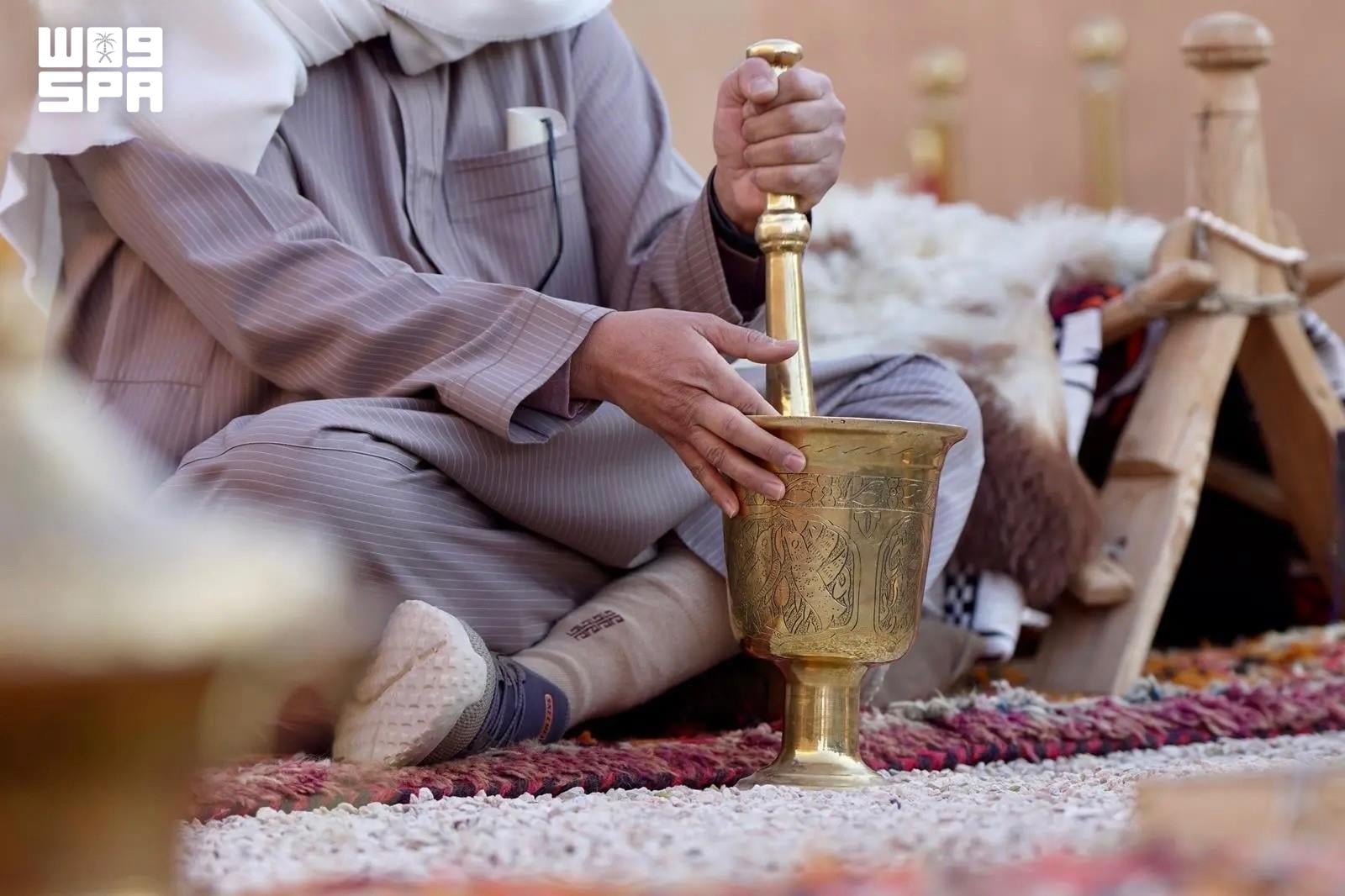
The najr is then used to pound and grind the roasted coffee beans along with other ingredients such as cardamom. The distinctive sound of pounding in the najr is associated with welcoming guests and announcing the presence of coffee in Saudi gatherings.
Dallah and finjan: Icons of Arab hospitality
The dallah is among the most prominent utensils tied to hospitality traditions, while the strainer is used to filter coffee from grounds and spices before serving. The shatt is used to store and carry the small coffee cups, combining practicality with the organized presentation of hospitality in gatherings.
These utensils remain present in Saudi gatherings today, reflecting the craftsmanship of artisans who create tools suited to daily needs from local materials, and carrying deep social and cultural significance rooted in hospitality and generosity.