
Falcon farms auction workshop highlights anti-doping regulations
A workshop at the International Auction for Falcon Production Farms 2026 reviewed anti-doping rules and the most commonly detected banned substances.
Key Takeaways
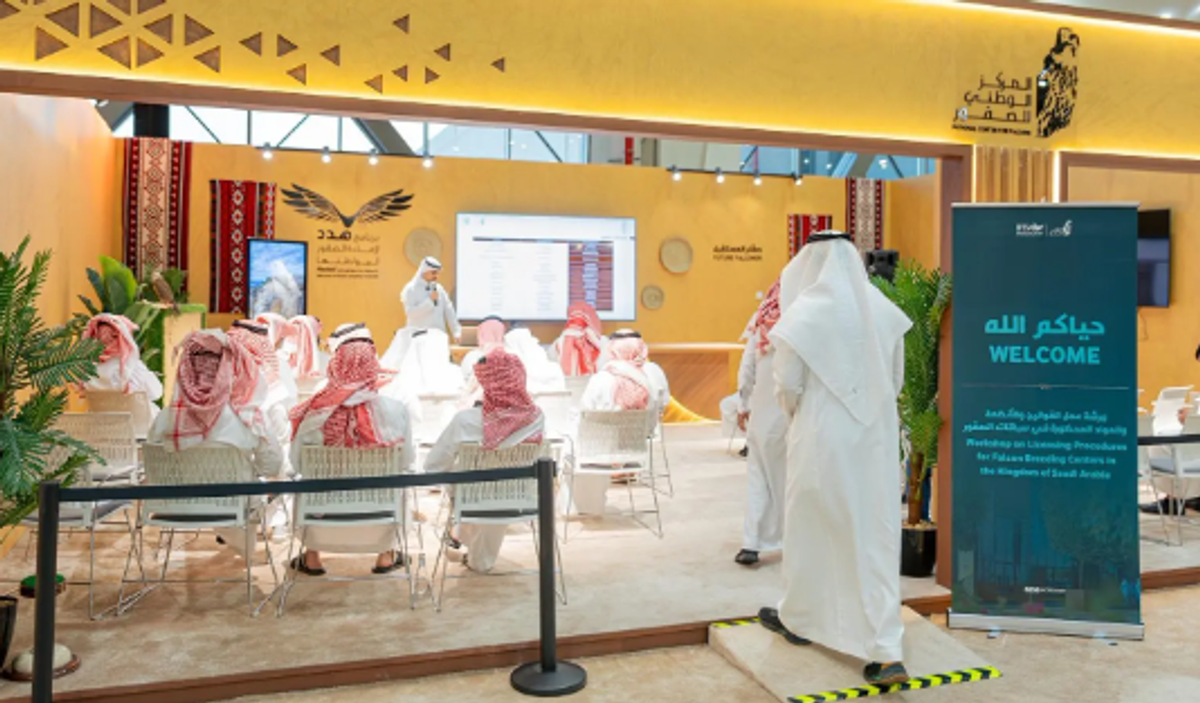
AIA workshop on “Laws and Regulations,” organized by the National Center for Falcons in cooperation with the Saudi Anti-Doping Committee as part of the International Auction for Falcon Production Farms 2026, revealed that caffeine derivatives topped the list of substances detected in recent periods, during a review of anti-doping regulations and testing procedures in falcon racing competitions.
Dr. Mohammed Al-Anazi from the Saudi Anti-Doping Committee gave a presentation on the risks of doping and its impact on falcon health and competition integrity. He explained that the belief that doping increases endurance and speed overlooks its health risks, which may include effects on organ function, the immune system, increased susceptibility to diseases and complications, and reduced falcon lifespan, in addition to undermining fair competition and equal opportunity.
The workshop reviewed the list of banned substances in falcon racing, which has been updated in coordination with competition organizers and published by the National Center for Falcons. The list continues to be updated based on monitoring results and available statistics, and is made accessible to participants.
The workshop also addressed violations of the anti-doping regulations, including the presence of a banned substance or its metabolites in a sample, use or attempted use of banned substances, refusal to submit samples, tampering with testing procedures, and possession, trafficking, or administration of banned substances to participating falcons. It was clarified that the current penalty for detection of banned substances is disqualification from prizes, with penalties under review in coordination with the committee.
The testing mechanism used in competitions was explained: each sample is assigned a unique barcode and sent to the laboratory without any information revealing the owner or falcon’s identity, ensuring confidentiality and independence of results.
The workshop is part of awareness programs accompanying the International Auction for Falcon Production Farms, held at the National Center for Falcons in Malham, north of Riyadh, to familiarize falconers and participants with the regulations and procedures related to competitions.