

Henna cultivation in Al-Jouf showcases local agricultural innovation
Farmer Naji Khalif Al-Shafi’s henna cultivation in Al-Jouf highlights how local environmental resources can support crop diversification and agricultural innovation.
Key Takeaways
AIFarmer Naji Khalif Al-Shafi’s experience with henna cultivation in Al-Jouf stands as a model for agricultural initiatives that leverage the region’s environmental resources and explore opportunities for crop diversification. He has successfully adapted henna farming to suit the area’s soil, climate, and water sources.
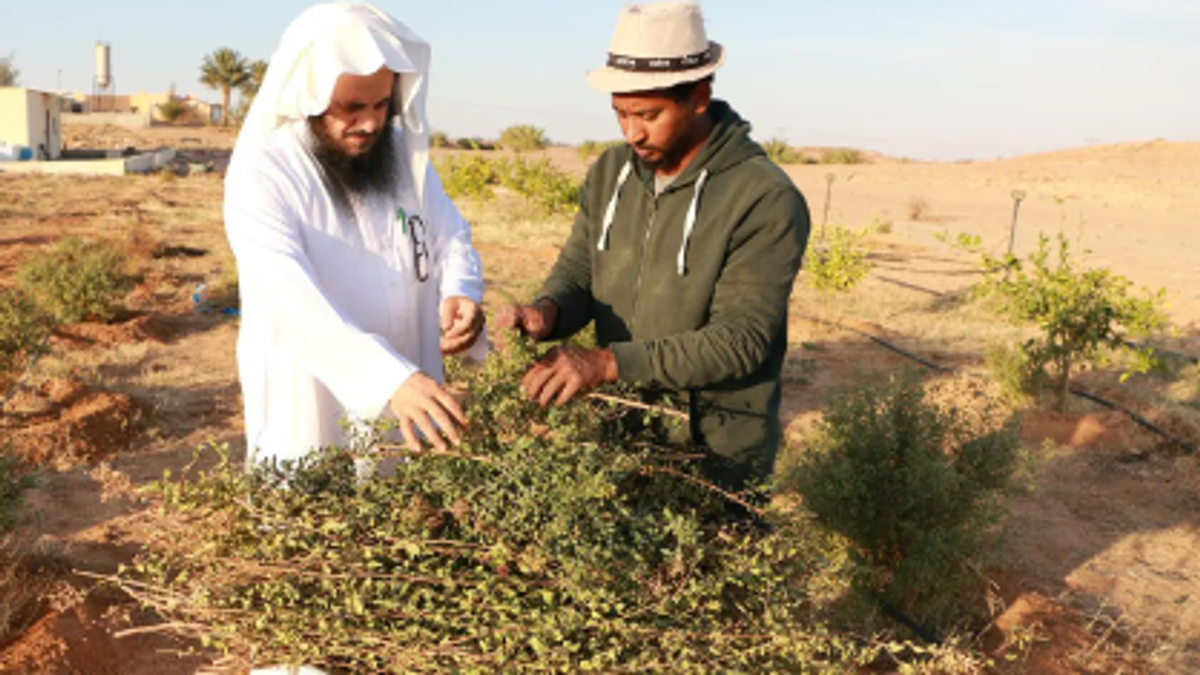
Al-Shafi began his henna cultivation experiment in Al-Jouf seven years ago with just three seedlings, aiming to test the crop’s viability in the local environment. After the plants thrived and yielded about four kilograms per harvest, he expanded his farm to nearly 200 trees.
The experiment demonstrated henna’s suitability for Al-Jouf’s agricultural environment, showing its ability to adapt to sandy soil, withstand drought, and cope with various weather conditions. The crop can also be grown in other soil types, and its trees are known for their dense foliage and abundant production.
Abdulaziz Al-Rujaie, director of the Ministry of Environment, Water and Agriculture’s Al-Jouf branch, explained that the region’s agricultural environment supports a wide range of successful crops due to nutrient-rich soil and available water. He noted that Al-Jouf is renowned for its production of dates, olives, vegetables, fruits, and henna.
Al-Shafi stated that the henna harvest season begins at the start of summer and continues until just before winter, typically allowing for three harvests each season. He noted that the current harvest is the last for this agricultural year. The process starts with picking the leaves, which are then dried for two to three days, separated from the stems, cleaned, and finally ground into a fine powder using specialized machines, making the product ready for use.
Henna contains lawsone, the natural pigment responsible for its distinctive color, which reacts with water during preparation to produce a reddish-brown hue when used as a dye. Henna holds cultural significance, being closely tied to traditions and social occasions, especially weddings, where the "henna night" remains a prominent custom in the community’s collective memory and celebrations.
Al-Shafi’s experience highlights the importance of individual initiatives in discovering new crops, utilizing local environmental features, and preserving plants linked to cultural heritage by transforming them into valuable local agricultural and traditional products.