

Najran’s traditional textiles showcase local weaving skills and rich motifs
Heritage textiles in Najran reflect deep-rooted weaving expertise and vibrant local designs, playing diverse roles in homes and daily life.
Key Takeaways
AITraditional textiles in the Najran region highlight the close relationship between craftsmanship and the local environment. Historically, these textiles met the daily needs of residents, furnishing homes and tents, and were also used for camel and livestock gear. Today, they remain a cultural heritage that demonstrates the region’s weaving skills and the richness of its decorative motifs.
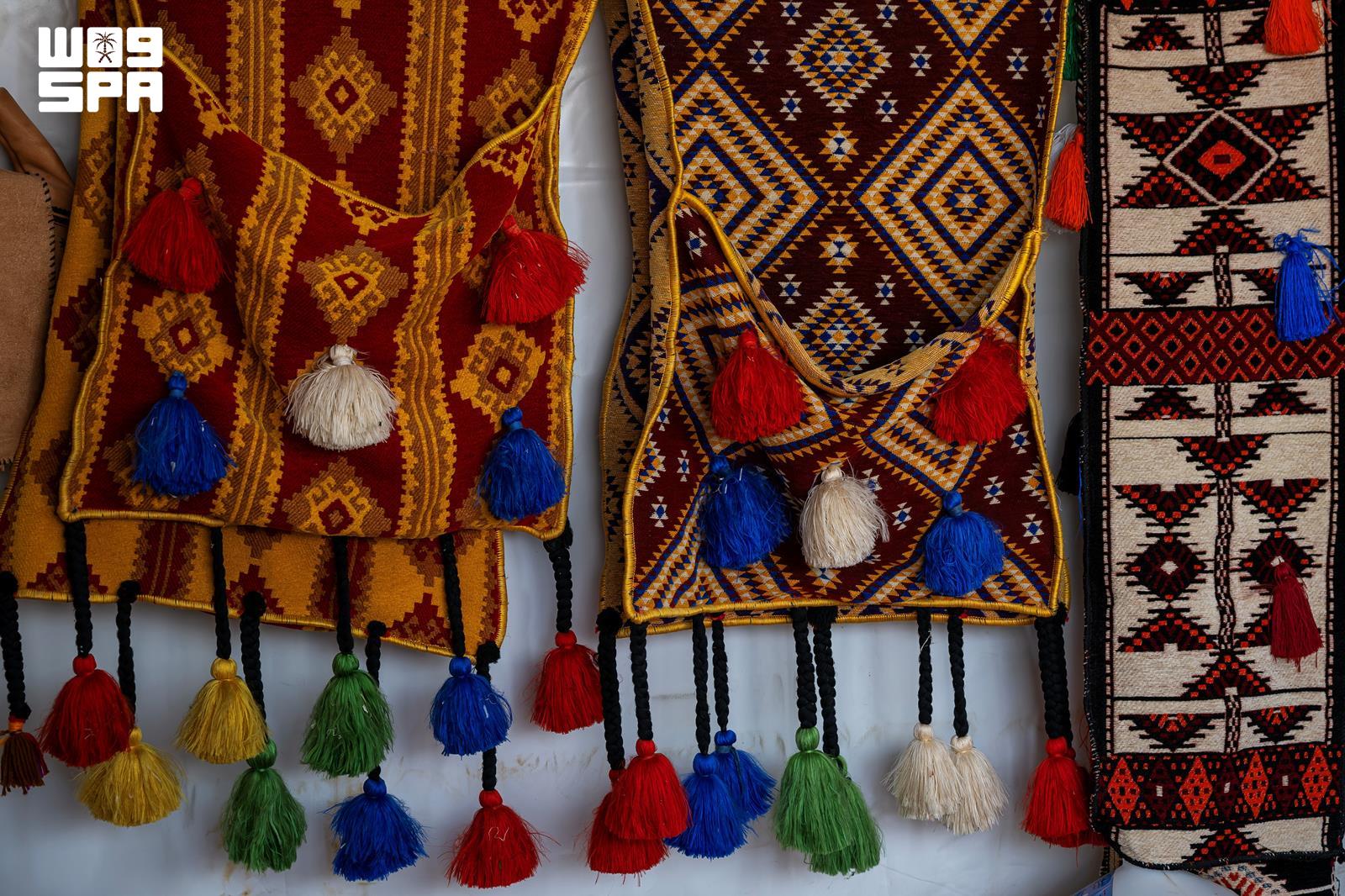
Najrani woolen textiles are distinguished by their contrasting colors—primarily red, black, white, and yellow—and feature repeated geometric patterns, with diamonds, triangles, and opposing lines at the center. Colorful tassels hanging from the edges add movement and beauty, while the precise patterns and harmonious colors reflect the artisan’s attention to detail and the practical function of each piece.
In Najrani homes, these textiles serve multiple purposes, such as small and long rugs, mats, and seating areas, as well as padding for tents. Far from being mere decorative items, these pieces have been essential for furnishing homes, providing places to sit, sleep, and rest, with sizes varying according to their intended use.
Among Bedouins, weaving was closely linked to caring for animals and travel. The “khurj” was used to carry belongings on livestock, while the “idhir” was designed for camels. Wool, goat hair, and camel hair were also crafted into horse necklaces, demonstrating how local materials were harnessed to meet daily needs and how weaving was intertwined with life in the region.
Najran’s traditional tools also show how textiles complemented other crafts, such as the “misabb,” a leather pouch for carrying food slung over the shoulder. This highlights the cooperation between local crafts in meeting storage and transport needs, combining leather and woolen products.
Najrani textiles remain a testament to inherited expertise that blends utility and beauty. Preserving this craft, showcasing its examples, and introducing it to new generations help safeguard its details and keep its cultural significance alive, with each piece reflecting an aspect of local life and heritage.