

Two Holy Mosques Ready for Last Ten Days of Ramadan
Saudi Arabia, home to Islam’s holiest sites in Mecca and Medina, has enabled foreign travelers to perform Hajj this year. Only a few thousand Saudi citizens and residents attended the annual pilgrimage in the last two years as COVID-19 wreaked havoc across the global economy and curtailed travel.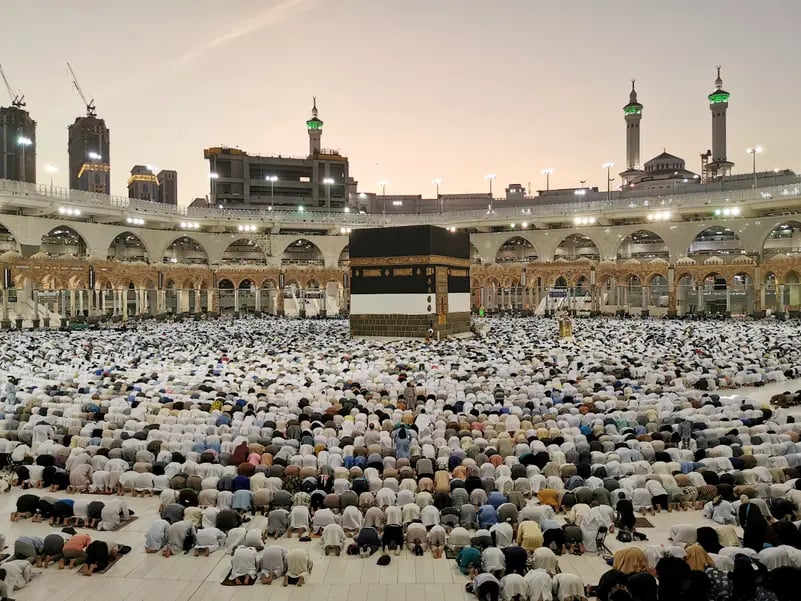
Key Takeaways
AIThe General Authority for the Care of the Affairs of the Two Holy Mosques has activated a comprehensive operational plan for the final 10 days of Ramadan, centered on four pillars: operational services, maintenance, crowd management, and enrichment.
To manage the expected surge in visitors, the authority is using Internet of Things (IoT) technology and color-coded screens to monitor crowd density in real time, guiding worshippers to less congested areas.
Maintenance efforts have been scaled up to ensure the peak efficiency of air conditioning, lighting, and sound systems, while crowd management has been bolstered by interactive 3D maps and barcode tracking.
For those observing itikaf, the authority has launched a dedicated suite of logistical and medical services, along with digital prayer guides and Braille copies of the Quran.
These integrated measures aim to provide a seamless, high-quality spiritual experience for visitors to the Grand Mosque and the Prophet's Mosque during the holiest nights of the year.