

The Saudi Red Sea: A Marine Destination Redefining Coastal and Maritime Tourism
The Saudi Red Sea: A Marine Destination Redefining Coastal and Maritime Tourism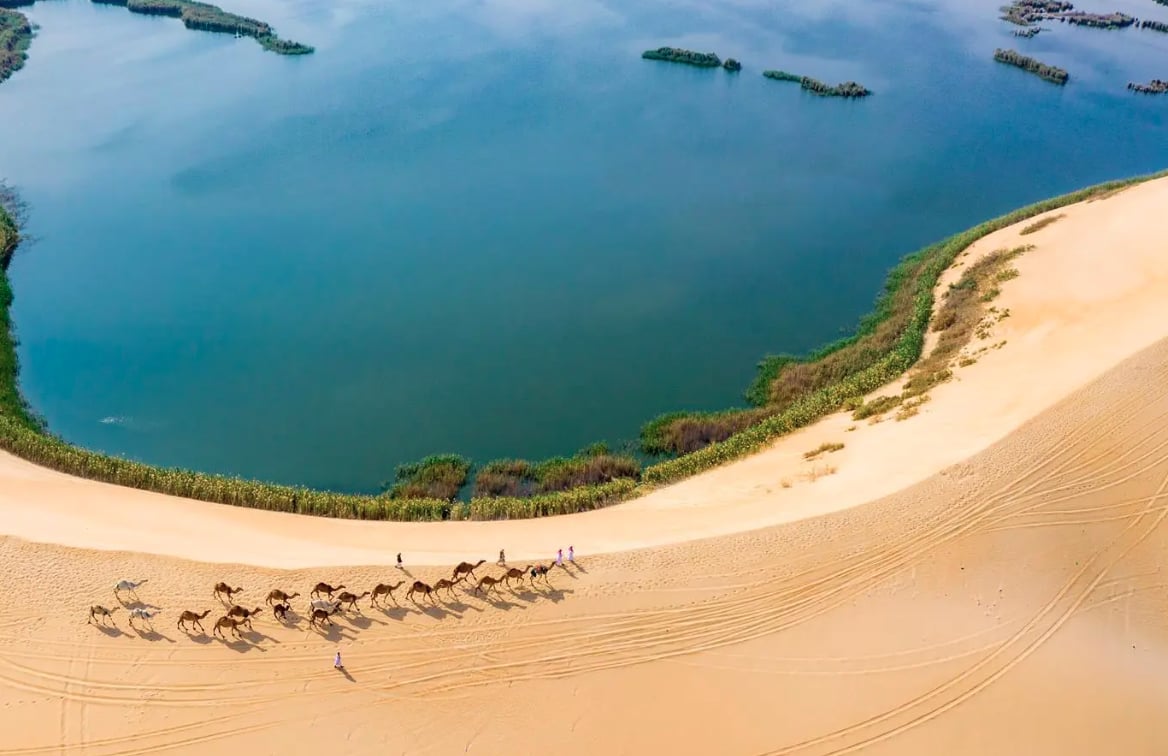
Key Takeaways
AIThe Red Sea within Saudi Arabia’s geographic scope is no longer merely an attractive coastal stretch.
It has become one of the world’s most promising marine destinations, where tourism and leisure intersect with the blue economy and the protection of marine ecosystems. Extending across more than 1,800 kilometers of coastline and covering a natural area of nearly 186,000 square kilometers, the Red Sea is home to the world’s fourth-largest coral reef system, representing approximately 6.2% of global coral reefs, in addition to hundreds of islands and natural formations that bring together beaches, mountains, deserts, and coastal valleys.
The value of this destination lies not only in its visual appeal, but in its rarity. While many global marine destinations face overcrowding and the gradual erosion of the visitor experience, the Red Sea within Saudi Arabia’s geography is entering the global market with a different proposition: measured development, carefully managed operational density, and an experience inseparable from the health of the ecosystem.
In this context, the Saudi Red Sea Authority stands out as the entity leading the regulation of navigational and marine tourism activities, while building the market’s foundations since 2021 through licenses, permits, regulations, and standards that move the sector from natural potential to an organized tourism industry.
The numbers here are not promotional details; they are indicators of a maturing transformation.
In 2025, the Saudi Red Sea Authority issued the Kingdom’s first requirements and guidelines for beach operators, launched the first electronic guide to coastal tourism activities, and conducted more than 370 compliance and awareness visits to marina operators and tourism maritime agents.
These efforts reveal that a destination is not built by resorts alone, but through an integrated market: regulation, safety, operational infrastructure, and environmental standards.
At the tourism product level, the Red Sea destination is advancing as a model of regenerative tourism rather than conventional tourism. Spanning 28,000 square kilometers and encompassing more than 90 islands, the destination aims to host 50 hotels by 2030, with a stated commitment to achieving a 30% net conservation benefit by 2040.
Developer data also indicates that development will remain limited to less than 1% of the total area, with an annual cap of no more than one million visitors - a rare approach that places nature’s carrying capacity ahead of the appetite for commercial expansion.