

Seasonal forage cultivation in Najran boosts local production, livestock sector
Najran expands seasonal forage crop cultivation, leveraging its agricultural strengths to enhance food security and support livestock production.
Key Takeaways
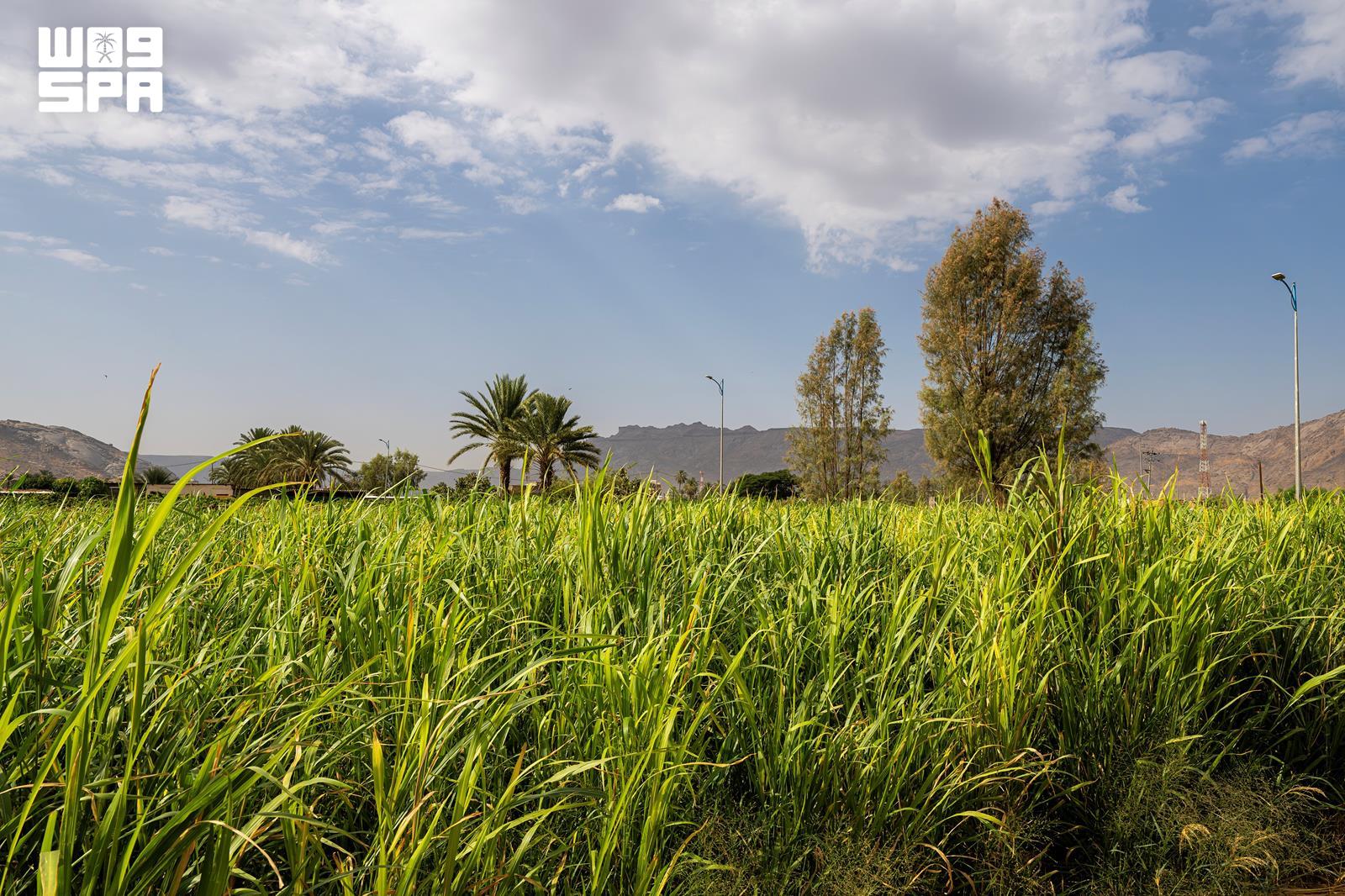
AINajran region continues to strengthen local agricultural production and support the livestock sector through the cultivation of seasonal forage crops, capitalizing on its diverse agricultural resources that have enabled a variety of crops in the area.
Forage cultivation in Najran covers approximately 990 hectares, with annual production reaching 16,000 tons, led by alfalfa and sorghum. Alfalfa is a key crop for livestock feed due to its high nutritional value, while sorghum is well-suited to the region’s dry climate and low water requirements, resulting in increased local demand.
Advances in agricultural production methods
The region has seen significant progress in forage crop production methods, as farmers adopt modern agricultural technologies tailored to local environmental and water conditions. These include precise irrigation management, selecting suitable crops, and optimal planting times, all of which have boosted sector productivity and sustainability.
The Director General of the Ministry of Environment, Water and Agriculture branch in Najran, Mureeh bin Sharaeh Al-Shahrani, stated that forage cultivation is closely monitored due to its direct link to both the agricultural and livestock sectors.
Sustainability and efficient resource use
Al-Shahrani noted that agricultural sustainability has become a core pillar for sector development, requiring a balance between boosting production and preserving natural resources, especially water. He highlighted the importance of expanding solutions and technologies that improve irrigation efficiency and reduce waste, stressing that guidance programs, awareness initiatives, and encouraging the adoption of modern practices all contribute to better resource use and the sustainability of agricultural activities.