

Jazan Neighborhoods’ Ramadan Tables Strengthen Intergenerational Bonds
Jazan Neighborhoods’ Ramadan Tables Strengthen Intergenerational Bonds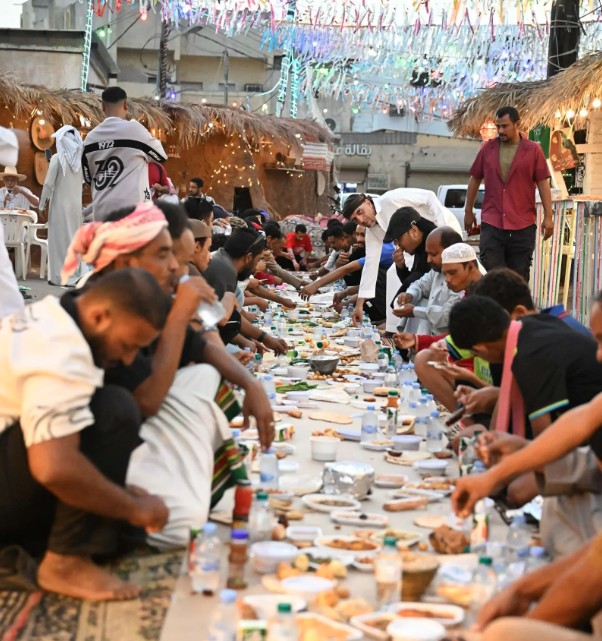
Key Takeaways
AIAs the time for the Maghrib prayer approaches, neighborhoods across Jazan Region transform into open gathering spaces where residents come together around communal Ramadan tables set up in front of their homes, an enduring social scene repeated throughout the holy month.
Families participate in preparing the food, while young people arrange the tables and lay out carpets. Every passerby or guest is warmly welcomed to join the gathering without prior invitation, reflecting the spirit of social solidarity that characterizes the month of Ramadan.
In neighborhoods across cities and villages in the region, breaking the fast goes beyond being a daily meal and becomes a social occasion that renews neighborly bonds. Elders sit alongside youth and children around simple tables filled with popular Ramadan dishes and seafood, which hold a special place in the coastal region’s cuisine.
Several residents note that this inherited custom reflects the values of sharing and closeness among community members. Communal iftar gatherings in neighborhoods provide opportunities for neighbors to meet and strengthen ties, while allowing younger generations to learn about the social life their parents and grandparents experienced.
Despite the changes brought by modern lifestyles, these Ramadan iftars remain a prominent feature in many of Jazan’s older neighborhoods.
They continue to serve as a social tradition that expresses the community’s spirit and cohesion, embodying one of the Ramadan customs that reflects the unique character of the local society and the depth of its human connections.