

GCC states open to the world, advancing deeper economic integration: Al-Budaiwi
GCC Secretary-General Jassem Al-Budaiwi says member states are pursuing deeper economic integration and long-term investment partnerships for shared interests.
Key Takeaways
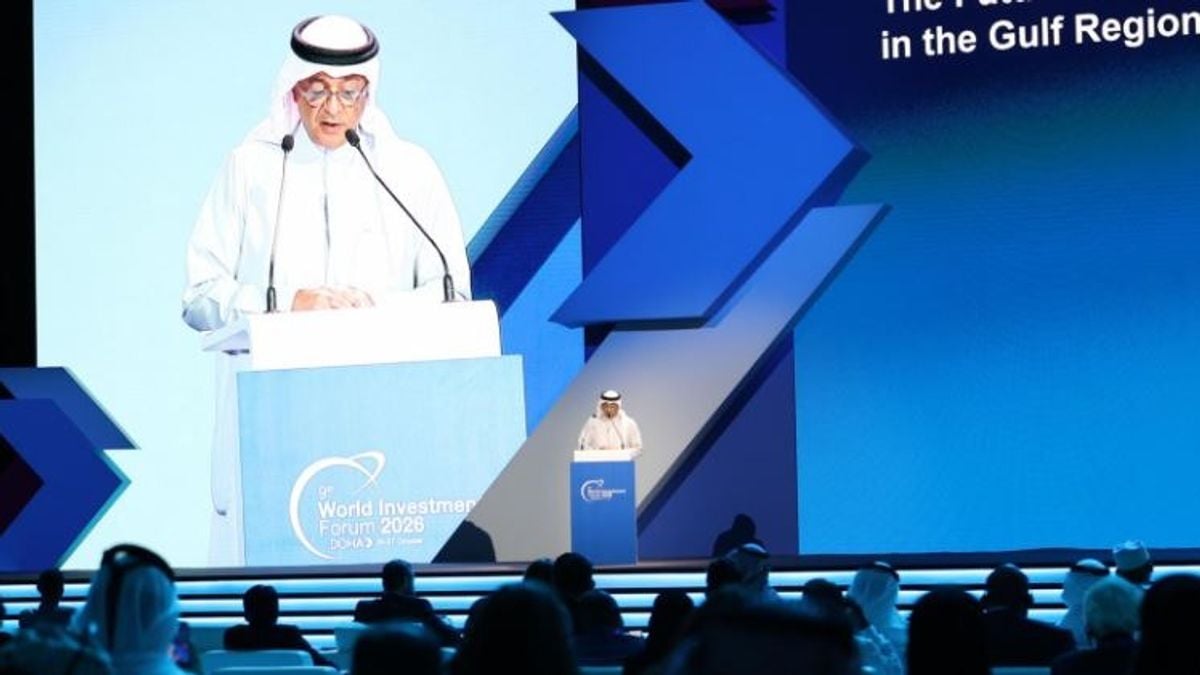
AIJassem Al-Budaiwi, Secretary-General of the Gulf Cooperation Council (GCC), said that the GCC states are open to the world and moving toward deeper economic integration, noting their aspiration to build long-term investment partnerships that serve mutual interests.
Speaking at the 'Future of Investment in the Gulf' session on Sunday, held on the sidelines of the ninth World Investment Forum (WIF2026) and attended by several ministers and officials, Al-Budaiwi expressed his sincere appreciation to Qatar, led by Emir Sheikh Tamim bin Hamad Al Thani, for its ongoing efforts to promote international economic and investment dialogue and strengthen the GCC’s presence regionally and globally. He also thanked the United Nations Conference on Trade and Development (UNCTAD) for its cooperation with the GCC Secretariat in organizing this session, which he described as an important opportunity to explore the future of investment and enhance Gulf economic integration.
During his speech, the Secretary-General emphasized that hosting this edition in Qatar carries special significance, as the country has provided an inspiring model in turning ambitious visions into global achievements. He said Qatar’s pioneering development experience demonstrates that when ambition is paired with a clear vision, firm resolve, and strategic planning, it not only delivers results but also shapes the future, turning challenges into opportunities and opportunities into sustainable successes.
Al-Budaiwi noted that the forum is taking place amid rapid changes in the global economy, with supply chains being restructured and emerging technologies shaping the economies of the future. He highlighted the growing competition to attract investment and posed a key question: how can investor confidence be strengthened and investment flows sustained in a world of increasing geopolitical challenges and impacts on maritime routes and global supply chains? He said the answer lies in three main points.
First: The GCC states have demonstrated their ability to confront these challenges and mitigate their effects by enhancing joint coordination, diversifying trade and logistics routes, and supporting the continuity of economic activities and supply chains.
Second: Recent developments, particularly challenges to the security of maritime passages such as the Strait of Hormuz, have confirmed that the stability of energy flows, trade, and supply chains is not only a regional matter but a fundamental pillar of global economic stability and investor confidence.
Third: Economic integration is no longer just a development option but a strategic necessity to strengthen resilience, ensure sustainable growth, and reinforce confidence in the investment environment. This integration is built on a solid foundation, including the customs union, the Gulf common market, interconnected payment systems, and the GCC railway project, all of which enhance supply chain efficiency and reduce the cost of doing business.
The Secretary-General pointed out that the GCC should no longer be viewed as six separate markets, but as an interconnected Gulf economic and investment bloc with a substantial economic, financial, and investment base. This is reflected in several indicators: the GCC economy ranks among the world’s top ten, with a combined GDP of $2.4 trillion and foreign trade exceeding $1.8 trillion, placing the bloc fifth globally. The combined assets of its sovereign wealth funds exceed $5 trillion. However, the strength of GCC economies lies not only in their size and financial capabilities, but also in the quality of their ongoing transformation.
Al-Budaiwi also highlighted that the ambitious national visions of GCC countries have redrawn the region’s economic landscape, expanded the role of the private sector, developed legislative and regulatory environments, and opened broad avenues for investment in future sectors such as artificial intelligence and advanced technologies, renewable energy and industries, transport and logistics, tourism, and financial services.
He called on investors and partners worldwide to view the GCC not just as an investment destination, but as a partner in shaping the future of global investment—a future built on trust, partnership, knowledge, and innovation, and measured by sustainable development and prosperity.
Al-Budaiwi also pointed to key indicators of growing economic interconnection within the GCC, particularly in investment flows. In 2025, total foreign direct investment inflows to GCC countries exceeded $792 billion, with more than $171 billion representing intra-GCC investments—about 22 percent of the total. This, he said, underscores an important fact: investing in one GCC country means entering a connected regional system, linking Gulf markets to each other and to the global economy.
View the post on X