

Levant Hajj Route: Historic Faith Journey across Diverse Paths and Stations
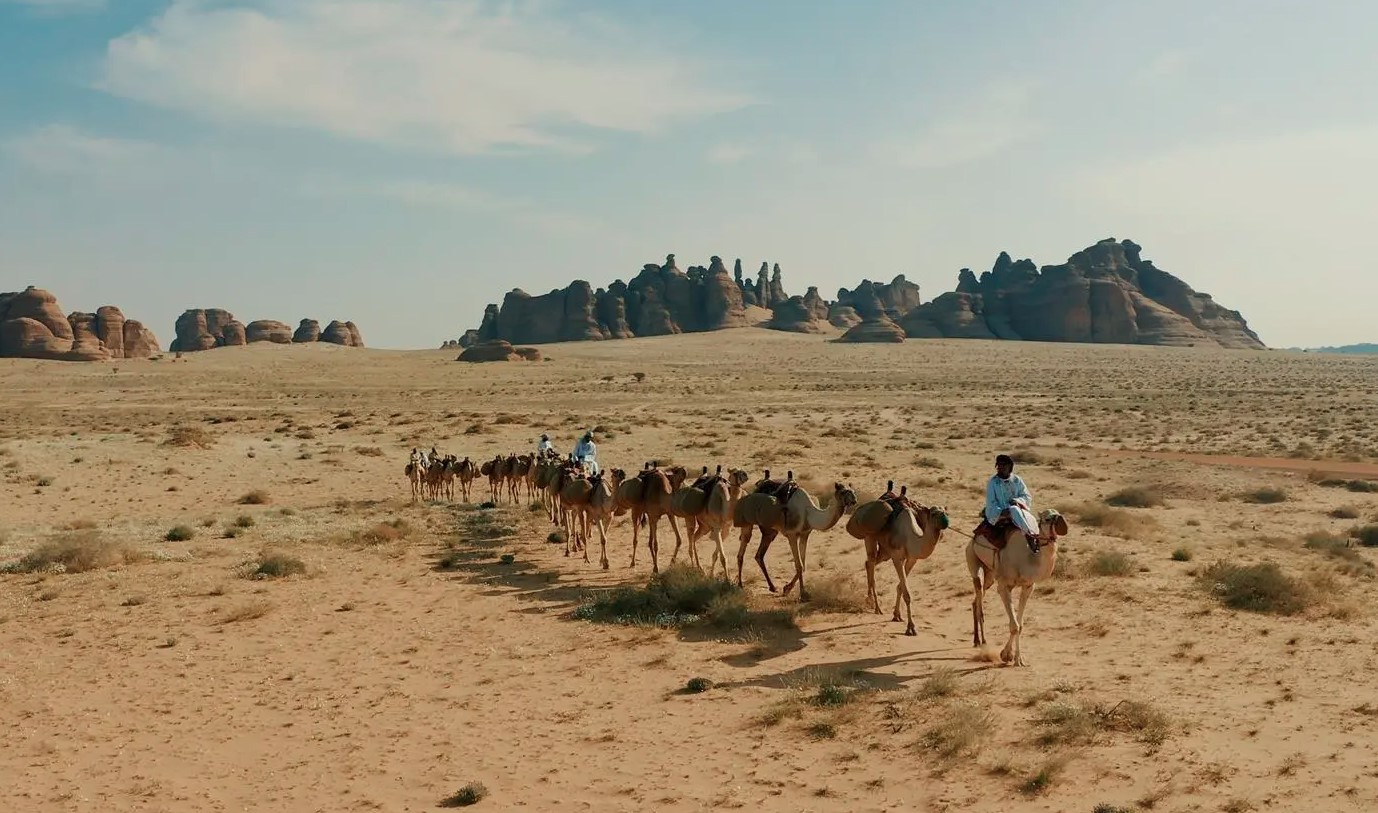
The Levant Hajj Route represents one of the top historical paths taken by pilgrims arriving from the Levant to Makkah and Madinah, serving as a main artery for caravan passage for centuries.
It is a civilizational route that reflects the depth of connection across the Islamic world.
The route extends from Damascus, passing through Busra Al-Sham (Daraa), then Adhriat, Maan, Al-Mudawwara, before entering Saudi Arabia through Halat Ammar, heading to That Al-Hajj in Tabuk Region, then Al-Aqra, Al-Akhdhar, reaching Al-Muazam Station, which hosts the historic Al-Muazam pool, one of the top water supply stations for pilgrims, then AlUla Governorate, passing through Hegra, Qaa Al-Hajj, Qarh, and arriving at Madinah.
Throughout its history, the route faced multiple challenges, most notably water scarcity and the difficulty of diverse terrain, as pilgrims crossed mountains, plains, and deserts.
This necessitated the establishment of rest stations, the digging of wells, and the construction of reservoirs to collect water and secure the caravans’ needs and provisions.
Pilgrims relied on these stations spread along the route, in addition to the support provided by local communities, which included offering food and shelter and securing caravan routes, embodying the values of solidarity and cooperation associated with the Hajj journey throughout history.
During the Saudi era, Hajj routes witnessed a comprehensive qualitative transformation, represented in the development of infrastructure and the establishment of modern road networks according to the highest standards, along with providing an integrated ecosystem of services for pilgrims, including equipped stations and advanced health, guidance, and logistical services, ensuring the performance of rituals with ease from arrival until departure.
Today, the Levant Hajj Route preserves its historical and cultural value as a living witness to the evolution of the Hajj journey, its transformation from traditional paths dependent on human effort to an integrated system of services reflecting Saudi Arabia’s care for pilgrims and its commitment to mobilizing all capabilities to serve them.