

Iran appoints former IRGC chief Mohsen Rezaei as national security council secretary
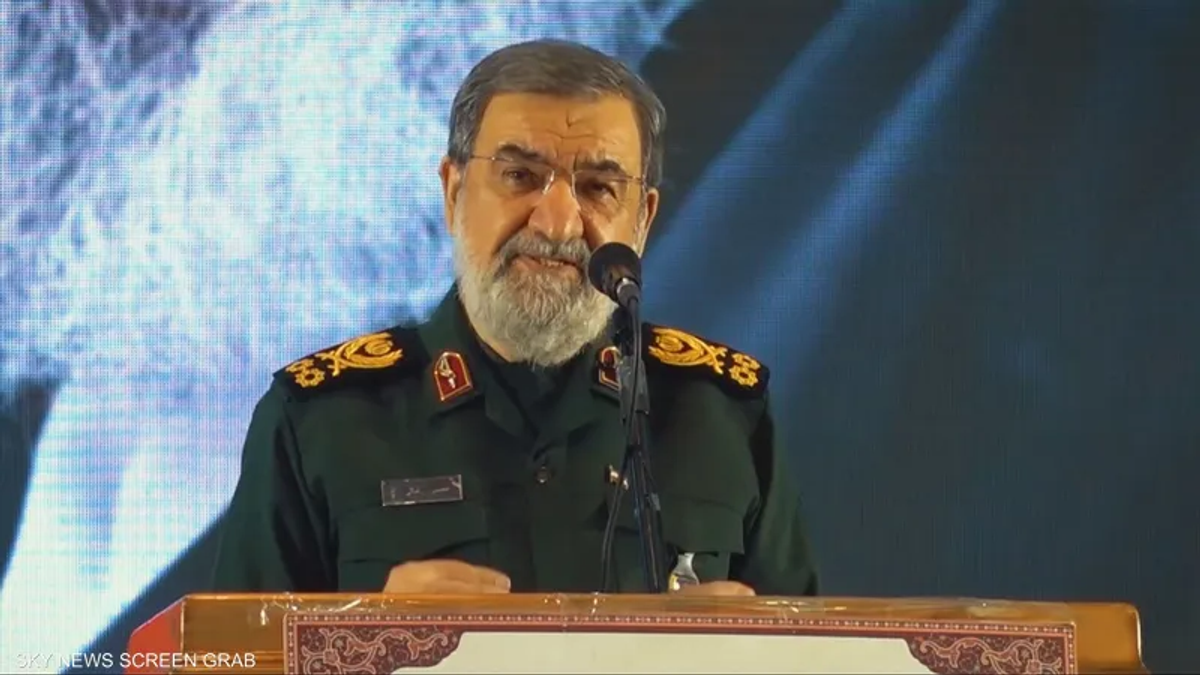
Iran has named Mohsen Rezaei, a hardline former IRGC commander and close ally of Mojtaba Khamenei, as secretary of the Supreme National Security Council.
Key Takeaways
AIIran has appointed Mohsen Rezaei as secretary of the Supreme National Security Council, promoting one of the country’s most hardline conservatives and a close associate of Mojtaba Khamenei, more than five months after the outbreak of war with the United States.
Rezaei replaces Mohammad Baqer Zolqadr as secretary of the council, which coordinates Iran’s security and foreign policy and is chaired by President Masoud Pezeshkian. Zolqadr has been named a political adviser to Khamenei.
Here are some key facts about the 71-year-old Rezaei:
Led the IRGC at age 27
Rezaei joined the Islamic Revolutionary Guard Corps shortly after the 1979 Islamic Revolution and became its commander in 1981 at just 27 years old. He led the IRGC for 16 years, a period that included most of the Iran-Iraq War from 1980 to 1988, overseeing the expansion of its ground, naval, and air forces.
Rezaei belongs to a generation of IRGC leaders who emerged from the revolutionary movement, which saw the formation of secret networks and organizations that later became prominent in Iran’s security apparatus.
A prominent figure in Iran’s political and security establishment, Rezaei has remained a regular contender in presidential elections since leaving the IRGC. He served as vice president for economic affairs from 2021 to 2023 under the late President Ebrahim Raisi, another hardliner.
Rezaei holds a doctorate in economics from the University of Tehran.
Advisor to Mojtaba
In March, Rezaei was appointed military adviser to Khamenei, who became Iran’s supreme leader following the death of his father, Ayatollah Ali Khamenei, on the first day of the US-Israeli war against Iran.
Throughout the war, Rezaei has repeatedly voiced deep skepticism about ongoing negotiations and issued threats against the United States.
In April, Rezaei said it would be “wonderful” if the United States launched a ground invasion of Iran, claiming, “We would take thousands of hostages and then get a billion dollars for each one.” He added, “I do not support extending the ceasefire at all, and that is my personal opinion.”
In June, before Iran signed a memorandum of understanding aimed at ending the war on June 17, Rezaei said the agreement contained ambiguities that needed clarification. On June 27, he accused Washington of violating the deal by stoking tensions in the Strait of Hormuz.
Highlighting his close ties to Mojtaba, the supreme leader on Sunday issued a decree appointing Rezaei as his representative to the Supreme National Security Council, citing Rezaei’s “valuable experience,” including his long military career.
Opposition to the Shah
Rezaei played an active role in opposing the Shah’s regime, which was overthrown in 1979, despite being a young man at the time. He was imprisoned by the Shah’s security service (SAVAK) in 1973.
He helped establish and develop the armed Mansouroun movement, which opposed the regime in the 1970s. Members of this group, including Rezaei, later became part of the IRGC’s senior leadership after being imprisoned together.
The Iran-Iraq War
Rezaei’s record during the Iran-Iraq War has been controversial in Iran, with critics questioning his role in operations that resulted in heavy Iranian losses, such as Operation Karbala-4, an Iranian offensive in December 1986 aimed at breaking through Iraqi defenses toward Basra.
In 2018, Rezaei again drew controversy when he tweeted—on what is now X—that Operation Karbala-4 was carried out to deceive the enemy ahead of Operation Karbala-5. He later clarified that the operation was originally intended as a real attack, but Iran later used its failure as a ruse before launching Karbala-5.
His comments drew criticism from war veterans, families of martyrs, and senior political figures.