

Ceuta crisis escalates as Spain deploys army, Schengen faces new test
Spain sends troops to Ceuta after a record migrant influx, sparking EU-wide debate over border controls and the future of the Schengen agreement.
Key Takeaways
AI
Spain has taken security and military measures to contain the migration crisis in the city of Ceuta, after an unprecedented mass crossing prompted authorities to deploy army units in support of security forces. The crisis has now spread to several European Union countries, fueling debate over the future of the Schengen agreement.
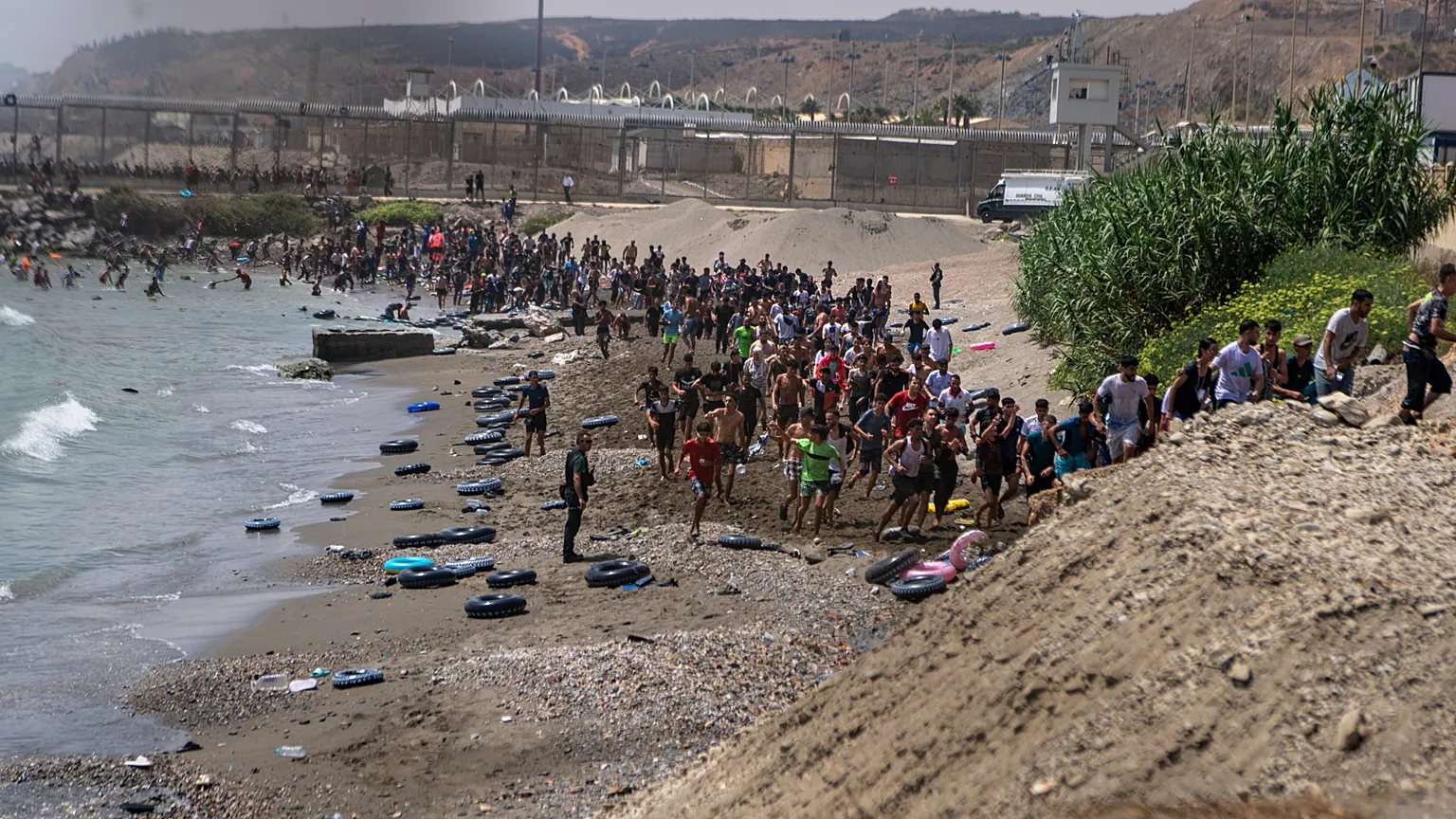
According to estimates from Spain's Interior Ministry, around 49,000 migrants entered Ceuta within 24 hours, marking one of the largest crossings the city has ever seen. Ceuta, located in northern Morocco, is a key land gateway between Africa and the European Union.
Spanish authorities explained that the army deployment aims to support police and civil guard units after the influx overwhelmed local capabilities. They stressed that law enforcement will remain the responsibility of security forces, according to the Associated Press.
Alongside these security moves, Madrid has stepped up coordination with Morocco to curb migrant flows, as Moroccan territory is the main departure point for those heading to Ceuta. Ceuta and Melilla are the primary land entry points between the EU and Africa.
Human toll and humanitarian pressures
The mass crossing coincided with casualties among those attempting to reach the city. International reports indicate that at least 18 migrants died—some by drowning, others in stampedes—while trying to cross the border. Local authorities have faced mounting pressure due to the sheer number of arrivals, according to the Associated Press.
The large influx has also raised concerns about the capacity of reception centers to accommodate migrants in such a short period.
Crisis spreads to EU countries
The Ceuta crisis has extended to France, which has tightened security along its border with Spain amid fears that the migration wave could spill over into the Schengen area. There are growing concerns about the impact on the EU's internal borders.
In a political development, Italian Prime Minister Giorgia Meloni called for Spain's suspension from the Schengen area due to the arrival of hundreds of irregular migrants. She announced on X that her government is preparing exceptional measures, including suspending the Schengen agreement with Spain.
Meloni described images of migrants arriving in Ceuta as "shocking," noting that many, including children, had to swim to reach the city.
She added that the Spanish government's decision to grant Spanish—and thus European—citizenship to more than 500,000 irregular migrants was a "grave mistake," arguing that it encouraged human trafficking.
Meanwhile, Italian Deputy Prime Minister and far-right League party leader Matteo Salvini called for the suspension of the Schengen agreement and for defending Europe's borders.
According to Spain's AS newspaper, Finland has also supported Italy's request to exclude Spain from the Schengen area in light of the Ceuta crisis.
Schengen agreement faces new test
The latest developments have brought the Schengen agreement back to the forefront of EU debate, as divisions over migration management deepen. The agreement allows member states to reintroduce internal border controls under exceptional circumstances.
Ceuta holds a unique geographic position on Morocco's northern coast, forming, along with Melilla, the EU's direct land border with Africa. Any escalation in Ceuta quickly becomes a European issue, touching on border security, migration, and relations among EU states.