

Islamic Military Counter Terrorism Coalition, Syria discuss partnership
The Islamic Military Counter Terrorism Coalition met Syria’s envoy in Riyadh to discuss joint efforts to combat terrorism and extremism.
Key Takeaways
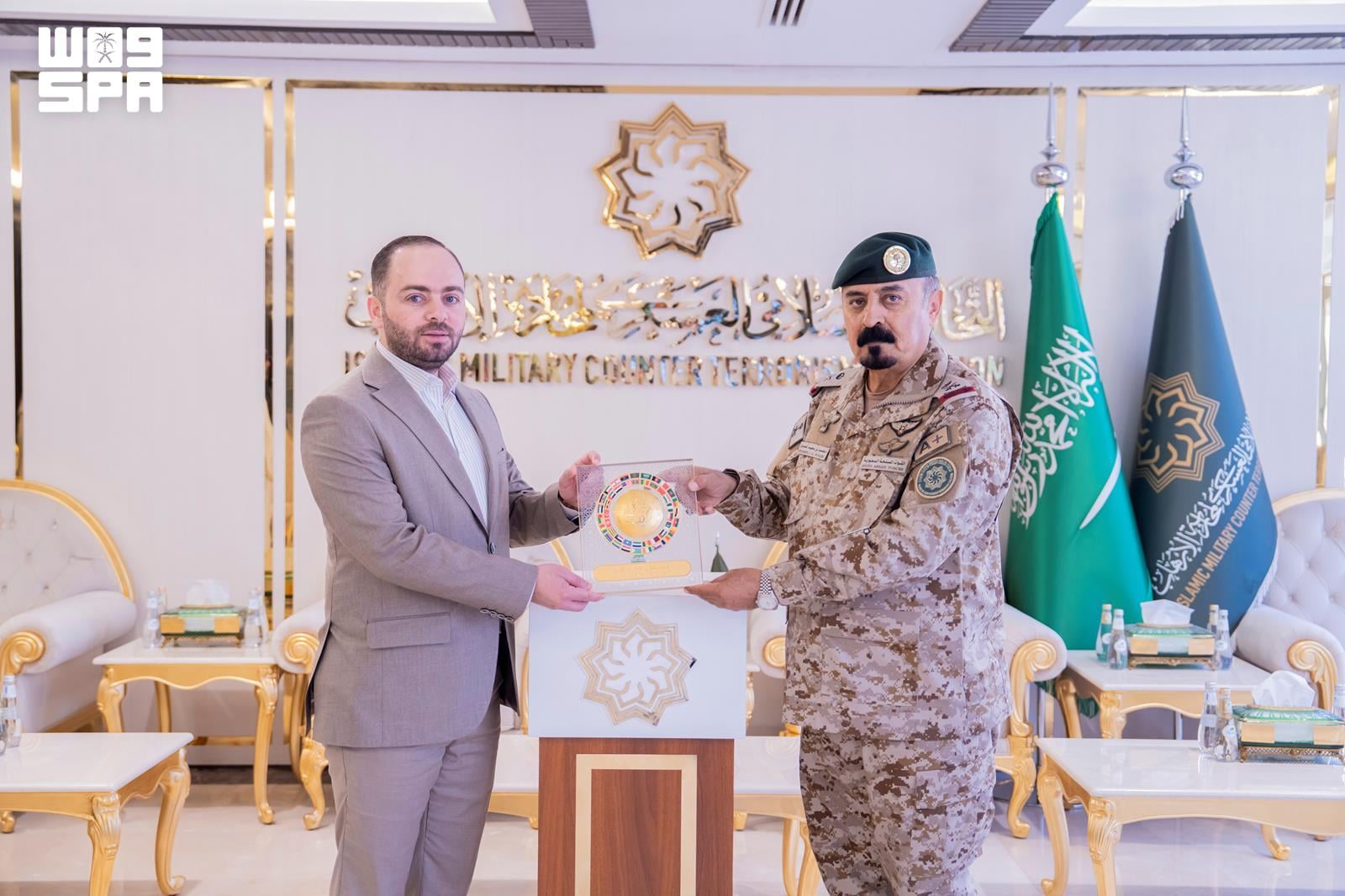
AISecretary-General of the Islamic Military Counter Terrorism Coalition, Maj. Gen. Mohammed bin Saeed Al-Moghedi, received today at the coalition’s headquarters in Riyadh the chargé d’affaires and head of the Syrian Arab Republic’s mission to the Kingdom, Minister Plenipotentiary Mohsen Mehbash.
During the meeting, both sides discussed ways to strengthen cooperation between the coalition and Syria in combating terrorism and extremism, building capabilities, and exchanging expertise. They also reviewed the coalition’s programs and initiatives in intellectual, media, counter-terrorism financing, and military fields.
Maj. Gen. Al-Moghedi emphasized the importance of Syria joining the coalition, given its pivotal role in regional security and stability. He noted that Saudi Arabia has dedicated its resources to fighting terrorism and has supported Islamic countries, especially Syria, Palestine, and Yemen, as part of its responsibility toward regional security and unity.
The Secretary-General explained that Saudi Arabia is the main supporter of the coalition and its programs, enabling the coalition to assist countries in confronting internationally designated terrorist organizations. He added that the coalition’s strategy is based on the integration of its four domains, which must not be separated to effectively counter terrorism.
Innovative initiatives and Syrian support for integration
Maj. Gen. Al-Moghedi highlighted the role of the Initiatives Funding Fund in turning countries’ needs into practical programs that help build capacity and enhance readiness. He affirmed the coalition’s readiness to develop innovative initiatives that address Syria’s priorities should it officially join.
For his part, Minister Plenipotentiary Mohsen Mehbash praised the coalition’s efforts, stressing that terrorism is an ideology that must be addressed at its roots through comprehensive programs, not just security and military measures. He noted the impact of economic conditions on the rise of terrorism, emphasizing that countering it requires international cooperation and continuous exchange of information and expertise.
This visit comes as part of efforts to strengthen communication and coordination between the Islamic Military Counter Terrorism Coalition and the Syrian Arab Republic, and to explore avenues of cooperation that support joint efforts in combating terrorism and extremism, contributing to regional and international security and stability.