

Canada welcomes EU proposal for first associate member status
Canadian Prime Minister Mark Carney welcomes the EU's proposal to grant Canada 'associate member' status, aiming to deepen cooperation and economic independence.
Key Takeaways
AICanadian Prime Minister Mark Carney on Thursday welcomed a proposal to grant his country the status of the first associate member of the European Union, stressing that strengthening ties with Europe aims to ensure that no country can dominate Canadian markets, undermine its sovereignty, or erode its freedoms.
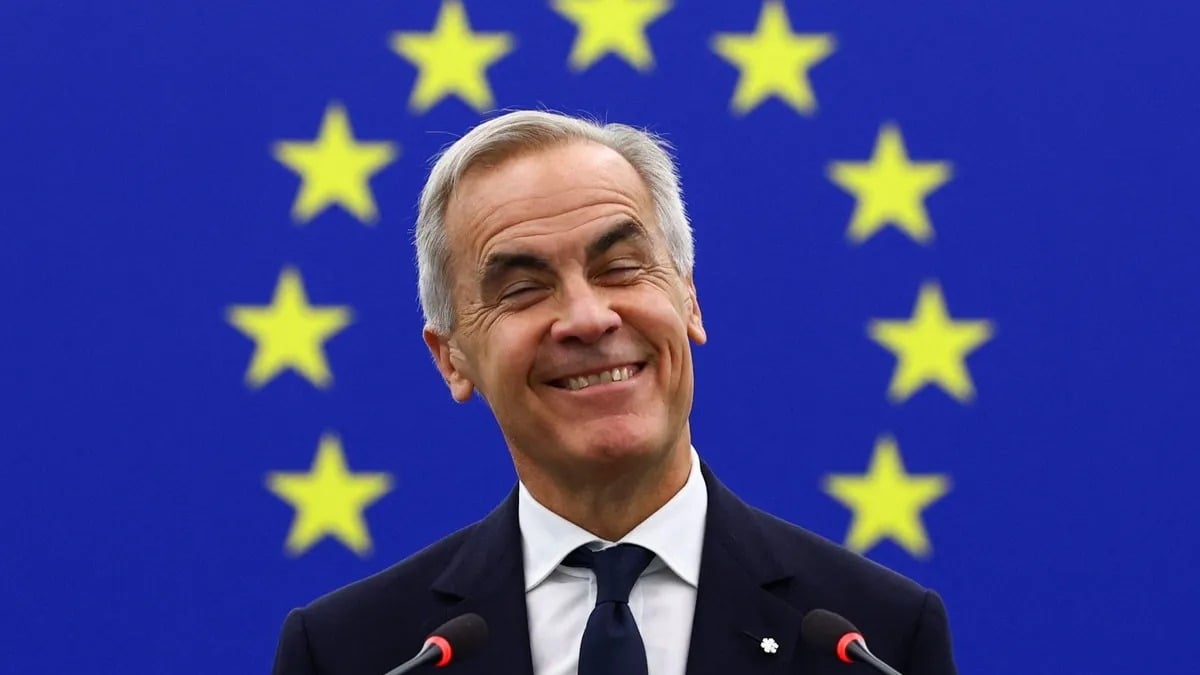
Carney made the remarks in a speech before the European Parliament in Strasbourg, where he praised cooperation between Europe and Canada and expressed support for the proposal unveiled Wednesday by European Commission President Ursula von der Leyen to grant Ottawa 'associate member' status in the bloc.
By contrast, U.S. President Donald Trump described the proposed arrangement as potentially 'hostile,' threatening to impose hefty tariffs on Europe if he deemed its intentions 'unfriendly.'
Carney noted that the concept of 'associate membership' still needs to be defined, emphasizing the need to deepen integration between Canada and Europe in areas such as trade, defense, critical minerals, artificial intelligence, energy, space, research, and financial services, in order to reduce both sides' exposure to economic and geopolitical pressures.
A new direction in Canada-Europe relations
The Canadian prime minister stressed that his country is not seeking to create a third bloc to rival major powers, but rather to enhance its resilience so that no country can influence its markets, sovereignty, or choices.
Carney received a warm welcome in the European Parliament, with many members shaking his hand and requesting photos, and his speech was met with a standing ovation. According to the Associated Press, one member even wore a Canadian ice hockey jersey as a gesture of welcome.
Reducing reliance on the United States
The Associated Press noted that Canada has built its economy for decades on integration with the United States, but President Trump's tariff policies, economic demands, and remarks about making Canada the 51st state have prompted Ottawa to reduce its dependence on Washington and seek deeper ties with Europe.
Von der Leyen proposed creating an 'associate member' status in the EU for Canada, stating that Europe wants to elevate its relationship with Ottawa to 'the highest possible level.' During the session, Carney stood to embrace von der Leyen amid applause from lawmakers for the proposal.
Von der Leyen explained that Canada and the EU should move beyond their current free trade agreement and establish an 'alliance for the future' that would create a 'zone of shared prosperity and economic security.'
Upcoming Canada-EU summit
Carney is scheduled to host a Canada-EU summit in Montreal on October 29 and 30, where both sides will discuss the details of the proposed new relationship.
Canada exports about 70% of its goods to the United States, making it vulnerable to U.S. tariffs. Ottawa has responded to Washington's measures in kind and rejected demands that Carney described as threats to Canadian sovereignty. Europe, meanwhile, has accepted tariffs of up to 15% on most of its exports to the U.S. without similar retaliation.
For his part, Canada's designated ambassador to the EU, Jonathan Wilkinson, said that Canada is not seeking full EU membership, which would require significant sovereignty concessions, but instead wants to get as close to Europe as possible while maintaining its independence.