

Only Lebanese state speaks for nation, says PM Nawaf Salam
Lebanon's Prime Minister Nawaf Salam affirms that only the Lebanese state has the authority to negotiate and speak on behalf of the country.
Key Takeaways
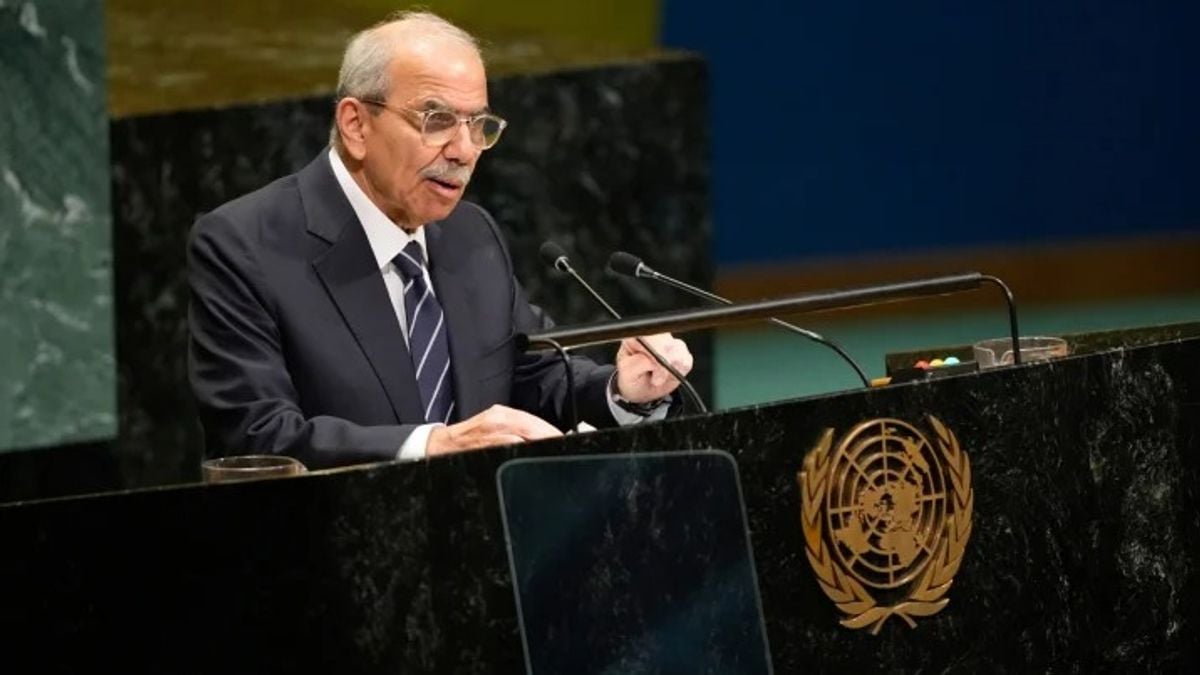
AILebanon's Prime Minister Nawaf Salam has affirmed that only the Lebanese state holds the authority to negotiate and speak on behalf of the country, rejecting any attempts to turn Lebanese territory into a battleground for external conflicts. His remarks come as Lebanon engages in direct negotiations with Israel to end the war and restore sovereignty.
Speaking at the 81st session of the United Nations General Assembly, Salam stated: “No one speaks for Lebanon, and no one negotiates on its behalf except the Lebanese state. We categorically reject our land being used to settle others’ disputes.”
He noted that Lebanon has found itself at the center of “a war it did not choose or seek,” adding that the government has taken measures to strengthen state sovereignty and effective authority over all its territory.
Salam revealed that “the Lebanese state has entered negotiations with Israel to reach security arrangements that guarantee an end to the war and the restoration of Lebanon’s sovereignty.” He stressed that regaining the trust of citizens and international partners requires strict adherence to international law without selectivity.
The prime minister emphasized that restoring sovereignty is not limited to the withdrawal of occupying forces from the south, explaining that “restoring land means not only the withdrawal of occupation forces, but also the return of residents to their homes and the revival of life in their villages and towns.”
Salam also addressed the reconstruction of southern Lebanon, which suffered from Israeli aggression, stressing that the process is “not merely about rebuilding structures; it is about restoring people’s lives, livelihoods, and their right to live safely and with dignity on their land.”
Regarding the international presence in the south, Salam underlined the need to “avoid a vacuum” as the mandate of the United Nations Interim Force in Lebanon (UNIFIL) is set to expire at the end of this year. He warned of the consequences of a withdrawal without agreement on a new international force to replace it.
He added: “What is important to emphasize here and now is the need to avoid any vacuum that could result from the withdrawal of UNIFIL forces if it occurs without an agreement on a new international force to take its place, ensuring the continuation of monitoring, reporting, and communication, and complementing the requirements of implementing the tripartite framework.”
On the domestic front, Salam reaffirmed his government’s commitment to implementing economic reforms despite the ongoing challenges since the port explosion and the financial crisis.