

Eisenkot sets four conditions for possible alliance with Arab parties in Israeli government
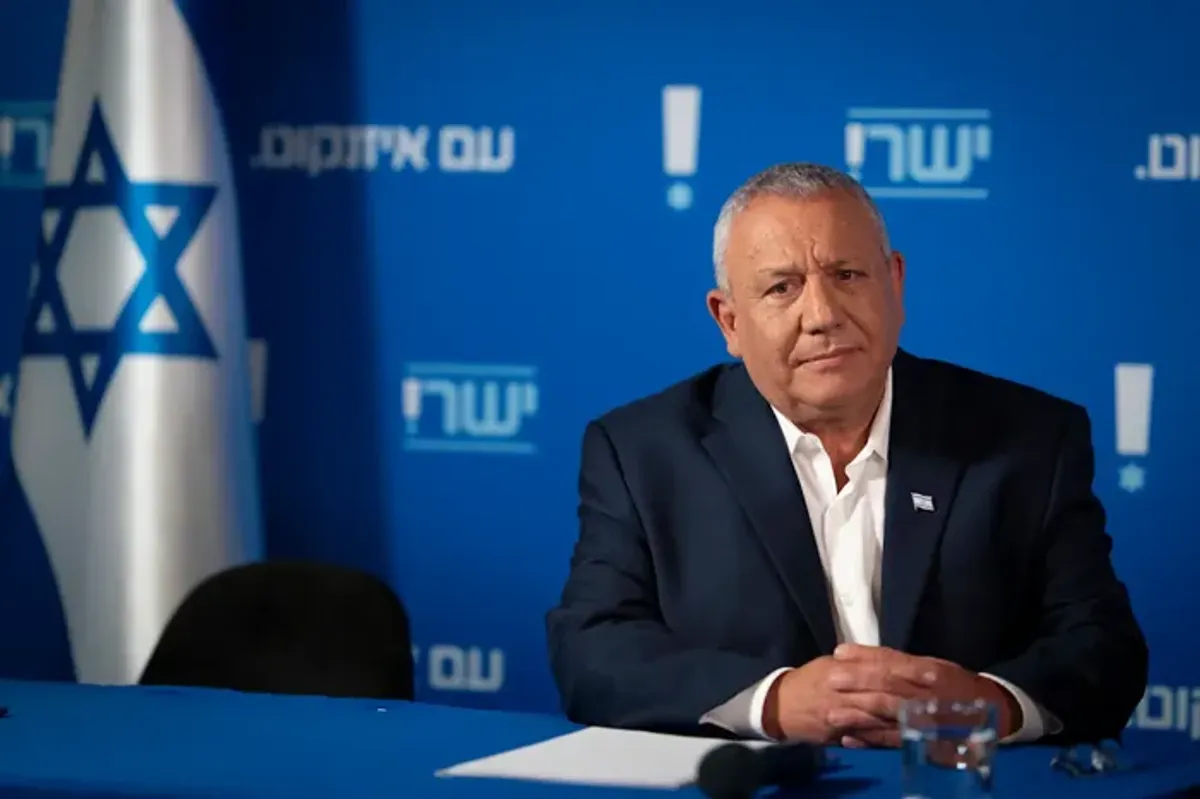
Gadi Eisenkot, leader of Israel's Yeshar party, outlined four conditions for any coalition with Arab parties, including recognition of Israel as a Jewish state.
Key Takeaways
AIGadi Eisenkot, leader of Israel's Yeshar party, has outlined a roadmap for forming the next government coalition following the recent elections, setting out four key conditions for any future political partnership.
In a post on X, Eisenkot stated that these conditions include: recognition of Israel as a Jewish, democratic, and liberal state based on equality; commitment to the values of the Declaration of Independence; mandatory military or civil service for all citizens without exception; and the need to eliminate Hamas's military capabilities and classify it as a terrorist organization.
Eisenkot noted that these conditions form the basis for any future political alliance, potentially opening the door for Arab parties to join the government amid a complex parliamentary landscape, with neither of the two main blocs securing the required majority of 61 out of 120 seats.
Benjamin Netanyahu's bloc won 53 seats, the opposition bloc secured 48, and Arab parties achieved a historic 19 seats.
Mansour Abbas, leader of the United Arab List (Ra'am), expressed willingness to discuss these conditions.
In contrast, Maj. Gen. Dr. Wael Rabie, an expert on regional and Israeli affairs, argued that Eisenkot's conditions do not introduce new legislation, as the 2018 Nation-State Law already defines Israel as a Jewish state. However, the requirement for mandatory service would effectively exclude religious parties such as Shas and United Torah Judaism from the government.
He explained that Eisenkot aims to reassure the Israeli public of his commitment to a liberal Jewish state, even if allied with Arab parties, and that the conditions are intended to counter accusations of "betraying the Jewish state" promoted by Netanyahu.
Rabie added that Eisenkot's statement was assertive, noting that the security failure on October 7 and its subsequent economic and international repercussions require bold decisions, possibly signaling an intention to form an official inquiry committee. Eisenkot also stressed that the war's objectives have not yet been achieved and said he would only support new military operations if there are direct threats.
For his part, Maj. Gen. Mohamed Rashad, former deputy head of Egypt's General Intelligence Service, said that meeting Eisenkot's four conditions is nearly impossible in practice, due to religious parties' rejection of mandatory conscription and their refusal to give up their historic exemption, as well as the challenge of reconciling nationalist demands with the country's diverse society.
Rashad pointed out that Arab parties increased their seats from 10 to 19 as a result of anger over Israeli actions in the West Bank and Gaza, giving them significant political weight and the ability to block any decisions that harm the Arab minority.
He concluded that imposing such tough conditions will clash with political realities, and the new parliamentary strength of Arab parties will make them a key player and watchdog over any future government decisions in Israel.