

Peace Council warns it may return Gaza administration to UN amid stalled transition
The Peace Council has threatened to hand Gaza's administration back to the UN if Israel continues to block agreements on the territory's future.
Key Takeaways
AIThe Peace Council has threatened to relinquish its role in managing Gaza and return responsibility to the United Nations if the Israeli government continues to obstruct the implementation of agreements concerning the territory's future. This comes amid stalled arrangements for the next phase of the ceasefire agreement, while Israeli reports have revealed alternative scenarios for managing Gaza should the council withdraw.
Josh Grunbaum, the Peace Council's chief adviser, said the council may hand the Gaza file back to the UN if the Israeli government fails to honor commitments made by Prime Minister Benjamin Netanyahu to US President Donald Trump. He warned that continued obstruction is diminishing the chances of implementing the plan, in an interview with Israel's Ynet news site.
Grunbaum accused political factions within Netanyahu's government of hindering the council's plan, clarifying that the requirements from Israel do not include a withdrawal from Gaza or security concessions, but rather approval of the necessary steps to allow the designated bodies to begin managing the territory after Hamas's role ends.
The proposed arrangements include deploying an international stabilization force in Gaza, forming a new Palestinian police force, and activating the National Committee for Gaza Administration, a technocratic body intended to oversee civil affairs during the transition period.
Disputes over international force and Palestinian police
According to Grunbaum, the main obstacles to implementing these arrangements are Israel's refusal to sign an agreement permitting the deployment of the international stabilization force in Gaza, and its lack of approval for the travel arrangements of selected Palestinian police officers to attend training for security duties.
Delays in these procedures are postponing the transfer of security and administrative responsibilities to the new authorities, including the handover of weapons that Hamas has agreed to relinquish as part of the disarmament plan. This is hindering the activation of the structures meant to govern Gaza in the coming phase.
Alternative scenarios for Gaza's administration
Highlighting the range of options for Gaza's future, Ynet revealed details of a presentation prepared for Israeli officials outlining possible scenarios if the Peace Council is forced to step back from managing the issue.
These scenarios include transferring responsibility to a new US administration that does not adhere to the Peace Council's framework, or having the UN Security Council take over the file, potentially involving the UN Relief and Works Agency for Palestine Refugees (UNRWA), as well as the Palestinian Authority assuming control of Gaza.
Another scenario presented is that Israel would bear full responsibility for humanitarian, administrative, and other costs related to Gaza's population if the Peace Council's arrangements collapse and it withdraws from the process.
These scenarios have not been presented as final decisions or agreed arrangements, but as alternatives in case the council fails to carry out its mission and is compelled to step aside.
Warnings of ceasefire collapse
Grunbaum's warnings follow a Peace Council report submitted to the UN Security Council on Wednesday, cautioning that the ongoing gap between declared commitments and realities on the ground threatens the ceasefire agreement. The report stressed that a truce that fails to deliver tangible benefits for residents cannot be sustained indefinitely, according to the Associated Press.
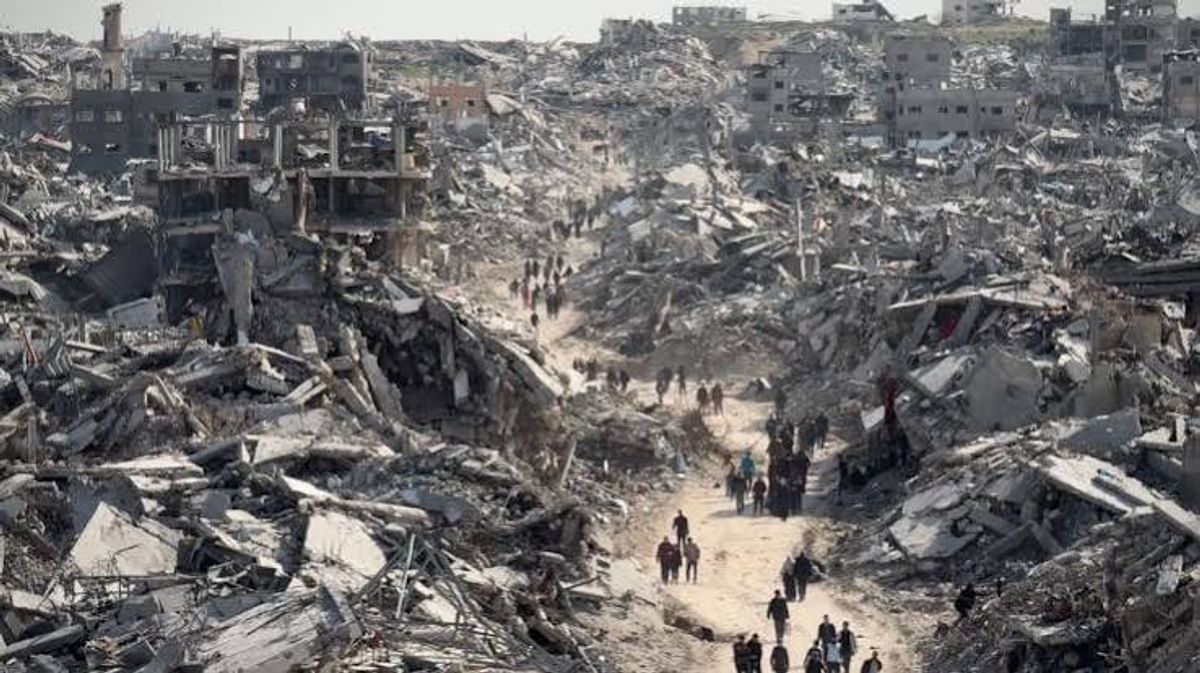
The report highlighted restrictions on the entry of shelter supplies and materials needed for winter, as well as funding shortages, as Palestinians face another winter in tents and among rubble, with continued need for pumps, generators, heavy equipment, and relief materials.
It also warned that failure to complete the training and deployment of the Palestinian civil police is delaying the activation of the technocratic administration and the international stabilization force, both of which are key to the arrangements for Israeli withdrawal and the start of reconstruction.
The report did not attribute the stalled agreement solely to disputes over the new administration, also citing ongoing Israeli military operations and Hamas's military activity, emphasizing that neither side's commitments justify delays by the other in fulfilling their obligations.
Trump plan and obstacles to the next phase
The next phase of arrangements is based on US President Donald Trump's 20-point plan, which outlines a path to end the war starting with prisoner and detainee exchanges, followed by Hamas disarmament, the formation of a Palestinian technocratic administration, Israeli troop withdrawal, and the start of reconstruction.
However, disagreements over the mechanisms for disarmament, Israeli withdrawal, and the nature of the new administration have kept the next phase stalled, despite Hamas's July 30 approval of the Peace Council's disarmament roadmap.