

Trump's Philippines visit strengthens military ties ahead of key summit with Putin and Xi
Donald Trump's visit to the Philippines focused on boosting defense cooperation and trade, setting the stage for a pivotal meeting with Chinese and Russian leaders.
Key Takeaways
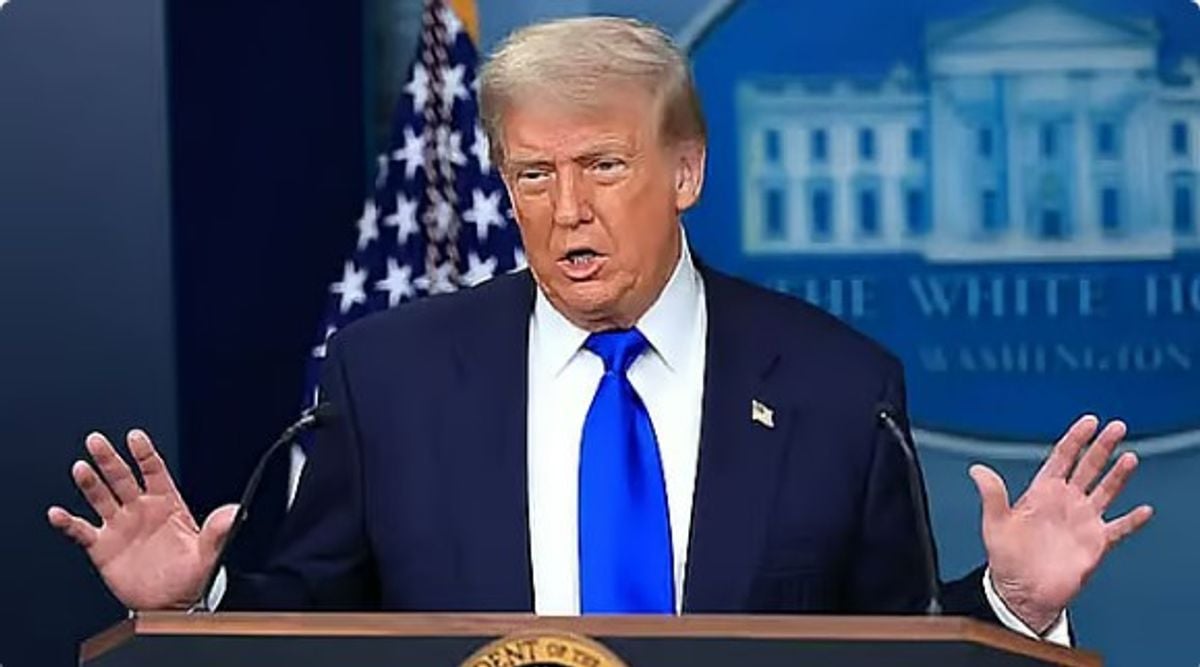
AIUS President Donald Trump's visit to the Philippines carried political, economic, and security messages that extended beyond bilateral ties with Manila, as the White House sought to reinforce its presence in the Indo-Pacific. The trip came amid diplomatic moves to recalibrate relations with China and Russia, ahead of a highly anticipated trilateral meeting with Chinese President Xi Jinping and Russian President Vladimir Putin.
During his meeting with Philippine President Ferdinand Marcos Jr. in Manila, Trump pledged to expand defense cooperation between the two countries, describing the US-Philippines alliance as one of America's oldest and most important partnerships in the Pacific. This underscored Washington's strategic focus on Manila amid rising competition with Beijing.
The visit also yielded economic outcomes, with Trump announcing a trade agreement with Manila, which he called the largest ever signed by the United States. He described the deal as substantial and fair to both sides, noting that it was reached quickly and unexpectedly.
However, details of the agreement—including its value, terms, and sectors covered—were not disclosed. The specifics of trade facilitation and implementation mechanisms remain unclear, leaving its actual economic impact to be determined by future announcements from both governments.
Washington sends signals to Beijing via Manila
Trump's visit came at a sensitive time for US-China relations, with ongoing trade tensions and simultaneous US efforts to deepen security and economic partnerships across Asia.
In this context, the meeting of the Quad—comprising the US, Japan, Australia, and India—took on added significance, marking Trump's first participation in nearly two years since the last leaders' summit.
The four leaders discussed maritime security, export controls, diversification of critical mineral supply chains, as well as undersea cables, emerging technologies, artificial intelligence, and disaster relief.
Through these moves, Washington aims to reaffirm its commitment to the Indo-Pacific and maintain its regional alliance network, as economic and technological competition with China intensifies.
These messages also reflect Southeast Asian nations' desire to balance relations with both powers; China is ASEAN's largest trading partner and a major investor, while the US remains a key economic and security partner for the region.
Protests in Manila highlight challenges for Trump
Despite Trump's positive messaging on US-Philippines relations, his visit was met with protests. Demonstrators gathered in Manila for the fifth consecutive day, holding anti-Trump banners and calling for an end to Middle East wars and the cancellation of the US "Pax Silica" supply chain initiative.
The protests highlight the political and popular challenges facing US moves in the region, even as cooperation with traditional allies continues.
Trump, Putin, and Xi to meet in key test of major power relations
Following his stop in the Philippines, attention turns to Shenzhen, China, where Trump will attend the Asia-Pacific Economic Cooperation (APEC) summit. A highly anticipated trilateral meeting with Xi Jinping and Vladimir Putin is scheduled for Thursday.
The meeting is especially significant as the first of its kind among the three leaders, coinciding with complex global issues such as nuclear non-proliferation, the war in Ukraine, and the future of US-China trade relations.
Trump has indicated that nuclear non-proliferation could pave the way for a new agreement among the world's largest nuclear powers. He also plans to discuss the war in Ukraine, making the summit a test of the leaders' ability to reach understandings on sensitive security matters.
Putin, for his part, expressed optimism about the meeting, saying he expects "significant potential benefits" from the trilateral talks, according to remarks at the APEC forum in Shenzhen reported by Russia's TASS news agency.
The Russian president also spoke about shifts in the global economy, noting that the Asia-Pacific region is now at the heart of these changes and currently accounts for 53% of Russia's foreign trade.
On the sidelines of the forum, Putin and Xi held a bilateral meeting, praising the stability of Moscow-Beijing ties and their benefits for the global order. Putin described the relationship as strengthening, with continued coordination on foreign policy, while Xi called their partnership a new model for major power relations.
Growing Russia-China ties complicate US calculations
The deepening Russia-China partnership presents a diplomatic challenge for Washington. While Trump seeks agreements with Beijing on trade and security, he faces a growing alliance between China and Russia, built on political and economic coordination and shared positions on the international order.
Statements from Putin and Xi underscore Moscow and Beijing's commitment to strengthening their relationship, as the US tries to maintain its influence in Asia without escalating into open confrontation with the two powers.
Trump's visit to the Philippines thus serves as a prelude to a broader US initiative, featuring promises of enhanced defense cooperation and a major but undisclosed trade deal, alongside renewed Asian alliances. The upcoming trilateral summit with Putin and Xi remains the key moment that will determine whether these moves lead to new understandings or expose further divisions among the world's major powers.