

Lebanese parliament passes divisive general amnesty law
Lebanon’s parliament has approved a long-awaited general amnesty law, expected to benefit thousands of prisoners and detainees for the first time since 1991.
Key Takeaways
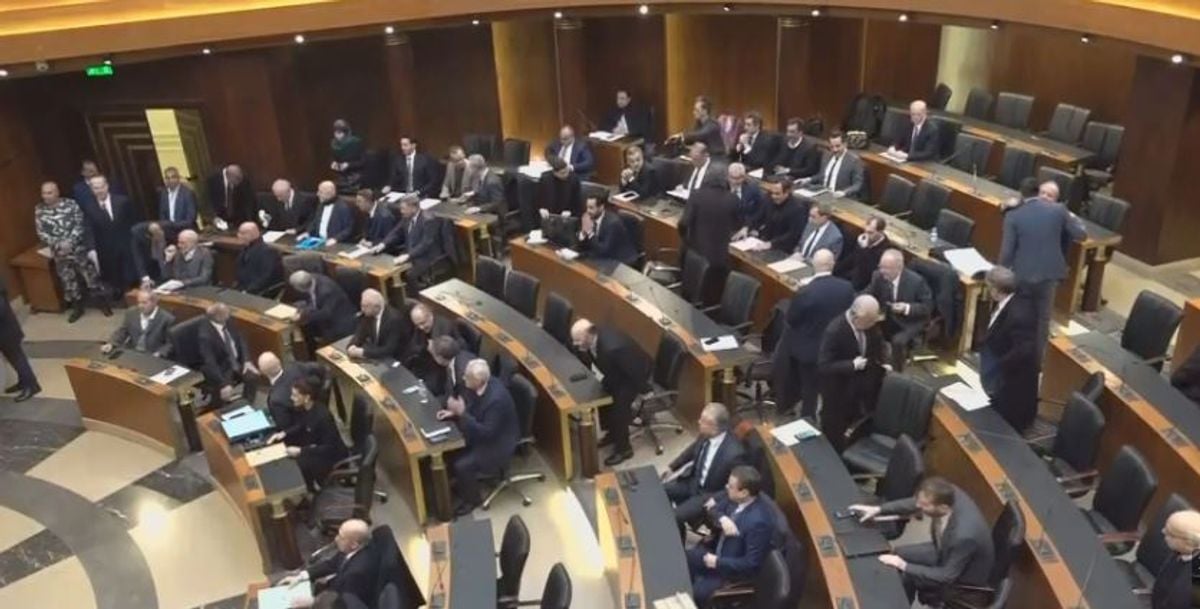
AILebanon’s parliament on Thursday passed a long-awaited general amnesty law, expected to benefit thousands of convicted prisoners, detainees, and fugitives, marking the first such decision since 1991.
In a brief statement, the parliament’s leadership announced: "The proposal for a law granting a general amnesty and exceptionally reducing certain sentences, as amended, has been approved," in a move primarily aimed at easing overcrowding in prisons, where some detainees have been held for years without trial.
According to the National News Agency, the law was passed by a show of hands. However, lawmakers from the Free Patriotic Movement bloc, led by Gebran Bassil, and Hezbollah’s Loyalty to the Resistance bloc walked out of the session after Prime Minister Nawaf Salam refused to allow Defense Minister Michel Mansy to deliver the army’s statement on the amnesty law during the legislative meeting.
Deputy Speaker Elias Bou Saab said that after the law’s approval, Prime Minister Nawaf Salam had no right to prevent the defense minister from addressing parliament, adding that repeatedly blocking the minister from speaking in the session was a "wrong and unconstitutional decision."
According to prison authority statistics, there were 6,268 inmates as of March 30. The National Human Rights Commission reported in its 2025 annual report that prison overcrowding had reached 300 percent.
The push for a general amnesty resurfaced after the fall of the previous regime in Syria in late 2024, particularly in relation to the so-called "Islamist detainees," many of whom were arrested over incidents linked to the Syrian conflict without trial. Most of these detainees are from Tripoli in northern Lebanon and face charges including fighting or attacking the Lebanese army and carrying out bombings.
Other political groups have also demanded that the amnesty cover their supporters. Hezbollah called for the law to include thousands of detainees and fugitives from Baalbek and Hermel in eastern Lebanon, most of whom are accused of drug-related crimes and car theft.
Christian parties, meanwhile, sought to include hundreds of families who fled to Israel after its withdrawal from southern Lebanon in 2000, fearing reprisals over their affiliation with the South Lebanon Army, which collaborated with Israel during the occupation.
Lebanon last passed a general amnesty law a year after the end of the civil war (1975–1990), pardoning crimes committed during the conflict without any real accountability or reconciliation between the warring parties, or justice for the victims and their families.
Justice Minister Adel Nassar described the decision from parliament as "historic," explaining that once the law is published, "countries that have abolished the death penalty will no longer be able to refuse extradition of fugitives from Lebanon," since the obstacle posed by the inclusion of the death penalty in Lebanese law will be removed.
Lebanon has maintained an unofficial moratorium on the death penalty, last carrying out an execution in 2004. The death penalty in Lebanon covers crimes such as murder, "terrorism," and espionage. The law’s passage follows years of advocacy and demands from Lebanese human rights organizations.