

UN report: Over 33,000 Palestinians forcibly displaced from West Bank camps
UN rights office says Israeli forces expelled all residents from three northern West Bank refugee camps in early 2025, raising concerns of international law violations.
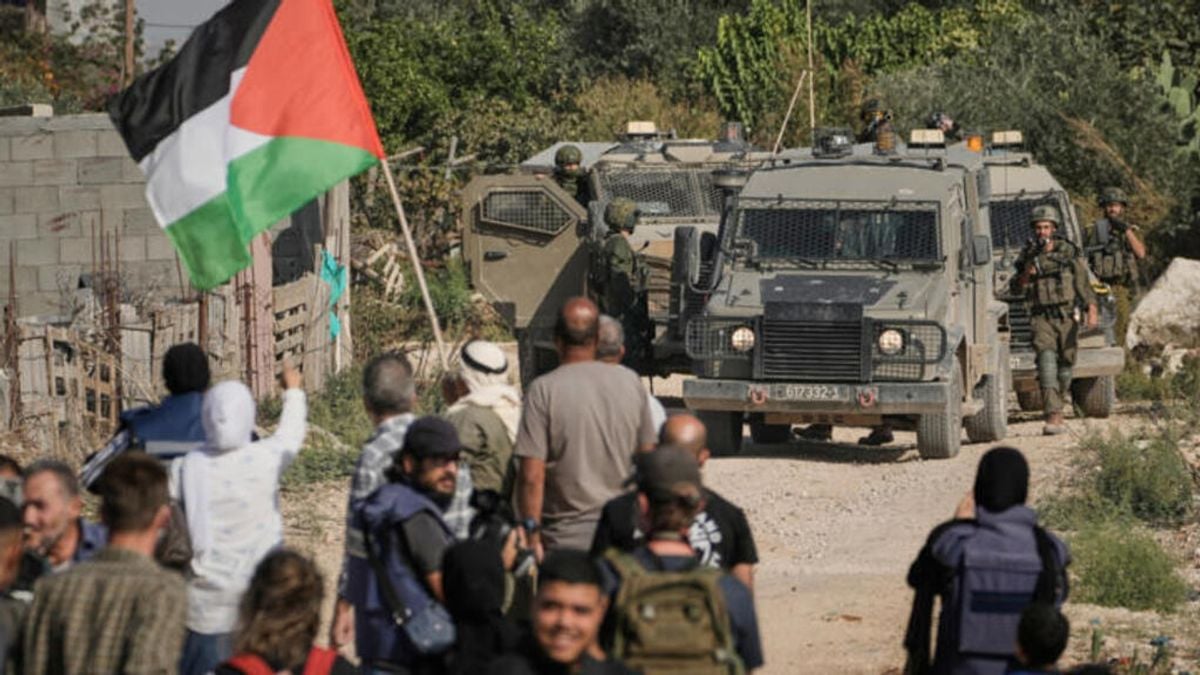
Key Takeaways
AIA report by the UN Office of the High Commissioner for Human Rights has revealed that Israeli security forces forcibly expelled all Palestinian residents from three refugee camps in northern West Bank during January and February 2025, and continue to prevent their return, raising serious concerns about violations of international law.
The report, titled "Destruction of Palestinian Refugee Camps in Northern West Bank," states that more than 33,000 Palestinians were displaced from the Jenin, Nur Shams, and Tulkarm camps during the Israeli operation known as "Iron Wall," which involved army, police, and other security forces.
According to the report, Israeli forces destroyed hundreds of homes, damaged roads and infrastructure, cut off water and electricity, and blocked humanitarian aid from reaching the camps. Security forces went house to house, forcing residents to leave.
The UN rights office said that by October 2025, 52 percent of buildings in Jenin camp had been destroyed or damaged, compared to 48 percent in Nur Shams and 36 percent in Tulkarm as a result of the Israeli operation.
The report noted that these three camps are among 19 Palestinian refugee camps in the West Bank established after the mass displacement during the 1948 Nakba, and are administered by the UN Relief and Works Agency for Palestine Refugees in the Near East (UNRWA).
The report indicated that, within days of the start of "Iron Wall," Israeli security forces had taken full control of the three camps and forcibly displaced all their residents, based on independent monitoring and documentation conducted by the Human Rights Office.
The report quoted displaced Palestinians as saying that Israeli officers told them there would be "no more refugee camps" and that "everyone should go to Jordan."
The report stressed that the large-scale, prolonged, and systematic displacement of more than 33,000 Palestinians raises serious concerns of a crime against humanity in the form of forcible transfer. It added that the use of airstrikes, armored bulldozers, and targeted demolitions to render the camps uninhabitable, forcing residents to flee and preventing their return in the absence of urgent military necessity, is not permitted under international law, appears to amount to collective punishment, and raises concerns of ethnic cleansing.
UN High Commissioner for Human Rights Volker Türk said: "The manner in which Operation Iron Wall was carried out indicates that its aim was to displace as many Palestinians as possible and make way for further illegal Israeli settlements, in further violation of international law."
Türk added: "The occupying power must end its 59-year occupation of Palestinian territory and halt any efforts to forcibly displace more Palestinians or further undermine the territorial continuity of a future Palestinian state. It must also take steps to comply with its obligations under international law, as made clear by the explicit conclusion of the International Court of Justice more than two years ago, which stated that it must end its unlawful presence in the occupied Palestinian territory as soon as possible."
The report said that during the period covered, Israeli forces killed 102 Palestinians, including 21 children, representing 46 percent of all killings by Israeli forces in the West Bank during the same period.
It added that Israeli forces carried out airstrikes and used combat drones and shoulder-fired explosive projectiles—weaponry designed for warfare rather than law enforcement—resulting in the deaths and injuries of unarmed individuals who apparently posed no threat to the forces.
Among the incidents cited in the report were the killing of Sundus Shalabi, who was eight months pregnant, shot while trying to drive away from Nur Shams camp; the shooting of Saddam Hussein Rajab, 10, in the abdomen in Tulkarm while waiting for his father to go to the mosque; the shooting of Ahmed Nimer Al-Shayeb, 43, as he tried to leave Jenin by car; and the killing of a two-year-old girl shot in the head while having dinner with her mother and aunt in Jenin.
According to the report, Israeli authorities claim those killed during the operation were "terrorists," but an internal Israeli investigation into the killing of Sundus Shalabi found she was shot because she was looking at the ground in a way that aroused suspicion.
The report also stated that there were reports of the Israeli military relaxing its rules of engagement in the West Bank, allowing soldiers to use live ammunition against individuals "tampering with the ground," on suspicion of planting explosives.
On February 23, 2025, the Israeli defense minister ordered the army to remain in the three camps and said that displaced Palestinians would not be allowed to return.
According to UNRWA, around 33,362 Palestinian refugees from these camps remained forcibly displaced as of July this year.