

Abdul El-Sayed wins Michigan Democratic Senate primary, could become first Muslim US senator
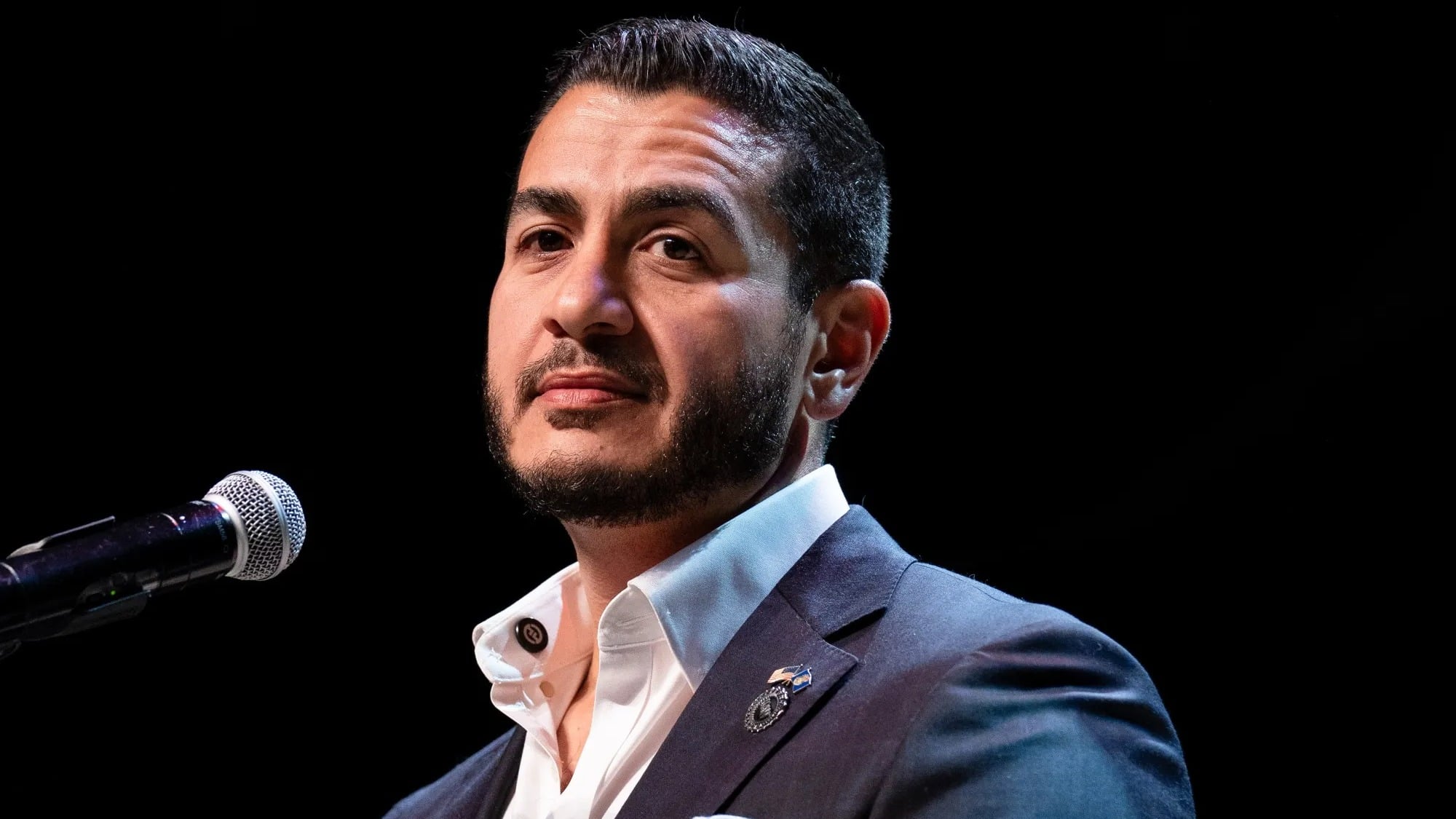
Democrat Abdul El-Sayed has won Michigan’s Senate primary, moving a step closer to becoming the first Muslim senator in US history.
Key Takeaways
AIThe victory of Democratic candidate Abdul El-Sayed in Michigan’s Senate primary has sparked mixed reactions, putting him one step away from entering the US Congress in November’s general election. If successful, he would become the first Muslim senator in US history.
Who is Abdul El-Sayed?
Abdul El-Sayed, a physician of Egyptian descent, is known for his advocacy of universal healthcare and calls to abolish US Immigration and Customs Enforcement. He is recognized as an expert on improving the American healthcare system and authored the book “Medicare for All: A Citizen’s Guide,” which outlines how to build a high-quality, affordable healthcare system for every American.
El-Sayed, 41, was born to an Egyptian immigrant father and raised in southeast Michigan, attending public schools. He graduated from the University of Michigan and earned his medical degree from Columbia University on a National Institutes of Health scholarship. He later completed a second doctorate at Oxford University as a Rhodes Scholar before rising to prominence as Detroit’s health director and later running for Michigan governor.
In 2020, he was selected to serve on Joe Biden’s healthcare unity task force, where he helped shape policies that have contributed to lowering prescription drug prices.
El-Sayed has never held elected office. He entered the Senate race seven years after losing the 2018 Democratic primary for Michigan governor by more than 20 percentage points. After stepping back from politics, he launched a podcast, wrote a book, became a regular presence on YouTube and television, and gradually built a following while awaiting another political opportunity.
When outgoing Senator Gary Peters announced he would not seek re-election, leaving a Senate seat open in one of the nation’s most competitive states, El-Sayed launched his campaign in April—clarified as April 2024, as the 2025 date in some sources appears to be a typographical error—with a four-person team.
El-Sayed’s congressional bid
El-Sayed narrowly defeated moderate Democratic Representative Haley Stevens in the primary, leading by fewer than 15,000 votes—just under one percentage point out of more than 1.5 million votes cast, the highest turnout in the state’s modern history.
He will face Republican candidate Mike Rogers, a staunch supporter of former President Donald Trump, in the November midterm elections.
After his victory, El-Sayed echoed boxing legend Muhammad Ali’s famous words following his 1964 upset over Sonny Liston, saying: “We shook up the world.”
He added: “The movement to get money out of politics, improve people’s financial situation, and establish universal healthcare for all is a big movement,” repeating a campaign slogan he used throughout his run.
In his victory speech on Wednesday, El-Sayed recalled the early days of his campaign: “Last April, I remember speaking to a room of five people. It was a chance to have an honest conversation about pain and purpose. I’ve had 500 similar conversations over the past fifteen months.”
El-Sayed said he visited 110 cities and held more than 500 events, with his volunteer network expanding alongside his campaign to reach 12,000 people, according to his team.
His opponent, Stevens, congratulated him after his win, stating: “I want to congratulate Abdul El-Sayed on winning the Democratic nomination for the US Senate. He is a physician, public health leader, Rhodes Scholar, and a true Michigander. I am proud to support him against Mike Rogers in the general election.”
Michigan is considered a key swing state in presidential elections, having voted for Democrat Joe Biden in 2020 but for Trump in 2024.
His stance on Israel
One of the main differences between El-Sayed and his Democratic rival Haley Stevens was their stance on Israel. El-Sayed strongly opposes US intervention in the Middle East, including aid to Israel, while Stevens is a staunch supporter and has publicly backed continued unconditional US assistance to Tel Aviv.
El-Sayed’s candidacy faced opposition from Michigan’s Jewish community due to his position on US-Israel relations.
What did Trump say?
After El-Sayed’s victory, Trump called the Michigan Senate result “good news for the Republican Party.”
On Truth Social, Trump described Democrats as “radical Democrats,” saying: “Their crazy policies will only get worse!”
In a speech in Las Vegas on Wednesday, Trump accused El-Sayed of “embracing communism” and “working to destroy the American dream.”
Trump also claimed El-Sayed “hates Jews and hates Israel,” adding: “He doesn’t like anyone. If you put him in office, you’ll see what he likes. He doesn’t like Israel, he doesn’t like Jews; in fact, he hates them, hates them deeply, and there’s nothing he can do about it.”
US Vice President J.D. Vance also warned of the possibility that El-Sayed, the Egyptian-American physician, could run for president in three years.
Vance said El-Sayed’s rise could undermine “all the incredible work we’ve done,” expressing concerns about El-Sayed’s potential policies if he were to reach the White House.