

US forces ready for major operations against Iran within 96 hours: CNN
US military in the Middle East can launch large-scale strikes on Iran within 96 hours of a Trump order, with targets including energy and nuclear sites, CNN reports.
Key Takeaways
AI
US forces deployed in the Middle East are prepared to launch new military operations against Iran within 96 hours of an order from President Donald Trump, with the Pentagon and US Central Command readying options that could target Iranian energy infrastructure, military sites, and nuclear facilities, according to US officials cited by CNN.
Two US officials said available forces in the region are sufficient for potential strikes, and that the scope of operations may go beyond limited attacks on radars, launch platforms, and other quickly restorable Iranian assets, which have been the focus since Trump halted full-scale combat operations earlier this year.
The report quoted one US official as saying, "It would be a major effort." Current and former US officials familiar with internal military discussions said some believe it is a matter of when, not if, Trump will issue the order, with a decision possible at any time before year-end, though action is more likely after the US midterm elections.
However, Trump has not finalized his decision on the next steps after the elections, although he appears inclined to authorize broad operations, according to officials. They cautioned that he has previously shown a tendency to consider similar actions before pulling back at the last moment.
The White House declined to comment on these preparations. A senior Pentagon official told CNN: "The department is organized to plan, and its mission is to develop and execute military options as directed by the president."
Military and nuclear targets, warnings of Iranian response
US Central Command and Pentagon leaders are preparing an extensive list of potential targets inside Iran, including energy infrastructure, military sites, and nuclear facilities. The US military faces the challenge that Iranian forces have gained greater familiarity with American tactics, making it harder to destroy all intended targets.
Meanwhile, recent US intelligence assessments indicate that Iran and the Houthis are taking the possibility of renewed US—and possibly Israeli—strikes against Iran seriously, according to two additional sources familiar with these assessments.
According to the sources, new US and Israeli military operations against Iran could prompt Tehran and the Houthis to immediately retaliate by targeting US personnel and facilities across the region, with the potential for attacks to spread further.
An unclassified memo dated October 23, sent by Director of National Intelligence Jai Clayton to US Secretary of State Mike Pompeo, reveals that US intelligence has detected a significant increase in Iranian efforts to target US personnel, with planning for such operations "reaching advanced stages in both the Middle East and some other countries," as previously reported by CNN.
Despite these indicators, US intelligence officials believe Iran and the Houthis are unlikely to launch preemptive escalatory attacks against US or Israeli personnel at this time, but would not hesitate to respond if US or Israeli forces strike Iran first, according to a source familiar with the latest intelligence assessments.
Washington reduces diplomatic and military presence in region
The threat posed by Iran and the Houthis is one reason the US is quietly withdrawing personnel from its embassies in the Middle East in the coming days, according to a source.
In another sign of possible regional escalation, a US official told CNN that non-essential US military personnel scheduled for deployment to the Middle East in the next rotation have been notified not to deploy.
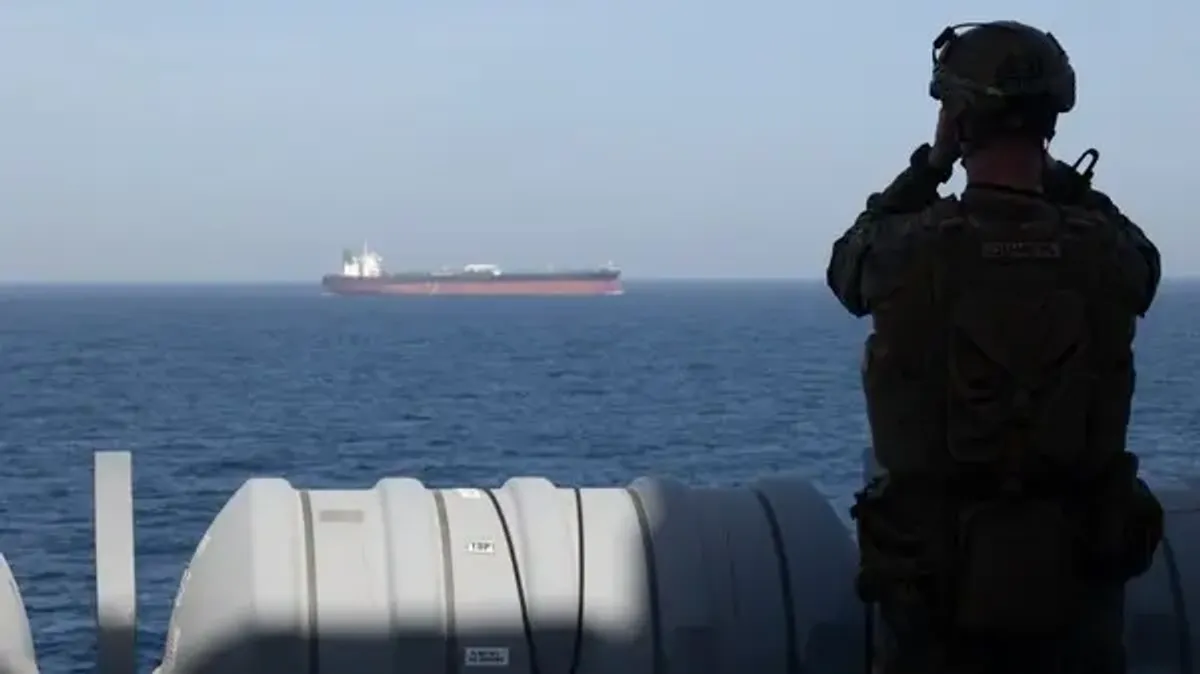
These developments coincided with a visit by US Central Command chief Admiral Brad Cooper to the Strait of Hormuz on Sunday, as the US military continues to blockade Iranian ports and assist navigation through the vital waterway.
CENTCOM said Cooper "reviewed the current operational environment" during a helicopter flight over the strait and met with service members who cleared Iranian mines from the waterway.
Cooper said in a press statement: "We continue to stand alongside our Gulf partners and the shipping sector." He added, "This visit underscores our strong commitment to ensuring freedom of navigation through the Strait of Hormuz."
Despite an increase in oil tankers passing through the strait, oil prices remain high, partly due to the threat of possible Iranian attacks. A US official acknowledged that the current situation around the strait is "unsustainable" in the long term, noting that unless a last-minute diplomatic breakthrough occurs, this could be among the reasons prompting Trump to consider military action, despite questions about whether the White House has a broader strategy to end the conflict.
Israel pushes to resume strikes, awaits coordination with Washington
On the Israeli side, Prime Minister Benjamin Netanyahu is pressing for new attacks on Iran, but US officials have asked him to delay until the Trump administration is ready for joint operations, according to US officials and an Israeli security source.
The Israeli security source told CNN: "Netanyahu was eager and tried to persuade Trump to launch a joint attack on Iran before the elections, but Trump did not give the green light." The Israeli prime minister's office denied this account, calling it "fake news."
The source added that one reason for Trump's refusal was that Israeli Chief of Staff Eyal Zamir informed US General Dan Coats, Chairman of the Joint Chiefs of Staff, that launching the attack would harm Israel's elections and cause a postponement.
Israeli Channel 12 reported Sunday that a "unprecedented confrontation" occurred between Zamir and Netanyahu less than 48 hours before Tuesday's scheduled vote.
The report said Zamir received a political directive regarding Iran but requested a thorough discussion and the necessary legal approvals before implementation, fearing that action could trigger a miscalculation and immediate confrontation.
Israeli Defense Minister Avigdor Lieberman said the report was "completely baseless and false." He added that the Israeli military is preparing for any scenario and coordinating closely with Washington.
Israel had been preparing for possible additional strikes on Iran over the past week and is pressing US officials to support and participate in new operations, according to a third source familiar with the matter who spoke to CNN.
However, senior US officials, including Trump, have asked Israel to hold off, indicating instead that the two countries will soon conduct joint operations.
Information suggests Israel has postponed immediate plans for further strikes but is preparing for possible joint operations with the US, likely after the US midterm elections, according to sources.
The source explained that Israel's agreement to delay is partly due to its need for US support in missile defense, as Iran and the Houthis are expected to retaliate against any attack, while Israeli defensive munitions have been strained during the war.
Netanyahu's statements on toppling the Iranian regime
Recent US intelligence assessments indicate that Netanyahu and his allies still lack a clear strategic goal beyond showing "progress" and continuing to weaken the Iranian regime, according to a source familiar with the reports.
Netanyahu said during a speech at an Israeli military graduation ceremony this week that his instructions to the Israeli military, Mossad, and other security agencies are to bring down the regime in Iran.
The same source told CNN: "The plans are ready and awaiting Trump's approval, which may come after the midterm elections."