

GCC, Switzerland hold first joint ministerial meeting to boost partnership
GCC Secretary-General Jasem Albudaiwi says the inaugural joint ministerial meeting with Switzerland marks a major step toward deeper political dialogue.
Key Takeaways
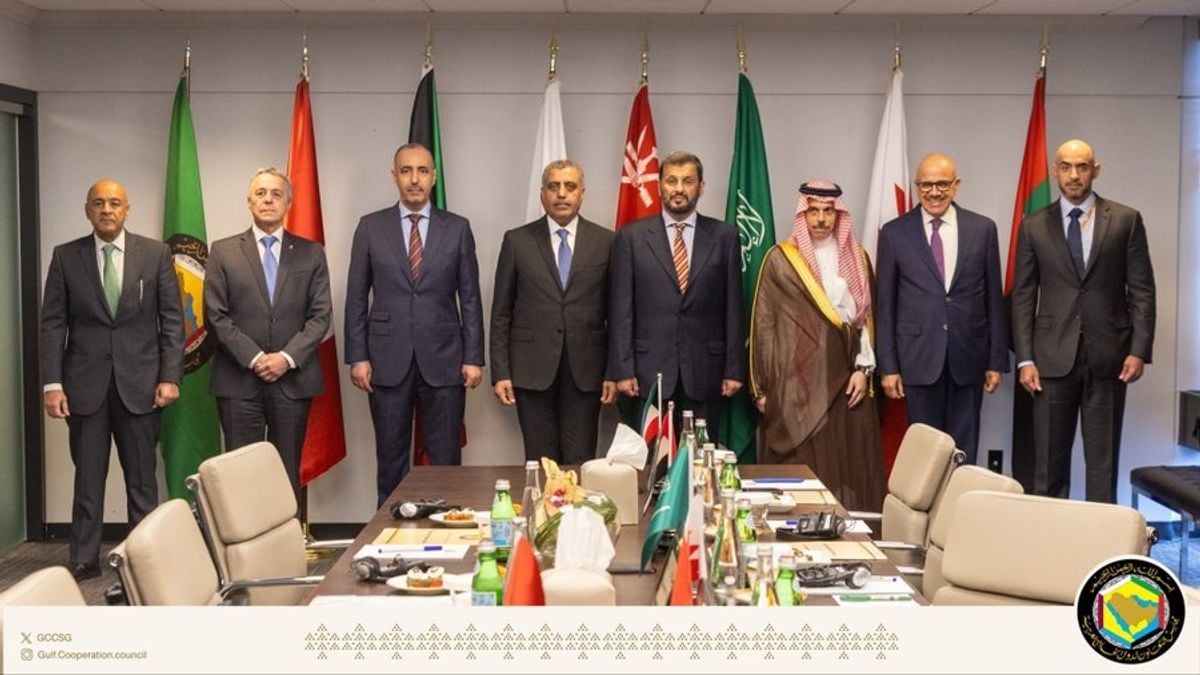
AIGulf Cooperation Council Secretary-General Jasem Mohammed Albudaiwi said the first joint ministerial meeting between the GCC and Switzerland marks an important step toward strengthening political dialogue and consultation, opening broader prospects for advancing relations to more effective and advanced levels.
He made the remarks during the joint ministerial meeting held on Monday, September 21, 2026, in New York, chaired by Bahrain’s Minister of Foreign Affairs Abdullatif bin Rashid Al Zayani, who currently presides over the GCC Ministerial Council, and Swiss Federal Councillor and Foreign Minister Ignazio Cassis, with the participation of GCC foreign ministers.
Albudaiwi noted that relations between the GCC and Switzerland have seen significant progress this year, highlighted by the signing of a memorandum of understanding to establish a strategic dialogue in January. He expressed the GCC’s hope to translate this memorandum into practical, tangible initiatives that enhance shared interests.
He added that the GCC Secretariat has prepared a draft joint action plan with Switzerland, outlining mechanisms and proposals for cooperation in political, cultural, developmental, and humanitarian fields. He expressed hope that the necessary steps would be completed soon to approve the plan, which would expand areas of cooperation and strengthen ties between the two sides.
On regional and international developments, Albudaiwi reviewed the ballistic missile and drone attacks launched by Iran and its proxies against GCC states since February 28, 2026, targeting vital infrastructure and causing human and material losses, despite the GCC not being a party to the conflict and making continuous mediation efforts to contain the escalation.
He stressed that the disruption of international navigation and the closure of the Strait of Hormuz have had global repercussions, including higher energy prices, supply chain disruptions, and increased burdens on governments and businesses. He emphasized that the security of maritime passages in the Gulf is an international, not just regional, concern.
The secretary-general called for Iran’s full compliance with UN Security Council Resolution 2817, a permanent and unconditional halt to attacks, guarantees against their recurrence, and the restoration of navigation in the Straits of Hormuz and Bab Al-Mandab to pre-February 28, 2026 levels.
He also reiterated the centrality of the Palestinian issue, the need to end Israeli occupation, and the establishment of an independent Palestinian state along 1967 borders with East Jerusalem as its capital, in line with the Arab Peace Initiative and relevant international resolutions. He expressed the GCC’s hope that Switzerland would recognize the State of Palestine, supporting international efforts to realize the two-state solution.
View the post on X
In closing, Albudaiwi expressed hope that this inaugural ministerial meeting would launch a new phase in GCC-Swiss relations, building on existing understanding and cooperation to achieve even more ambitious goals.