

Netanyahu calls for unity government, warns against Arab-backed coalition
Outgoing Israeli Prime Minister Benjamin Netanyahu has urged the formation of a unity government of Zionist parties, warning against a coalition reliant on Arab parties.
Key Takeaways
AIOutgoing Israeli Prime Minister Benjamin Netanyahu has called for the formation of a national unity government including Zionist parties, cautioning against rushing to form a new government. His remarks come ahead of Israeli President Isaac Herzog’s announcement, expected Sunday, of the candidate who will be given the first opportunity to form a governing coalition, as Yeshar party leader Gadi Eisenkot intensifies efforts to become prime minister.
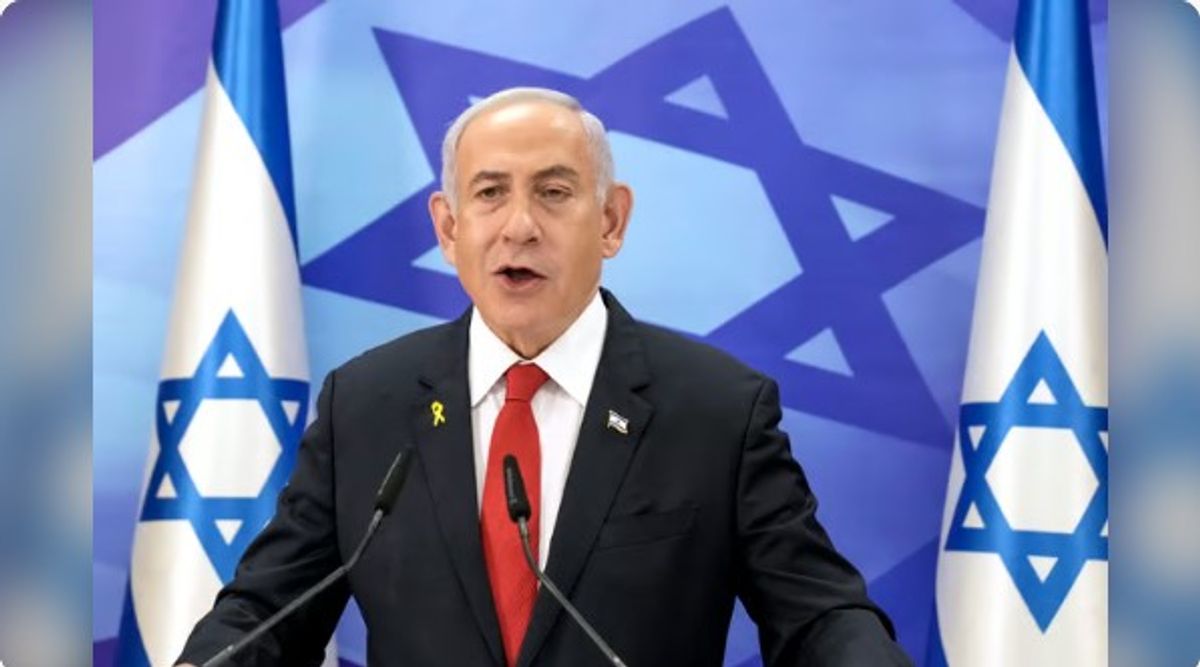
In a video posted Saturday on X, Netanyahu said Israel is facing a period that requires national unity. He noted that he called for a unity government during the election campaign and reiterated the call after the vote, saying it reflects "the will of the people" and the needs of the current stage.
Netanyahu also criticized attempts to form a government with the support of Arab parties, claiming that "some intend next week to install a government that includes supporters of terrorism and people seeking to destroy the state." He called for a government that brings together all parties of the national camp, including Zionist parties.
The outgoing prime minister outlined three objectives for the government he envisions: permanently eliminating the Iranian nuclear threat, maintaining Israel as a Jewish state, and achieving internal unity.
Netanyahu’s call coincides with Gadi Eisenkot’s efforts to form a new government. On Friday, Eisenkot announced he had held intensive consultations with his partners in recent days to establish a national emergency government, citing what he described as an emergency threatening Israel and escalating its security and diplomatic challenges.
Eisenkot said in a post on X that he and his partners are working to form a government that will be sworn in as soon as possible, based on the four Zionist change and reform parties, while allowing other parties and Knesset members who agree to his principles to join. He revealed "progress and breakthroughs" in negotiations and expressed hope to be tasked with forming the government early next week.
President Isaac Herzog is expected to announce on Sunday the candidate who will be given the first chance to form a coalition government, after concluding consultations with political parties on Thursday and hearing their recommendations. Herzog described the discussions as frank and direct, with in-depth questions raised.
The United Arab List and the Joint List, which includes three main Arab parties, have recommended Eisenkot to form the next government. In the recent parliamentary elections, Netanyahu’s Likud party won 27 out of 120 seats, while Eisenkot’s newly formed Yeshar party secured 21 seats.
If Eisenkot is tasked with forming the government and relies on Arab party support, he will face the challenge of maintaining coalition unity, as some opposition allies may refuse to cooperate with those parties.