

Lebanon's Nawaf Salam warns of vacuum if UNIFIL mandate ends
Lebanese Prime Minister Nawaf Salam warns of a security vacuum if UNIFIL ends, urging continued international presence and state control over weapons.
Key Takeaways
AILebanese Prime Minister Nawaf Salam has warned of a possible security vacuum if the mandate of the United Nations Interim Force in Lebanon (UNIFIL) comes to an end, stressing his country's need for continued international presence in southern Lebanon. He also reaffirmed his government's commitment to ongoing reforms, asserting that all weapons must remain under state control.
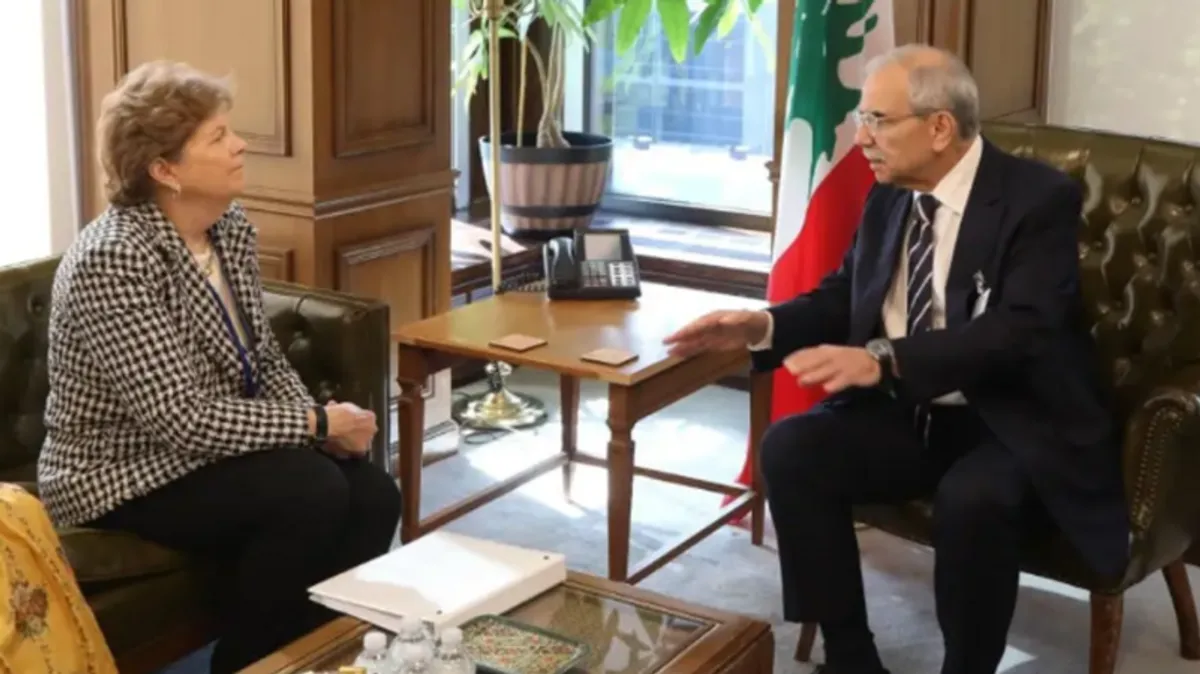
Salam made these remarks during a meeting with US Senator Jeanne Shaheen, a senior member of the Senate Foreign Relations Committee, at Lebanon's Permanent Mission to the United Nations in New York, in the presence of Lebanon's Ambassador to the United States, Nada Hamadeh Mouawad. The two sides discussed the latest developments in Lebanon and the region, as well as Lebanese-American relations.
Salam emphasized the importance of continued US support for the Lebanese Armed Forces and strengthening its capabilities, in addition to rallying international support for Lebanon's recovery and reconstruction efforts. He praised Senator Shaheen's positions in support of Lebanon, particularly her ongoing backing of the Lebanese army.
The Lebanese prime minister reiterated his government's commitment to pursuing reforms, extending state authority, and ensuring that weapons remain solely in the hands of the state. Senator Shaheen, for her part, stressed the need for Lebanon to continue efforts to ensure that arms are exclusively under state control.
She also underscored the importance of the Lebanese parliament passing the financial gap law and moving forward with the reforms required to reach an agreement with the International Monetary Fund.
The issues of arms control and international presence in southern Lebanon are linked to the framework agreement reached between Lebanon and Israel on June 26, after five rounds of direct negotiations brokered by the United States. The agreement called for the disarmament of Hezbollah and the gradual withdrawal of Israeli forces from occupied areas in southern Lebanon, with the Lebanese army deploying initially in designated 'pilot' zones.
However, Israel continues to occupy large areas in southern Lebanon and has announced the establishment of a 'security zone' extending up to 10 kilometers along the border. It also continues to carry out strikes and large-scale demolitions and explosions.