

Netanyahu orders major military operation in West Bank after Hebron attack
Israeli Prime Minister Benjamin Netanyahu has announced preparations for a large-scale military operation in the occupied West Bank following a shooting that wounded five Israelis.
Key Takeaways
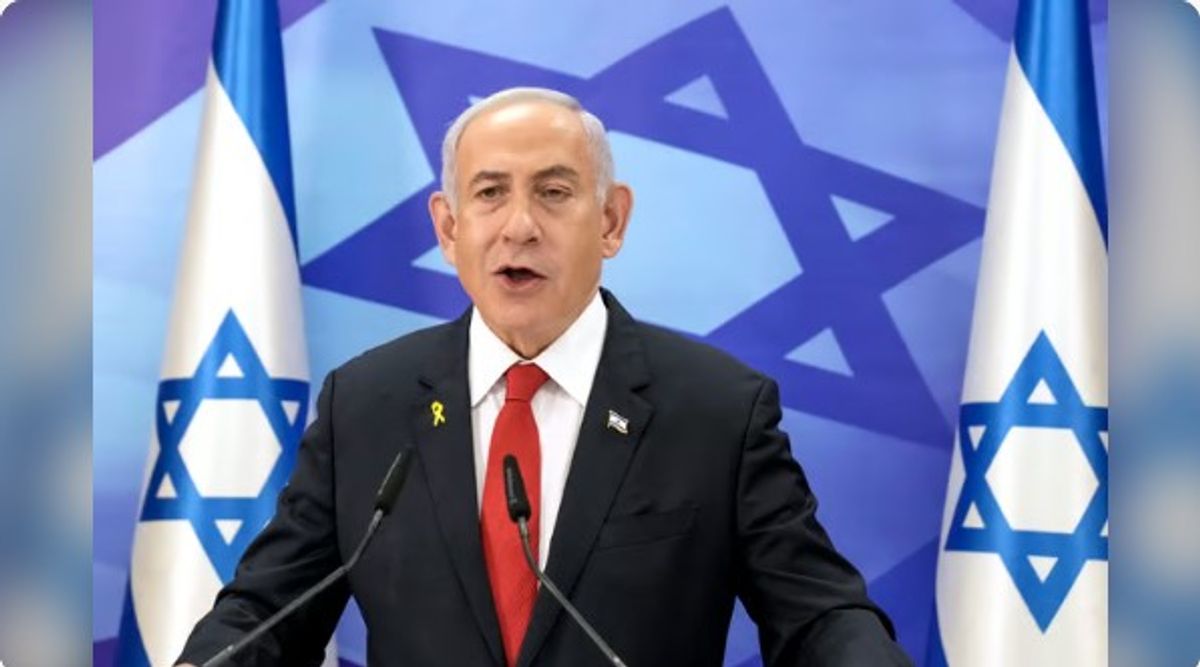
AIIsraeli Prime Minister Benjamin Netanyahu announced on Friday preparations for a large-scale military operation in the occupied West Bank, following a shooting attack that wounded five Israelis. In response, Israeli forces imposed a siege on the city of Hebron and closed roads leading to it, while also preparing to seal off the entire West Bank.
Netanyahu said he had instructed the Israeli military and security forces to immediately impose a blockade on Hebron, prepare for a full closure of the West Bank, reinforce troops, and carry out extensive arrest campaigns.
The attack took place on Friday morning at an Israeli military checkpoint at the western entrance to Hebron in the Farsh al-Hawa area, near Highway 35, according to Magen David Adom. Five people were wounded, with two in critical condition, one moderately injured, and two sustaining minor injuries.
After a pursuit by Israeli forces, two Palestinians, Hamouda and Firas Jawabah, both 27 and from the same family in Hebron, were killed.
Israeli military chief Eyal Zamir announced that a large quantity of ammunition was found inside the vehicle used by the attackers, claiming that the swift response by Israeli forces prevented a larger attack.
As part of the Israeli measures in Hebron, occupation forces closed the Ibrahimi Mosque to worshippers on Friday, expelled staff and caretakers affiliated with the Palestinian Ministry of Endowments and Religious Affairs, and barred them from entering the site.
The Palestinian Ministry of Endowments condemned the closure and expulsion of staff, calling it a violation of the sanctity of Islamic holy sites and the freedom of worship guaranteed by international conventions and laws.
Meanwhile, Israeli National Security Minister Itamar Ben-Gvir called for dismantling the Palestinian Authority, disarming its forces, and eliminating what he described as the infrastructure of terrorism, warning of the risk of renewed confrontation in the West Bank.
Ben-Gvir described the attack as a "painful and bloody reminder" of the cost of current security policies, saying that Israel should not wait for another October 7 event in the West Bank and must act before it is too late.