

Wall Street Journal: Iran resumes ballistic missile production from stored components
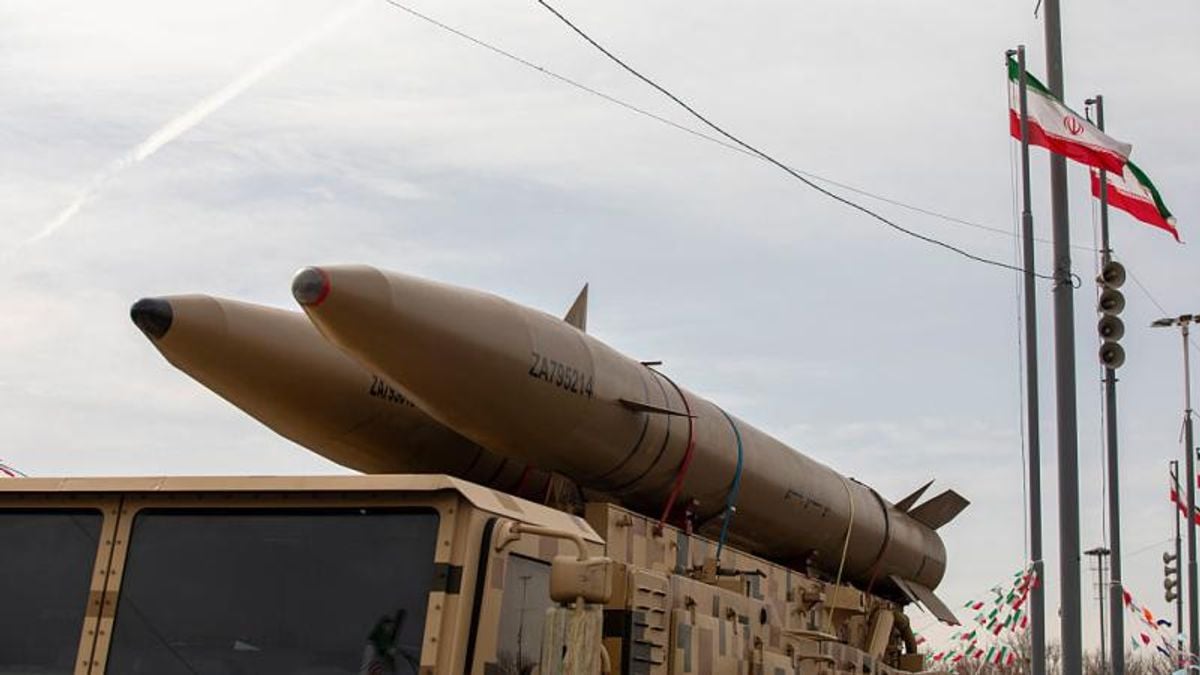
Iran has restarted production of new ballistic missiles using stored parts and underground facilities, but at lower volumes than before the war, US officials say.
Key Takeaways
AIIran has resumed production of new ballistic missiles using components it had previously stockpiled, alongside renewed activity at underground facilities, according to US officials cited by The Wall Street Journal. Current production is focused on assembling missiles in smaller quantities than before the war.
Officials said Tehran is now assembling both liquid- and solid-fueled missiles using existing components, with intelligence reports indicating activity at several underground sites, including the Khojir missile facility in southeastern Iran.
They added that Iran is also building new underground assembly sites to reduce the risk of future strikes. One US official estimated that, following a preliminary agreement with the administration of President Donald Trump in mid-June—which reopened the Strait of Hormuz and began talks to end the war—Iran was able to assemble at least 200 missiles from available parts.
A White House official did not directly confirm Iran's resumption of ballistic missile production but said Iran's nuclear facilities had been "completely destroyed" and its military capabilities "severely damaged." He added that Iran is "weaker now than ever before" and stressed that President Donald Trump "will not allow Iran to acquire a nuclear weapon."
Pentagon spokesperson Sean Parnell stated that the US had "destroyed up to 90% of Iran's drone, ballistic missile, and naval industrial base," significantly weakening Tehran's ability to launch missiles and drones.
However, the Wall Street Journal reported that Iran may have resumed missile production at a low rate using pre-war stockpiled components. According to Jim Lamson, a visiting fellow at King's College London and former CIA analyst specializing in Iranian military affairs, these stockpiles included completed warheads, missile bodies, and guidance and control systems.
Lamson pointed to old photos and videos released by Iran showing large numbers of these components lined up in underground facilities. He explained that the scale of new production depends on the remaining stockpiles and the number of operational underground sites, estimating output could range from "hundreds to possibly thousands" of missiles.
Iran depleted part of its ready missile stockpile during the war, forcing it to scale back attacks, but it still retains significant missile capability, with its arsenal estimated in the thousands.
Tal Inbar, chief analyst at the US Missile Defense Advocacy Alliance, said it would be "extremely naive" to assume Iran would not rebuild its missile capabilities. He noted that the pause in strikes allows Tehran to repair damaged infrastructure, purchase new components from other countries, and store them in its facilities.
Iranian missile production sites, storage depots, and launch platforms were hit by thousands of US and Israeli strikes in the early stages of the war, while a naval blockade complicated the import of some components and materials needed for solid fuel production.
Tehran used the lull over the summer to rebuild its military capabilities, believing the ceasefire might not last. In April, US Defense Secretary Pete Hegseth said Iran's missile program had been "effectively destroyed" and that Tehran could no longer produce new missiles.
In contrast, satellite images have shown Iran rebuilding various facilities—from bridges and roads to missile production sites—at a pace that has alarmed Israeli officials, according to previous reports. Tehran has also reopened tunnel entrances at missile bases that were collapsed by US and Israeli airstrikes, with Israeli military estimates suggesting that many stored weapons inside these sites may have remained largely intact.
Despite reconstruction efforts, Iran faces major challenges in restoring large-scale missile manufacturing. The country's missile program dates back to the 1980s during the Iran-Iraq war, when Tehran lacked a modern air force, and missiles became a key pillar of its deterrence strategy.
Iran previously rebuilt its missile program after the 12-day war with Israel in June 2025, managing to replenish its stockpiles faster than expected despite attacks on the program. This prompted Israel to warn that new strikes might be needed before the end of the year.
Nicole Grajewski, an expert on Iranian strategy at Sciences Po in Paris, said the missile program is being rebuilt faster and in a more dispersed manner than the nuclear program, explaining that Iran had established this complex infrastructure in anticipation of attempts to target and destroy it.