

Turkey to receive Russian diesel under Moscow-Washington deal, says energy minister
Turkey will secure Russian diesel supplies following a US-Russia agreement, Turkish Energy Minister Alparslan Bayraktar announced on Monday.
Key Takeaways
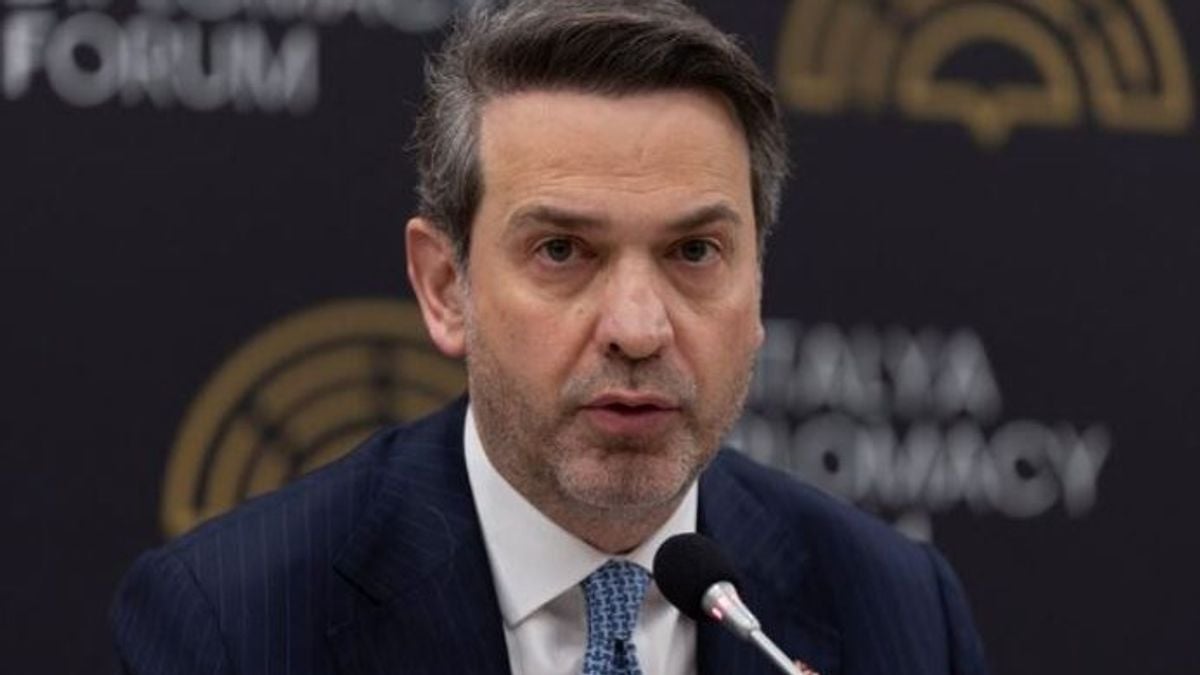
AITurkish Minister of Energy and Natural Resources Alparslan Bayraktar said on Monday that Turkey will receive a portion of the diesel supplies Russia is sending to global markets, under an agreement reached with US President Donald Trump.
Bayraktar told Reuters that the diesel supply agreement between the United States and Russia is significant for Turkey's energy security.
According to Reuters, "Russia imposed restrictions on diesel exports in recent months when it began facing this issue. Now, it has reached a diesel agreement with Trump, and through the discussions we have held, we will receive part of this diesel for Turkey."
The energy minister also noted that Turkey plans to launch a second floating gas production platform in the first quarter of 2028, which will increase Turkey's daily Black Sea gas output to 45 million cubic meters.
Yesterday, Turkey sent the Osman Gazi platform—its first floating gas production facility—to the Black Sea, a move Bayraktar said is expected to nearly double daily output from the Sakarya field, the country's largest gas field, to 20 million cubic meters from the current 9.5 million cubic meters, equivalent to 7.3 billion cubic meters annually.
Bayraktar said, "In the first quarter of 2028, the second floating production platform will arrive in Turkey, and through it, we will produce 25 million cubic meters. It has a slightly larger capacity than Osman Gazi," adding that with a total output of 45 million cubic meters, "we will be able to use our domestic gas in three out of every four homes in Turkey."
The minister added that Turkey's daily output from the field will rise to 550,000 barrels of oil equivalent once the second floating platform is operational. He also noted that planned hydrocarbon exploration off the coast of Pakistan has been delayed by about six months due to the impact of the Iran war on the region.