

BRICS concludes 18th summit in New Delhi with new cooperation initiatives
The 18th BRICS Summit wrapped up in New Delhi after two days of talks on global governance, trade, development, and international cooperation.
Key Takeaways
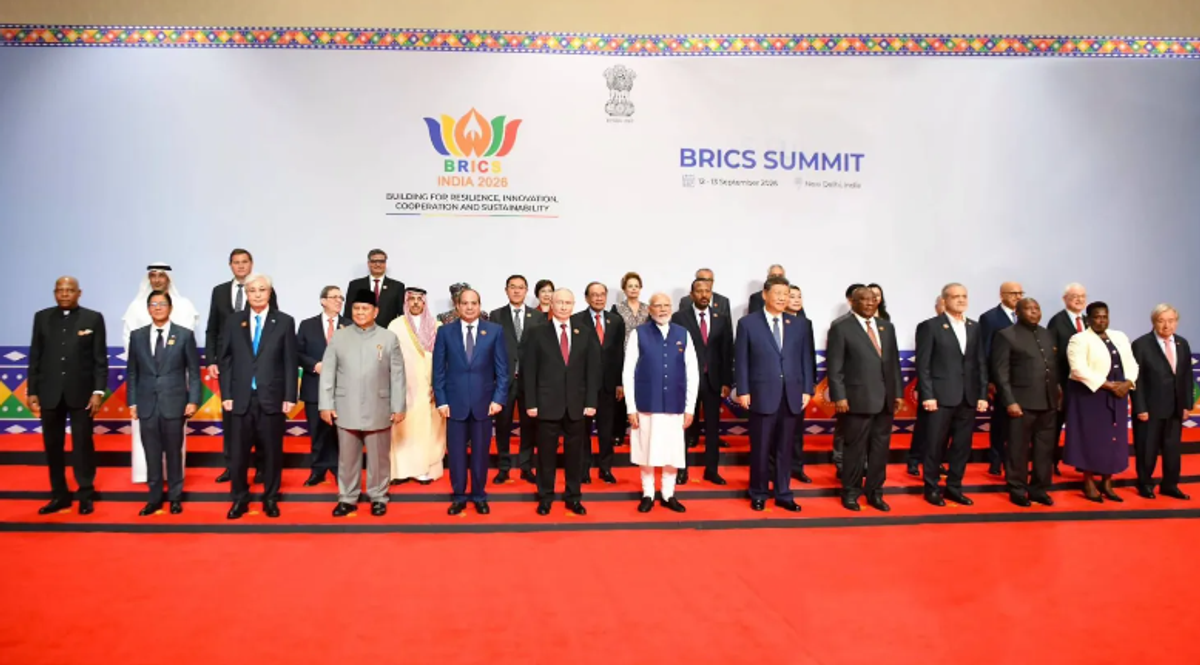
AIThe 18th BRICS Summit concluded on Sunday in New Delhi, after two days of meetings that brought together leaders from member states, partner countries, and invited nations to discuss global governance, trade, development, technology, sustainability, health, and international security.
Saudi Arabia participated as an invited country, with a delegation led by Foreign Minister Prince Faisal bin Farhan bin Abdullah, representing Crown Prince and Prime Minister Mohammed bin Salman bin Abdulaziz Al Saud.
Held under the theme "Building for Resilience, Innovation, Cooperation, and Sustainability," the summit addressed complex political and economic challenges, steering discussions toward reforming global governance institutions and enhancing the representation of the Global South in international decision-making.
Global governance reform
The first day focused on reforming the multilateral international system, strengthening the role of the United Nations, increasing the representation of emerging economies and developing countries in international financial institutions, and developing more effective frameworks for trade, finance, and development.
Indian Prime Minister Narendra Modi emphasized the need for global governance institutions to undergo reforms that reflect current economic and political realities, calling for greater participation of the Global South in decision-making processes.
At the end of the first day, BRICS leaders adopted the "New Delhi Declaration," which outlined the group’s political and economic directions, reaffirmed support for reforming the UN system and international financial institutions, and called for enhanced cooperation in trade, investment, and sustainable development. The declaration also rejected unilateral economic and trade measures that impact global commerce.
The declaration addressed international developments, expressing concern over rising tensions and conflicts in the Middle East, urging maximum restraint, protection of civilians, and the resolution of disputes through peaceful means, dialogue, and diplomacy.
From consensus to initiatives
On the second day, discussions moved to an expanded session titled "Resilience, Innovation, Cooperation, and Sustainability: Shaping the Future for Inclusive Global Growth," with participation from member, partner, and invited countries.
The session focused on translating political consensus into practical initiatives in the fields of economy, technology, health, supply chains, and development.
Prime Minister Modi announced that BRICS countries had agreed to establish an integrated early warning system for the prevention and control of infectious diseases, as well as to strengthen cooperation in disaster management and logistics supply chains to enhance countries’ abilities to handle cross-border crises.
In the area of innovation, India proposed the creation of a BRICS startup innovation fund, the development of a business incubator network, and a digital agriculture network that combines artificial intelligence, geospatial technologies, digital infrastructure, and the needs of the agricultural sector.
‘Greater BRICS’ and technological cooperation
The summit also saw Chinese initiatives to expand economic and technological cooperation under what President Xi Jinping described as "Greater BRICS," including the establishment of an open-source artificial intelligence zone and enhanced collaboration among special economic zones.
China also announced plans to host a BRICS services trade forum during its next presidency of the group.
On the economic front, Russian President Vladimir Putin stressed the importance of deepening integration among BRICS economies, noting that intra-group trade had reached around $1.2 trillion, alongside new initiatives to strengthen production chains, investment, and financial cooperation.
There was increased focus during the summit on using local currencies in trade and developing more efficient payment systems, though the creation of a unified BRICS currency was not proposed at this time. Discussions on enhancing the financial and trade independence of member states are ongoing.
Sustainability, energy, and food security
Summit outcomes also addressed sustainability, clean energy, climate adaptation, food security, digital agriculture, sustainable cities, and smart infrastructure.
India’s Ministry of External Affairs announced that its BRICS presidency resulted in practical and developmental outcomes, including frameworks, action plans, networks, platforms, and guidelines in several areas of cooperation, reflecting the group’s shift from political statements to actionable programs and initiatives.
The summit concluded with India handing over the rotating BRICS presidency to China, which will lead the group in 2027 and host the 19th summit, as BRICS enters its third decade with expanding membership, agenda, and influence on Global South and international governance issues.