

Nobel Peace Prize laureate urges US to reclaim leadership on human rights
Navi Pillay, 2026 Nobel Peace Prize winner, has called on the US to restore its traditional role in defending human rights, criticizing new sanctions on the ICC.
Key Takeaways
AI
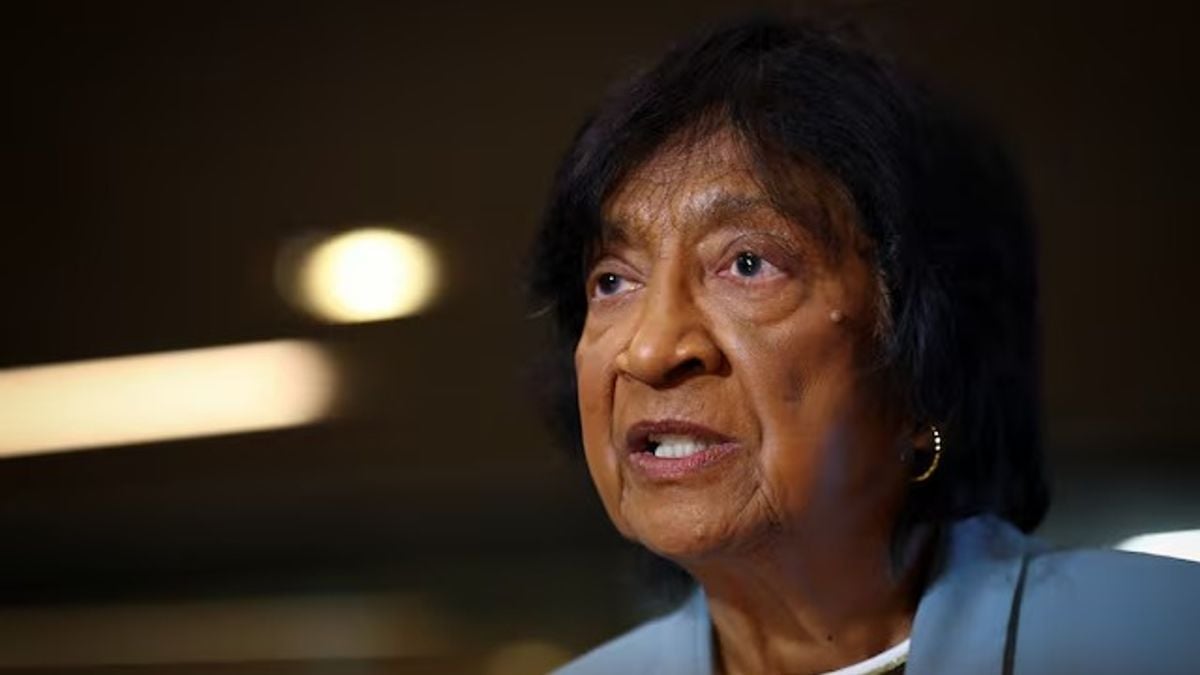
Navi Pillay, winner of the 2026 Nobel Peace Prize, has called on the United States to reclaim its traditional leadership in defending human rights and freedom worldwide, criticizing the US sanctions imposed on the International Criminal Court announced by Washington just hours after she was awarded the prize last Friday.
Pillay, 85, told Reuters in The Hague—where she serves as a judge at the International Court of Justice, the UN’s highest judicial body—"My message is: you must return to playing your serious role as leaders, and act as a force for liberation for the rest of the world."
Pillay said the timing of the US sanctions, coming immediately after her Nobel win, could not be a coincidence, describing the move as an unprecedented attack on an institution established by international treaty.
She said, "I think this is very unfortunate, but plans to target international criminal justice through the ICC have been in the works all along."
Pillay explained that the first thing she did upon returning from Nuremberg, Germany, to The Hague was to visit ICC staff to show solidarity amid the US sanctions targeting the court.
She said, "That’s why the first thing I did after returning from Nuremberg to The Hague was to go to the ICC staff to show solidarity with them in their work to advance international criminal justice and to support those already facing sanctions."
US Secretary of State Marco Rubio described the ICC on Friday as a "rogue court," stressing that Washington would never allow it to prosecute Americans.
The sanctions include a six-month grace period, as well as exemptions for certain transactions related to communications, software, pension payments, and dealings involving detainees.
The United States has long opposed the ICC, particularly because its statute grants jurisdiction not only over citizens of member states but also over individuals suspected of committing serious crimes on the territory of member states.
US President Donald Trump’s anger intensified after the ICC issued arrest warrants in 2024 for Israeli Prime Minister Benjamin Netanyahu and former Defense Minister Yoav Gallant, with the US administration escalating its campaign against the court in recent months.
Separately, Pillay defended the findings of the UN Commission of Inquiry on the Occupied Palestinian Territories, which she chaired last year and which concluded that Israel had committed genocide in Gaza.
Israel described the commission’s report as "disgraceful," while Pillay on Tuesday called the angry reactions "false propaganda from pro-Israel lobbying groups."
Pillay noted that winning the Nobel Peace Prize made her reflect on the fact that she is only the 21st woman to receive the award since 1901, saying this highlights ongoing discrimination against women. She said, "This alone is evidence of how deeply injustice against women is entrenched."
During her time as a judge at the International Criminal Tribunal for Rwanda, Pillay was part of the panel that issued a landmark ruling recognizing rape and sexual violence as acts of genocide.
Pillay believes that sexual violence crimes still do not receive sufficient prosecution in war crimes cases, noting that one reason is that many prosecutors—most of whom are men—think focusing on these crimes might distract from their cases.
Pillay intends to address this issue after her term at the International Court of Justice ends, emphasizing the importance of the legal foundation established by the Rwanda tribunal and subsequent international courts for prosecuting sexual violence crimes.
She said, "There is a solid foundation, established not only by the Rwanda tribunal but also by subsequent international courts, that sexual violence can no longer be ignored as collateral damage or a 'reward for soldiers.'"