

Pre-dawn earthquake shakes Egypt, no casualties reported
Millions in Egypt were jolted awake by a 5.5-magnitude earthquake early Monday, one of the strongest in recent years, but no casualties were reported.
Key Takeaways
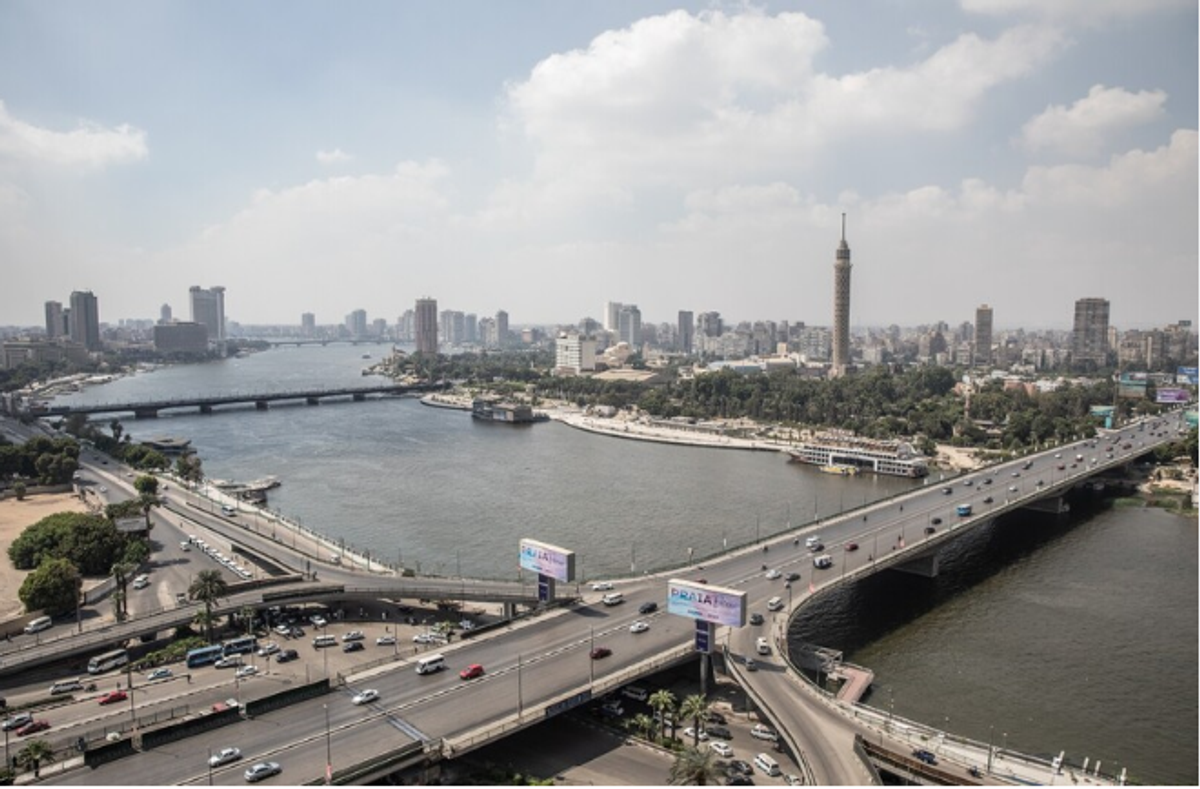
AIMillions of Egyptians were awakened before dawn on Monday by an earthquake measuring between 5.5 and 5.6 on the Richter scale. The tremor, which lasted about 15 seconds, was felt in Cairo and many other governorates after striking the Gulf of Suez region. It was one of the strongest quakes Egypt has experienced in recent years, but caused no casualties or material damage.
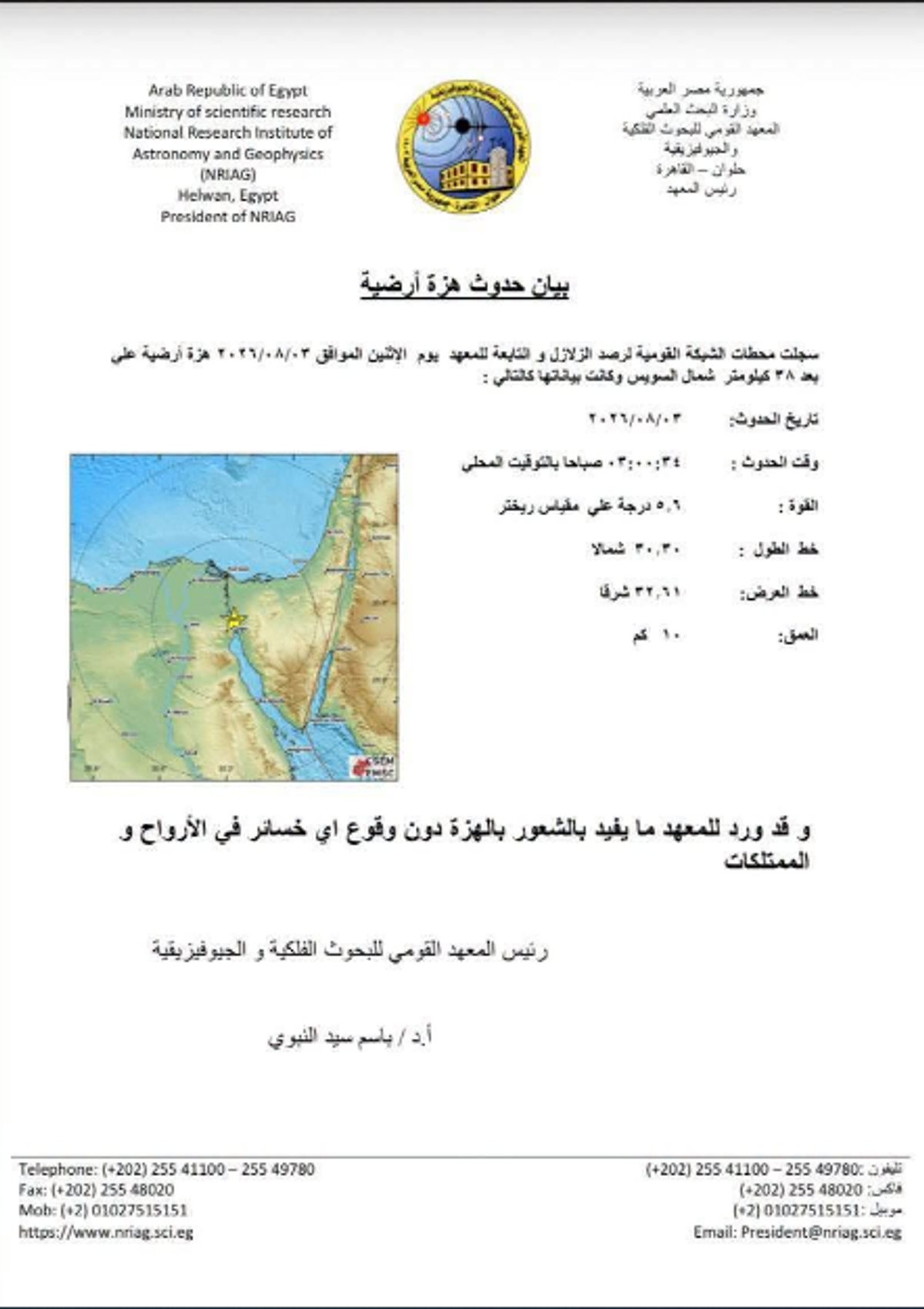
The National Research Institute of Astronomy and Geophysics announced that the earthquake occurred at 3:01 a.m. local time, with its epicenter located about 38 kilometers north of Suez city at a depth of 10 kilometers. The institute explained that the earthquake data was updated several times as new readings arrived from monitoring stations, which accounts for variations in initial reports regarding magnitude and depth.
The institute confirmed receiving reports from citizens who felt the tremor across wide areas, but emphasized that no loss of life or property was recorded.
Why did the earthquake occur?
Experts from the National Research Institute of Astronomy and Geophysics explained that the quake was caused by movement along an active fault in the Gulf of Suez, a region geologically known for tectonic activity due to its location at the northern end of the Red Sea rift system, where rock plates naturally shift.
Sherif El-Hady, head of the institute's earthquake department, said this activity was expected and not a cause for concern. He noted that earthquakes in the area result from the release of accumulated energy within rocks, and that the institute recorded several minor aftershocks following the main tremor.
Swift government response
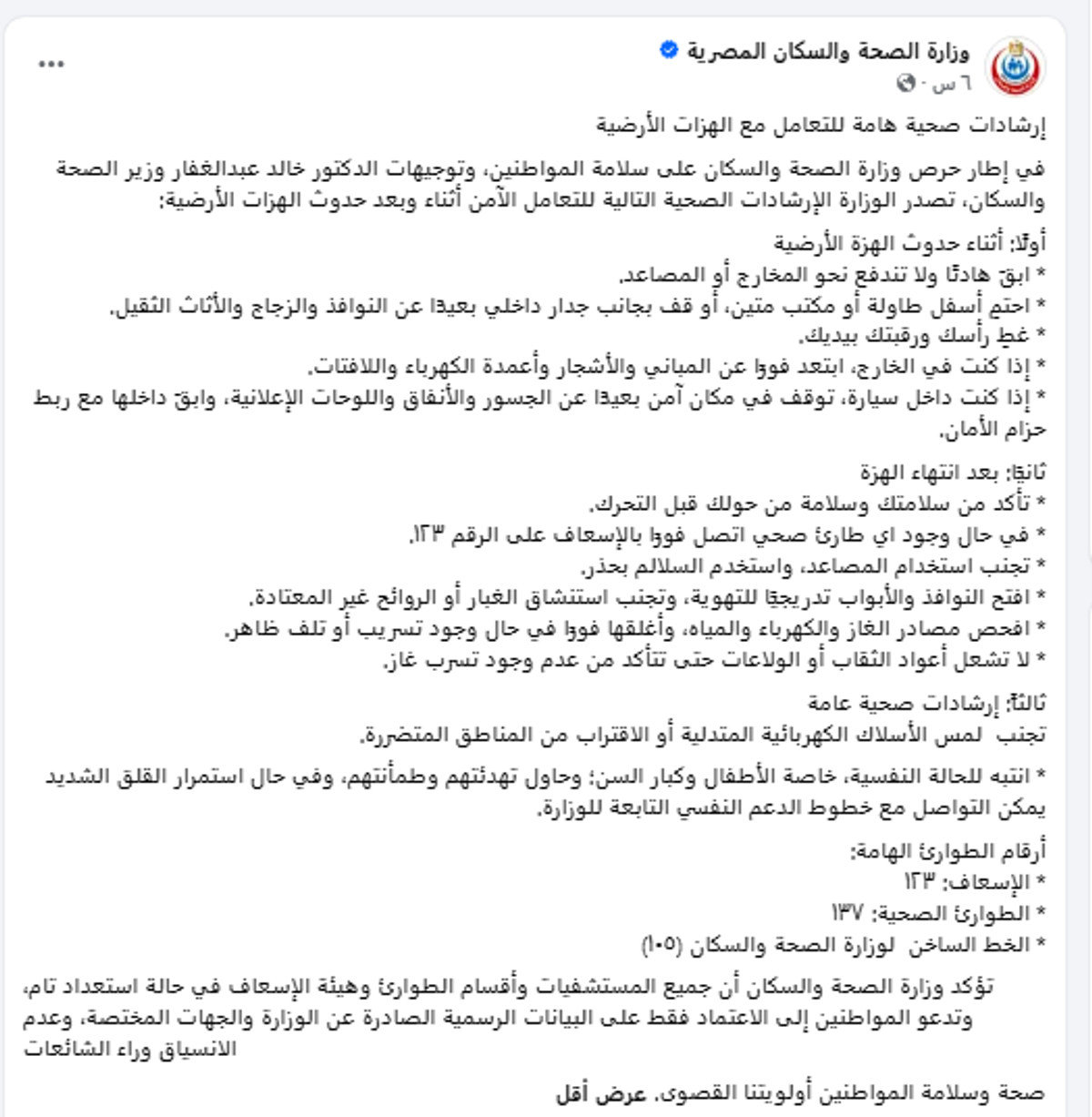
Immediately after the tremor, the Ministry of Health and Population activated its national health emergency plan. Health Minister Khaled Abdel Ghaffar ordered heightened readiness in emergency and critical care units, the operation of the central crisis room, and its linkage to provincial emergency rooms to monitor the situation in real time.
Authorities also ensured the preparedness of ambulances and rapid response teams, as well as the availability of medicines, medical supplies, blood bags, and oxygen. The ministry confirmed that the health situation remained stable and that no earthquake-related injuries had been reported.
Similarly, the Egyptian Red Crescent activated its emergency plan in cities affected by the tremor, urging residents to avoid old or visibly cracked buildings until their safety could be confirmed.
Tremor felt across the region
The earthquake was not limited to Egypt, as its effects were also felt in several neighboring countries, including Palestine, Jordan, Lebanon, and Cyprus, due to its proximity to the Red Sea region. International seismic monitoring centers indicated the possibility of limited aftershocks in the hours or days following the main event.
Although Monday's pre-dawn tremor passed without casualties or damage, it brought back memories for many Egyptians of the October 12, 1992 earthquake, which remains one of the most significant in the country's modern history.
While the recent quake caused concern among residents, the swift official response and initial monitoring results confirming stability and lack of damage reflected the readiness of relevant authorities to handle such incidents and to continue monitoring for any potential developments.