

Mansour Abbas nears acceptance of Eisenkot’s demand to label Hamas a terrorist group
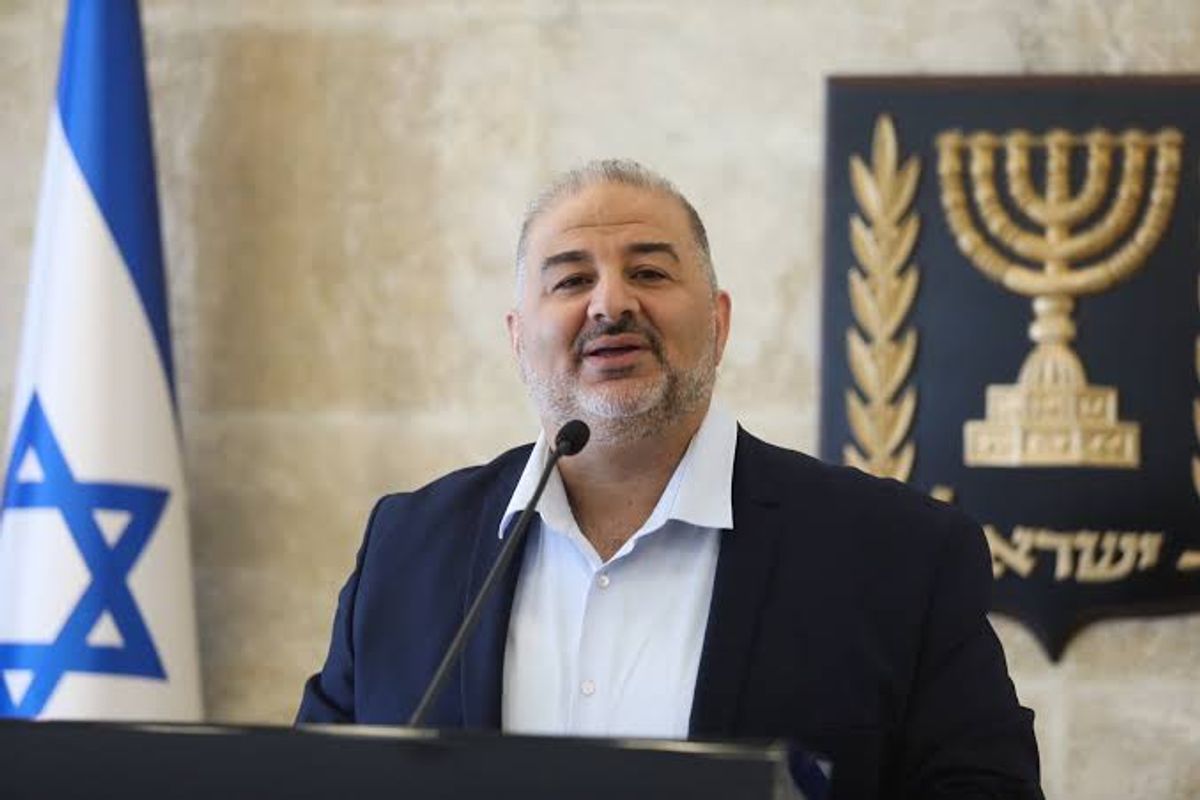
United Arab List leader Mansour Abbas is close to agreeing to designate Hamas as a terrorist organization, a key condition set by Gadi Eisenkot for forming Israel’s new government.
Key Takeaways
AIMansour Abbas, leader of the United Arab List, is moving closer to agreeing to designate Hamas as a terrorist organization, in response to a key condition set by Gadi Eisenkot, who has been tasked with forming Israel’s new government. This step could pave the way for the United Arab List to join a coalition seeking to end Benjamin Netanyahu’s rule.
Leaders within the Change Bloc are holding intensive talks with Abbas to discuss his party’s participation in the upcoming government, amid signs that he is willing to compromise on his stance toward Hamas in exchange for guarantees that any political partnership will be genuine, not just a means to secure parliamentary support, according to sources involved in the negotiations cited by Yedioth Ahronoth.
According to these sources, Abbas has given preliminary approval to meet the condition of recognizing Hamas as a terrorist group, but has linked this to the Change Bloc demonstrating its seriousness about establishing a real political partnership with the United Arab List.
Although the Change Bloc currently prefers to form a government in alliance with ultra-Orthodox parties, prominent figures have not ruled out involving Abbas as a potential partner in a coalition led by Eisenkot.
The Democrats party is playing a leading role in the negotiations, working alongside figures from the Yeshar party, headed by Eisenkot. Yair Golan, leader of the Democrats, confirmed ongoing talks with the United Arab List, stating that recognizing Hamas as a terrorist group does not necessarily pose an obstacle for Abbas.
Mansour Abbas’s position on Hamas
Abbas’s flexibility comes despite his previous refusal to explicitly label Hamas as a terrorist organization. During consultations held at the Israeli president’s residence last week, Abbas explained his reluctance to use this term, saying: “Leave me this space to build a bridge and influence the other side as well, and give me room to protect myself and my family. We are a bridge, so do not destroy this bridge.”
In a related development, Israel’s Channel 13 reported that President Isaac Herzog asked Abbas whether he supported the disarmament of Hamas. Abbas replied: “Yes, our vision is reconciliation, peace, and the establishment of an independent, sovereign Palestinian state alongside the occupying state.”
The idea of including Arab parties in the government does not have unanimous support within the Change Bloc. Avigdor Lieberman, leader of the Yisrael Beiteinu party, announced during the Knesset’s opening session on Tuesday that he rejects joining any coalition that includes Arab parties.
Eisenkot’s conditions for forming the government
Government formation talks center on four principles set by Eisenkot for potential partners: recognizing Israel as a Jewish state, committing to the values of the Declaration of Independence, imposing military service on all Israeli citizens, and recognizing Hamas as a terrorist organization with a commitment to dismantle its military and governmental power in Gaza.
Meanwhile, Netanyahu’s bloc has moved to prevent Abbas from providing parliamentary support to their rivals, despite criticism Abbas faced from the bloc before and after the elections.
Israel’s Channel 12 revealed that Natan Eshel, a close associate of Netanyahu, has held repeated secret talks with Abbas to gauge his position on supporting a potential government led by Eisenkot and to try to dissuade him from backing Netanyahu’s opponents.
President Isaac Herzog officially tasked Eisenkot with forming the new government after he secured the support of 67 Knesset members during presidential consultations, compared to 46 who recommended Netanyahu. Another party holding seven seats did not endorse either candidate.
Eisenkot has 28 days to form a government, with the possibility of a 14-day extension, as he seeks to build a coalition with the backing of at least 61 out of 120 Knesset members. Negotiations with Mansour Abbas remain one of the options to broaden the parliamentary base for the prospective government.