

Yemen's presidential council chief warns Houthis: attacks will no longer go unpunished
Yemeni Presidential Leadership Council head Rashad Al-Alimi says the era of cost-free Houthi aggression is over as military and political dynamics shift.
Key Takeaways
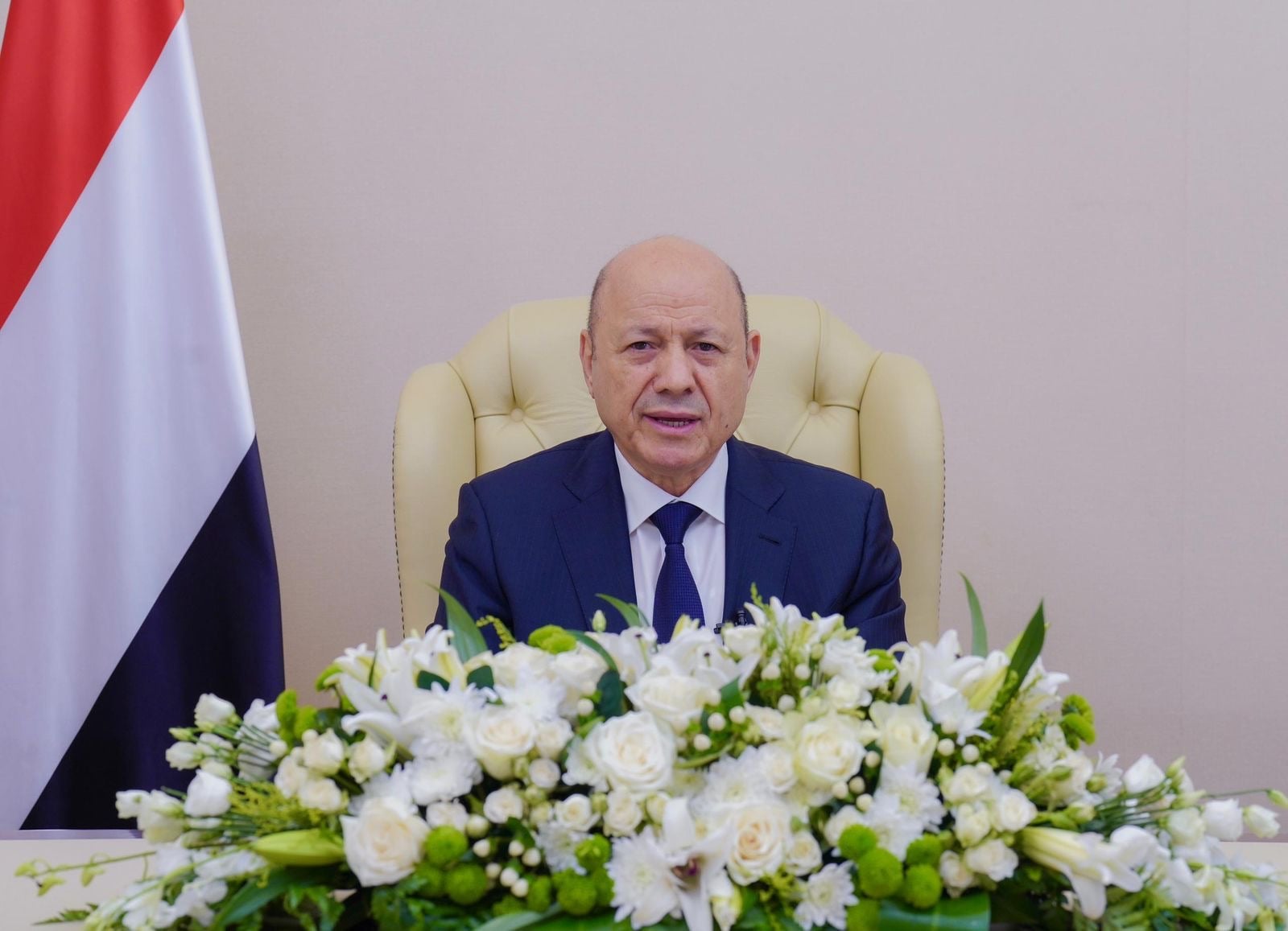
AIYemeni Presidential Leadership Council Chairman Rashad Al-Alimi declared that the era of cost-free attacks is over, stressing that both the military and political landscape have changed and that Yemen’s armed forces are now more prepared. His remarks come amid a recent escalation by Houthi militias, whose attacks have targeted military sites, sovereign facilities, and civilian infrastructure.
During a meeting on Monday with ambassadors from countries sponsoring the political process in Yemen, Al-Alimi said the Houthi escalation is a new test of the international community’s commitment to safeguarding peace efforts, in which the Yemeni government and its allies have invested for years.
He emphasized that the Yemeni state did not initiate or seek escalation, but would not allow its commitment to peace to become, in his words, “an open license for militias to choose when and where to attack, and then demand restraint from everyone when there is a response.”
Al-Alimi discussed the recent Houthi ballistic missile and drone attack on Mocha port, which resulted in civilian casualties, including women and children.
He clarified that the attack did not target a military site, but struck a pier, service facilities, cargo and food handling cranes, and several commercial vessels docked at the port. He noted the attack caused severe damage to the Saudi hospital, the immigration and passport authority, and water projects.
Al-Alimi pointed out that the events in Mocha are part of a weeks-long escalation, beginning with attempts to operate flights for the Revolutionary Guard to Sanaa, targeting commercial vessels and civilian sites in Saudi Arabia, and culminating in Houthi attacks in Marib and Hadramout on armed forces sites, sovereign facilities, civilian infrastructure, and displacement camps.
He reiterated the Yemeni government’s warnings to the international community that sustainable peace is impossible with an armed group that retains ballistic missiles, monopolizes decisions of war and peace, and considers its leaders above the state and the rule of law.
Al-Alimi said, “I want to remind our friends that the Yemeni government did not choose the military option first; it chose peace first. With exceptional patience, we respected the truce, exercised restraint, facilitated air and port traffic and the flow of goods, cooperated with UN and allied efforts, and bore significant political and economic costs because we believe Yemeni lives are more valuable than anything else.”
He argued that the current situation is the result of years of international leniency and incentives that the group believed it could extract more of through missiles and suicide drones.
Al-Alimi reaffirmed that “the era of cost-free aggression is over,” noting that Yemen’s armed forces are now better prepared and that recent developments have shown attacks on Marib, Hadramout, or the western coast will not go unpunished. He stressed that such acts are not isolated incidents but attacks on the entire state.
He insisted the state will no longer allow militias to dictate the timing, location, and scale of confrontations, nor to decide when they should end.
Al-Alimi called on the international community to uphold its responsibility to protect the rules of the international order, including safeguarding civilians, the sanctity of civilian facilities and commercial ports, state sovereignty, and rejecting the use of missiles and drones to achieve illegitimate gains.
He warned that silence or ambiguous language does not help de-escalation, but may be interpreted by militias as a green light for further escalation.
He added, “We do not ask our friends for statements of solidarity with the government as much as we ask for the defense of principles that underpin the international order. Do not equate the state and terrorist militias again.”
The council chief urged the international community to take a clear and swift political stance condemning attacks on ports, civilian facilities, and civilians, holding the militias responsible for the escalation, and supporting the Yemeni government’s right to protect its citizens, institutions, and economic assets in accordance with international law.
Addressing the ambassadors, Al-Alimi said, “For years, our friends have asked us to give peace a chance, and we have done so responsibly—perhaps more than expected. Today, we ask our friends to give the state a chance as well.”
For their part, the ambassadors of the countries sponsoring the political process strongly condemned the recent Houthi escalation and attacks on government forces, civilian sites, and economic facilities, including Mocha port, as well as attacks on Saudi Arabia and commercial vessels.
The ambassadors affirmed their countries’ support for efforts to confront these threats, protect civilians, and ensure the safety and freedom of international navigation. They also reiterated support for the Presidential Leadership Council and the government.
The ambassadors praised the state’s restraint and responsibility during the Houthi escalation and its adherence to international law, stressing their rejection of violence, missiles, and drones as means to achieve illegitimate political and economic gains.
They welcomed the UN Security Council’s condemnation of the recent attacks and violations, emphasizing the importance of continued international pressure to halt escalation, prevent the conflict from widening, protect peace prospects, and push the Houthis to abandon violence and return seriously to the political process to ensure the security and stability of Yemen, the region, and international waterways.